
Last Updated: November 4, 2026
Quick Summary
A motorcycle GPS tracker reports your bike's location, movement, and ignition status to a phone app, sending tamper and movement alerts that turn a theft into a same-hour response. It is a recovery tool, not a prevention tool, and it may also help you qualify for an insurance discount.
- Movement alerts are the most useful feature, turning theft into a same-hour response instead of next-morning discovery.
- Insurers look for professional installation documentation, an active monitoring subscription, and a recovery-capable device type.
- The discount usually attaches to comprehensive coverage only, so liability-only riders may see no discount.
- Constant 12V power keeps the tracker live for parked alerts but causes parasitic draw, so use a battery tender.
- LTE-M is the best default connectivity for most riders, using less power than full 4G.
Table of Contents
- What a Motorcycle GPS Tracker Actually Does for You
- Theft Recovery and Tamper Alerts: How Trackers Get Bikes Back
- How to Qualify for a Motorcycle Insurance Discount for GPS Tracker
- Motorcycle GPS Tracker Installation Guide: Where to Mount It and What to Avoid
- Protecting Your GPS Unit and Mounting Hardware From Theft
- Battery Drain, Privacy, and Legal Limits: What Competitors Skip
- LTE-M vs. 4G vs. RF: Choosing the Right Connectivity for Your Riding
- Securing Your Touring Bike With Robert Becker Design Hardware
- Frequently Asked Questions
What a Motorcycle GPS Tracker Actually Does for You
A motorcycle GPS tracker is a compact device that reports a bike's location, movement, and sometimes ignition status to a phone app or web dashboard. A parked touring bike is an easy target, and riders buy trackers for that reason. A tracker is the recovery tool, not the prevention tool, and that distinction matters more than most product pages admit.
Real-Time Tracking and Movement Notifications
Real-time tracking shows where the bike is right now, usually refreshed every few seconds while riding and every few minutes when parked. Movement notifications are the more useful feature. A motion sensor wakes the unit, sends a push alert, and starts logging position. That alert is what turns a theft into a same-hour response instead of a next-morning discovery.
Hardwired vs. Battery-Powered Units
Hardwired units draw from the bike's electrical system and never need charging. Battery-powered units install in minutes with no wiring but require a recharge cycle. Hardwired installation is permanent and harder for a thief to defeat; battery units are easier to move between bikes.
Theft Recovery and Tamper Alerts: How Trackers Get Bikes Back
Recovery depends on speed, not on the tracker alone. A tamper alert fires when the unit is unplugged, the seat is lifted, or the bike moves without the ignition on. The rider calls police with a live location, and the unit keeps logging position from an internal battery after the main power is cut.
Watch out: a thief who finds the unit will cut power first. Mount the tracker where it takes real disassembly to reach, and treat the alert as the start of a chain of evidence rather than a guarantee.
How to Qualify for a Motorcycle Insurance Discount for GPS Tracker
A motorcycle insurance discount for GPS tracker installs is real but rarely automatic, and the qualifying criteria are stricter than most product pages suggest. Insurers are not discounting the hardware, they are discounting the reduced loss exposure that a monitored, recoverable asset represents. That distinction explains why a $30 plug-in unit and a professionally installed, subscription-backed tracker do not earn the same treatment.
What Insurers Actually Look For
Most carriers evaluate three things before applying any credit:
- Professional installation documentation. A receipt from a licensed shop, or an installer certification number, carries more weight than a self-install photo. Some carriers require the device to be installed by a shop that holds a specific certification, not just any mechanic.
- Active monitoring subscription. A tracker with a lapsed data plan is a paperweight. Insurers commonly want proof of an active monitoring contract, and some require the policyholder to keep it active for the full policy term.
- Recovery-capable device type. Devices that only log location for later download generally do not qualify. The device needs real-time or near-real-time reporting and a tamper or movement alert that triggers a notification.
The Coverage Question Riders Miss
Ask your agent whether the discount applies to comprehensive coverage only or also to collision and liability. In most cases the credit attaches to the comprehensive portion, because theft is a comprehensive peril. That means a rider carrying liability-only coverage may see no discount at all, regardless of the device. Get the answer in writing before you buy hardware.
Documentation to Keep
Keep the installation invoice, the device serial number, the monitoring subscription confirmation, and the carrier's written discount confirmation together. If you switch carriers, the new insurer will usually ask for the same packet.
Watch out: a discount quoted verbally by a call-center agent is not binding. Request the discount amount and the qualifying device list in writing, and confirm whether the credit renews automatically or must be re-verified each term.
Discount amounts vary by carrier, bike, state, and coverage package, so treat any percentage you hear as a starting point for negotiation rather than a fixed number.
Motorcycle GPS Tracker Installation Guide: Where to Mount It and What to Avoid
The best mounting spot is hidden, dry, and close to a constant power source, but the electrical decisions you make during install determine whether the tracker survives a season and whether your battery survives a winter. This is the part most guides skip.
Choosing the Power Source
Hardwired trackers tap one of two circuits:
- Switched power (ignition-on only) means the tracker sleeps when the bike is off. It draws nothing while parked, but it also cannot send a tamper alert when the bike is sitting, which is exactly when theft happens.
- Constant 12V power keeps the tracker live 24/7, enabling movement and tamper alerts while parked. The trade-off is continuous parasitic draw.
A constant circuit is one option for a theft-recovery device, paired with a tracker that has a low-power sleep mode. The device wakes on motion, reports, and returns to sleep. That architecture is what makes 24/7 monitoring practical without flattening the battery.
Mounting Locations That Work
Good locations include under the seat, inside the tail section, and behind a side panel. Avoid the handlebar area, the top of the tank, and anywhere a thief can see or reach in seconds. Mount the unit so the antenna has a clear path to the sky, metal enclosures, the exhaust, and dense wiring looms all degrade signal. A tracker buried inside a steel toolbox will report intermittently at best.
Step-by-Step Hardwired Install
- Disconnect the battery negative terminal before any wiring work.
- Identify a switched or constant 12V circuit with a multimeter, and never tap a safety-critical circuit such as ABS, lighting, or the ECU feed.
- Route the harness along the existing loom and secure it with zip ties every 6-8 inches.
- Solder and heat-shrink every connection; crimp connectors vibrate loose on a twin.
- Mount the antenna away from metal enclosures and the exhaust.
- Reconnect power, confirm the app reports position, then test the tamper alert by unplugging the unit.
Protecting Battery Health
Parasitic draw is the most underreported downside of a hardwired tracker. A device drawing even a small current continuously will flatten a battery on a bike that sits for weeks. Riders who store their bikes seasonally should use a battery tender or choose a tracker with a documented low-power sleep mode.
Watch out: tapping a constant circuit without an inline fuse creates a fire risk if the harness chafes. Always fuse the positive lead at the tap point, as close to the source as practical.
If wiring is not your thing, a shop install is money well spent.
Protecting Your GPS Unit and Mounting Hardware From Theft
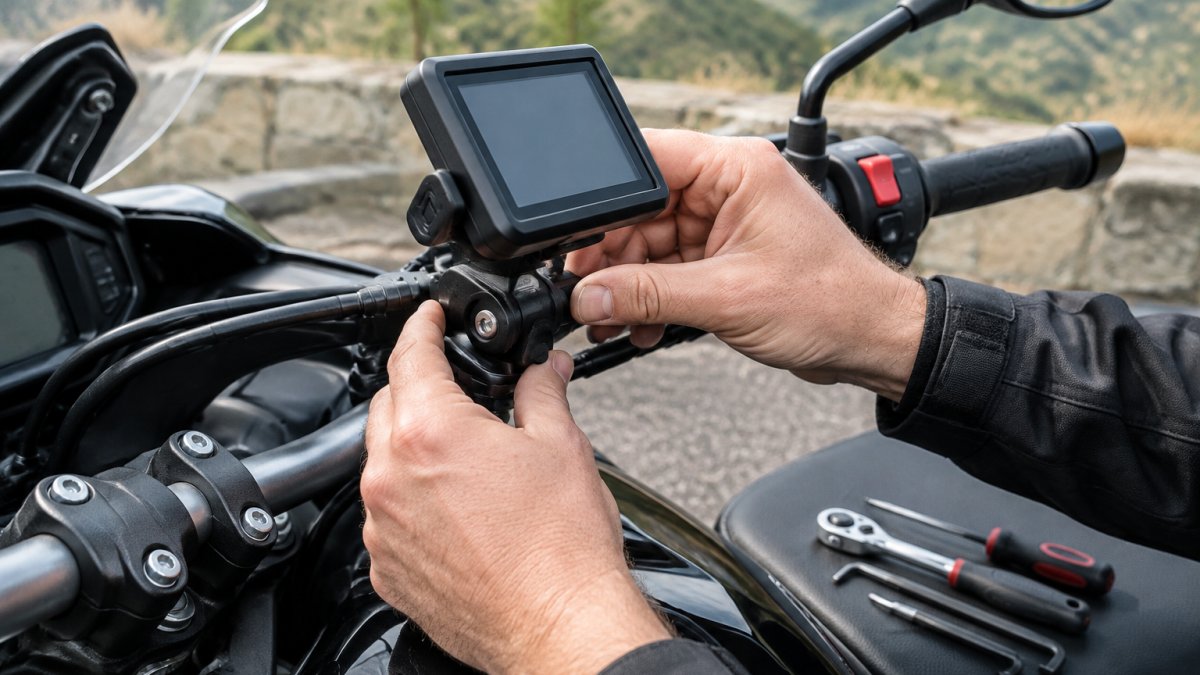
A tracker hidden in the tail section is one problem. Remove the unit when you leave the bike overnight in a high-risk area, and use a locking mount that requires a key to release. Robert Becker Design builds locking hardware, including locks for saddlebags, seats, and mounting arms, to help secure the components around your electronics.
Battery Drain, Privacy, and Legal Limits: What Competitors Skip
Parasitic battery drain is a downside worth planning for. A hardwired tracker draws a small current continuously, and on a bike that sits for weeks that draw can flatten a battery.
Privacy is the second gap. A cloud-based dashboard means your location history lives on someone else's server. Check the provider's data retention policy and whether you can delete history. Legal limits matter too: remote immobilization is restricted in many jurisdictions, and self-recovery is not the same as lawful recovery.
LTE-M vs. 4G vs. RF: Choosing the Right Connectivity for Your Riding
LTE-M is the best default for most riders. It uses less power than full 4G, penetrates parking structures reasonably well, and costs less to run on a subscription-based service. 4G gives faster updates and better coverage in remote areas at the cost of battery life. RF tracking is the odd one out: short range, no subscription, and useful only as a backup for locating a bike in a known area with a handheld receiver.
| Connectivity | Power Draw | Coverage | Best For |
|---|---|---|---|
| LTE-M | Low | Good in urban areas | Daily riders, long battery life |
| 4G | Higher | Best overall | Remote touring, fast updates |
| RF | Very low | Short range only | Backup locator, no subscription |
Securing Your Touring Bike With Robert Becker Design Hardware
A tracker helps you get a stolen bike back, and locks help keep the components on the bike in place. Riders who combine both spend less time filing reports and more time riding. If you want the prevention half handled properly, our locking mounts, saddlebag locks, and seat locks are designed for Harley-Davidson and Indian touring models. Browse the full range and match the hardware to your bike before your next trip.
Frequently Asked Questions
Are motorcycle GPS trackers actually worth the investment?
For riders who park in high-theft areas or own a touring bike with expensive aftermarket parts, yes. A tracker gives you real-time location data and movement alerts that an alarm alone cannot provide. The value comes from recovery speed: the faster you know the bike moved, the better the chance it is found intact. Factor in a possible motorcycle insurance discount for GPS tracker installs and the cost narrows further. Pair the tracker with physical locks on your GPS unit, saddlebags, and seat so a thief cannot strip the bike even if it stays put.
Where is the best place to put a tracker on a motorcycle?
Mount it where it is hidden from casual view but still gets a clear signal. Common spots include under the seat, inside the tail section, behind a side panel, or tucked near the battery box. Avoid wrapping the unit in metal, which blocks the antenna, and avoid spots that collect engine heat or water. A hardwired unit near the battery keeps you from recharging it, while a battery-powered unit needs a spot you can reach for service. Your motorcycle GPS tracker installation guide should confirm the unit sits flat and the antenna faces up.
Can a motorcycle GPS tracker help lower my insurance premiums?
It can, but not automatically. Insurers that offer a motorcycle insurance discount for GPS tracker installs usually require a professionally installed, hardwired unit with active monitoring, and some want proof of installation. Call your agent before you buy and ask three things: whether the discount exists, which device types qualify, and what documentation they need. A discount is not guaranteed, and the amount varies by carrier and state. Even without a discount, the recovery benefit and the peace of mind may justify the cost on their own.
What are the downsides of using a GPS tracker?
The main ones are subscription costs, battery drain, and privacy. Most cellular trackers need a monthly or annual plan to send data, so check the plan price before buying. Hardwired units draw a small current, and a poorly wired install can cause parasitic battery drain on a bike that sits for weeks. Privacy matters too: a tracker logs where you ride, so choose a provider with clear data policies and app controls. Finally, a tracker is a recovery tool, not a lock. It does not stop a thief from taking your GPS unit or saddlebags, so combine it with physical security hardware.
The gap between a bike that comes home and one that does not is usually a lock, not a subscription. Robert Becker Design has built theft prevention hardware for touring motorcycles since 2012, including locking GPS mounting arms, saddlebag locks, and seat locks for Harley-Davidson and Indian models. Get started with Robert Becker Design and protect the components a tracker can only report on after they are gone.
