
Last Updated: November 11, 2026
Quick Summary
A disc lock alarm is the best starting point for most riders because it is loud, simple and inexpensive. Add a GPS tracker if you want to recover a stolen motorcycle alarm-protected bike.
- Disc lock alarms clamp onto the brake rotor and sound a loud siren when the bike is moved or tilted.
- Oxford Alpha XA14 Alarmed Disc Lock starts at $89.99 and offers a 120dB alarm.
- GPS trackers send movement alerts to your phone and help with recovery after theft.
- Battery health should be checked at the start of every riding season.
- Confirm your insurer's qualifying device list and documentation requirements before buying.
Table of Contents
- How We Compared These Motorcycle Alarm Systems
- Types of Motorcycle Security Systems: Disc Lock Alarms, GPS Trackers, and Integrated Systems
- Disc Lock Alarms: Top Picks and How They Hold Up
- Best Motorcycle Alarm and Tracker Options for Phone Alerts and Recovery
- Motorcycle Alarm System Installation: DIY Versus Professional
- Battery Life, Insurance Impact, and Layering Your Security
- Choosing the Right Setup for Your Bike and Your Travel Habits
- Frequently Asked Questions
Motorcycle theft is a real and costly problem, and a good alarm can be the difference between a bike that stays in your garage and one that disappears from a hotel parking lot. Robert Becker Design builds theft prevention hardware for Harley-Davidson, Indian and other touring motorcycles, so we know how much rides on choosing the right layer of protection. In this guide, we compare the main types of motorcycle alarm systems, explain how each one holds up, and show you how to match a setup to your bike and your travel habits. Our short answer: a disc lock alarm is the best starting point for most riders, and a GPS tracker is the best addition if recovery matters to you.
Quick Picks:
- Best Physical Deterrent with Alarm: Oxford Alpha XA14 Alarmed Disc Lock, starting at $89.99
- Best for Phone Alerts and Recovery: Monimoto 9, starting at $229.00
- Best Budget Option: ONVIAN Wireless Bike Alarm, starting at $18.99
How We Compared These Motorcycle Alarm Systems
We looked at disc lock alarms, GPS trackers and integrated alarm systems, and compared them on price, alarm volume, sensor type, installation effort and what each does after a bike is moved. Pricing for each product depends on the manufacturer's current listing, so confirm it on the manufacturer's site before buying. The notes below are a comparison of product features and common trade-offs.
Types of Motorcycle Security Systems: Disc Lock Alarms, GPS Trackers, and Integrated Systems
Motorcycle alarm systems fall into three broad groups. Each solves a different part of the theft problem, and the best setup often combines two of them.
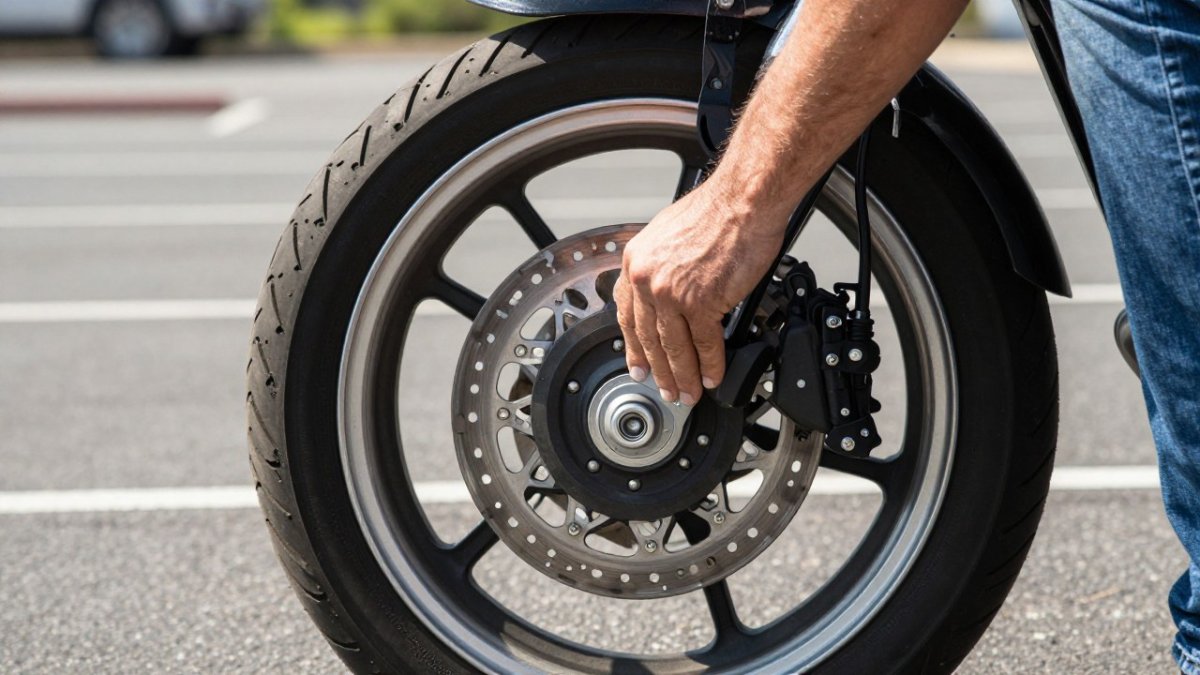
Disc lock alarms clamp onto the brake rotor and sound a loud siren when the bike is moved or tilted. They deter thieves at the scene and cost the least to add. GPS trackers do not make noise at the bike; instead they report location and send movement alerts to your phone, which matters most if the bike is taken. Integrated systems combine sensors, a siren and sometimes remote paging into one unit wired to the bike's electrical system.
Think of a disc lock alarm as the first line of defense and a tracker as the recovery plan. Riders who park overnight in busy urban areas usually benefit from both.
Disc Lock Alarms: Top Picks and How They Hold Up
Disc lock alarms are the most common choice because they are simple, portable and loud. Here is how the leading options compare on the features that matter most.
| Product | Starting Price | Alarm Level | Key Feature | Main Drawback |
|---|---|---|---|---|
| Oxford Alpha XA14 Alarmed Disc Lock | $89.99 | 120dB | 14mm hardened steel pin, motion and impact sensors | No remote notifications |
| ABUS 7000 RS1 3D Alarm Disc Lock | $129.99 | 100dB | 3D sensor detects tilt and movement | Battery replacement can be fiddly |
| Xena XX-14 Disc Lock with Alarm | $115.00 | 120dB | Corrosion-resistant stainless steel body | Sensitive to wind or heavy rain |
| Scorpio SRX-900 | $199.99 | Integrated siren | Perimeter sensing, hands-free arming | Requires professional or technical installation |
| Tchipie Disc Brake Lock Alarm | $22.99 | 110dB | Lightweight, battery-operated | Not suited to long-term outdoor storage |
| YOHOOLYO Disc Lock Alarm | $25.99 | 110dB | Includes carrying pouch and reminder cable | Limited durability versus premium brands |
Starting Price
A disc lock alarm makes a theft noisy and slow, but it does not stop every determined thief. It works best as one layer in a broader plan.
Best Motorcycle Alarm and Tracker Options for Phone Alerts and Recovery
If you want to know where your bike is, or get a message when it moves, a tracker is the right tool.
Cellular connectivity typically requires an ongoing plan, so factor that into the total cost of ownership.
Riders who already run an integrated alarm can also pair a tracker with a disc lock for layered protection. This combination covers both the moment of theft and the hours after it.
Motorcycle Alarm System Installation: DIY Versus Professional
Installation difficulty is the factor most buyers underestimate, and it is the one most product listings gloss over. The right answer depends on what kind of device you are buying, not just on your mechanical skill.
Disc lock alarms need little installation. You place the unit over the brake rotor, close the pin, and set the sensor. The only real preparation is checking that the disc is clean and that the lock body does not interfere with the caliper or the wheel spokes. Riders with cast or narrow-spoke wheels should dry-fit the lock before the first ride to confirm clearance.
Battery-operated trackers are DIY installs, with one caveat. The practical risks are placement and sensor sensitivity. Mount the unit where it is hidden but not wedged against a heat source, and test motion alerts in a parking space before relying on them.
Hardwired integrated systems are where professional help earns its cost. Errors here can drain the battery, trigger false alarms, or damage electronics. A reasonable DIY checklist before you start:
- Disconnect the battery and confirm you have the correct harness for your model year
- Locate the ignition and accessory circuits with a multimeter rather than guessing
- Route wiring away from exhaust heat and moving suspension parts
- Test every sensor and the siren before reassembling body panels
If any of those steps feel unfamiliar, have a qualified shop do the wiring. Ask for the installer to document the connections so you can troubleshoot later.
Watch out: Many insurers will only credit an anti-theft device if it is professionally installed, so check the policy language before you choose a DIY hardwire install.
A useful rule: if the device needs a power connection, it is a professional-leaning install; if it runs on its own battery and mounts mechanically, it is a reasonable DIY project for most riders.
Battery Life, Insurance Impact, and Layering Your Security
Three factors determine whether a motorcycle alarm keeps working and whether it pays off beyond the sticker price: battery health, insurance treatment, and how the device fits with the rest of your security. Most guides cover one of these. Very few connect all three.
Battery health is a maintenance schedule, not a one-time check. Battery-operated disc locks and trackers lose capacity gradually, and a weak battery often shows up as a shorter siren or missed motion alerts rather than a dead unit. A practical routine:
- Check battery level at the start of every riding season
- Replace batteries on a fixed interval rather than waiting for a warning, since some low-battery alerts arrive with little margin
- Before a long trip, test the siren and any app alerts from a distance
- Keep spare batteries in the same pack you travel with, so a dead cell does not leave the bike unprotected
Insurance credit depends on certification and paperwork. Some insurers give a premium discount for approved anti-theft devices, and insurers set their own qualifying lists, and the availability of discounts varies by carrier and by state. Ask your insurer three specific questions: which devices qualify, whether the device must be professionally installed, and what proof they accept. Keep the device's model number, the installation receipt if one exists, and photos of the installed unit. A discount is only useful if you can document it at claim time.
Layering works by making each layer answer a different threat.
- A disc lock alarm addresses the opportunistic thief who wants a quick roll-away at a parking spot
- A GPS tracker addresses recovery after a bike is taken by someone willing to tow it
- Secure hardware on saddlebags, seats, and mounting arms addresses theft of parts and accessories, which is often the easiest loss
For a touring rider who parks at hotels, a realistic stack is a disc lock alarm at every stop, a tracker that stays armed overnight, and locking hardware on the components thieves most often take. For a rider who keeps the bike in a secured garage, a tracker alone may be enough.
Watch out: A layered system only helps if every layer is maintained. An alarm with a dead battery and a tracker with an expired subscription leave the bike effectively unprotected while looking protected.
Choosing the Right Setup for Your Bike and Your Travel Habits
The right setup depends on where and how you ride. Use this quick guide to narrow your choice:
- You park mainly at home: A single disc lock alarm, such as the Oxford Alpha XA14, is usually enough.
- You travel and park in busy areas: Pair a disc lock alarm with a tracker such as the Monimoto 9.
- You want the lowest cost: The ONVIAN Wireless Bike Alarm at $18.99 offers a loud, adjustable deterrent, though its plastic build is less secure than steel.
- You want a hands-off system: The Scorpio SRX-900 suits riders who will pay for professional installation.
For Harley-Davidson and Indian owners, be sure to check the fit of any lock or mounting hardware against your model before buying. Compatibility varies by year and by aftermarket accessories. If you run a Garmin zumo, Montana or Monterra unit, secure mounting hardware is worth adding to your plan alongside any alarm.
Robert Becker Design builds locks for saddlebags, seats and mounting arms on touring models. For current pricing and to confirm fit for your specific model, visit robertbeckerdesign.com or contact the team directly for a quote. Shop All of our theft prevention hardware to build the layered setup that suits your ride.
Robert Becker Design protects the parts of your bike that thieves target most. Explore our saddlebag, seat and mounting hardware to add a practical layer of security to your alarm setup.
Frequently Asked Questions
What is the best alarm system for a motorcycle?
No single system wins for every rider. For a loud, low-cost deterrent, a disc lock with a built-in siren such as the Xena XX-14 or Oxford Alpha XA14 works well. For phone alerts and recovery, a GPS system such as the Monimoto 9 fits better, though it requires a cellular subscription. Match the system to where you park and how long the bike sits unattended.
What is the difference between a motorcycle alarm and a GPS tracker?
A motorcycle alarm sounds a siren or sends a local warning when the bike is moved, which can scare off a thief in the moment. A GPS tracker reports the bike's location to your phone so you can help police recover it. Many systems combine both functions. If your priority is recovery after a theft, a tracker matters most. If it is deterrence while parked, a loud alarm matters more.
Which motorcycle alarm systems send alerts to your phone?
Systems that pair with a smartphone app, such as the Monimoto 9, send movement alerts and location updates directly to your phone. Standalone disc lock alarms like the Oxford Alpha XA14 and ABUS 7000 RS1 sound a siren on the bike but do not send remote notifications. Check whether a phone alert requires a monthly cellular plan before you buy.
Can you use a disc lock and an alarm together?
Yes, and combining them is a common approach. A physical disc lock blocks the wheel from rolling, while a separate alarm or tracker handles detection and alerts. Robert Becker Design focuses on physical theft prevention hardware for saddlebags, seats, and mounting arms, which can complement an electronic alarm on touring models. Current prices and availability are listed on the Robert Becker Design website.
