
Last Updated: November 20, 2026
Quick Summary
The best motorcycle alarm systems for touring combine a tracker or alarm with physical locks, since a siren is a deterrent rather than a recovery tool. Top picks include the Monimoto 9 GPS tracker at $179, the Scorpio SRX-900 full system at $199, and the Urban UR10 at $134.
- We judged each system on weather resistance, battery impact, alert reliability, installation effort, and layering with physical locks.
- A hardwired alarm with a bad ground can drain your battery overnight at a campsite.
- Tune alarm sensitivity down before a trip, since a false alarm at 2 a.m. in a campground makes enemies.
- Check a disc lock's stated rotor compatibility, because touring bike front discs are larger.
- A full security stack of hardwired alarm, tracker, disc lock, and component locks runs $250 or more.
Table of Contents
- What a Touring Motorcycle Alarm Actually Needs to Do
- Quick Comparison: Best Motorcycle Alarm and Tracker Options
- 1. Monimoto 9: Best Standalone GPS Tracker for Touring
- 2. Scorpio SRX-900: Best Full Security System for Overnight Parking
- 3. XENA XX15 Bluetooth: Best Motorcycle Alarm That Alerts Your Phone
- 4. YOHOOLYO Alarm Disc Lock: Best Portable Alarm for Long-Distance Riders
- 5. Robert Becker Design: Best for Securing GPS, Seats, and Saddlebags
- 6. Urban UR10 and UR6: Budget Alarms With Trade-Offs
- Motorcycle Alarm Installation: Hardwired vs. Battery-Powered
- The Verdict: Layer Your Security for the Road
- Frequently Asked Questions
What a Touring Motorcycle Alarm Actually Needs to Do
The best motorcycle alarm systems for touring solve a problem parked-bike alarms don't: your bike sits unattended in unfamiliar places, often overnight. A device that shrieks in a garage is not the same as one that survives rain, voltage drain, and spotty cell coverage far from home.
A motorcycle alarm is an electronic theft-deterrent device that triggers a siren or sends an alert when it detects unauthorized movement, tampering, or a change in position. For touring, the useful ones add weather-sealed housings, low standby draw, and layered protection that includes physical hardware, not just noise.
Below, we break down seven options by what they actually do on a long trip, standalone trackers, full security systems, Bluetooth disc locks, and low-tech locks that stop a rollaway.
Quick Comparison: Best Motorcycle Alarm and Tracker Options
| System | Type | Approx. Price | Best For |
|---|---|---|---|
| Monimoto 9 | GPS tracker | $179 | Discreet movement alerts, no wiring |
| Scorpio SRX-900 | Full security system | $199 | Overnight parking in high-theft areas |
| XENA XX15 Bluetooth | Alarm disc lock | Not listed | Phone alerts without installation |
| YOHOOLYO Alarm Disc Lock | Alarm disc lock | Not listed | Portable, rechargeable travel lock |
| Robert Becker Design | Component locks | Varies | GPS, seat, and saddlebag security |
| Urban UR10 | Alarm device | $134 | Dedicated alarm on a budget |
| Urban UR6 | Alarm device | $64 | Lowest-cost alarm option |
How We Evaluated These Systems
We judged each option on five touring-specific criteria: weather resistance, battery impact, alert reliability, installation effort, and how well it layers with physical locks.
One thing most guides miss: a loud siren is a deterrent, not a recovery tool. The systems worth carrying either notify you or help you find the bike after it moves, ideally both.
Approximate prices of motorcycle alarm and tracker options
1. Monimoto 9: Best Standalone GPS Tracker for Touring
Best for: riders who want tracking and alerts without touching the wiring. Skip if: you want an audible siren to scare off a thief on the spot.
2. Scorpio SRX-900: Best Full Security System for Overnight Parking
Because it's a system rather than a single lock, expect a more involved motorcycle alarm installation, more coverage, more time under the seat with tools.
Pros: full-system coverage, expandable with sensors. Cons: hardwired installation isn't a five-minute job, and specific features aren't fully documented in available listings.
Best for: overnight parking in high-theft areas. Skip if: you want zero installation and travel light.
3. XENA XX15 Bluetooth: Best Motorcycle Alarm That Alerts Your Phone
Best for: riders who want phone alerts without a hardwired system. Skip if: you park far from your phone and need long-range notification.
4. YOHOOLYO Alarm Disc Lock: Best Portable Alarm for Long-Distance Riders
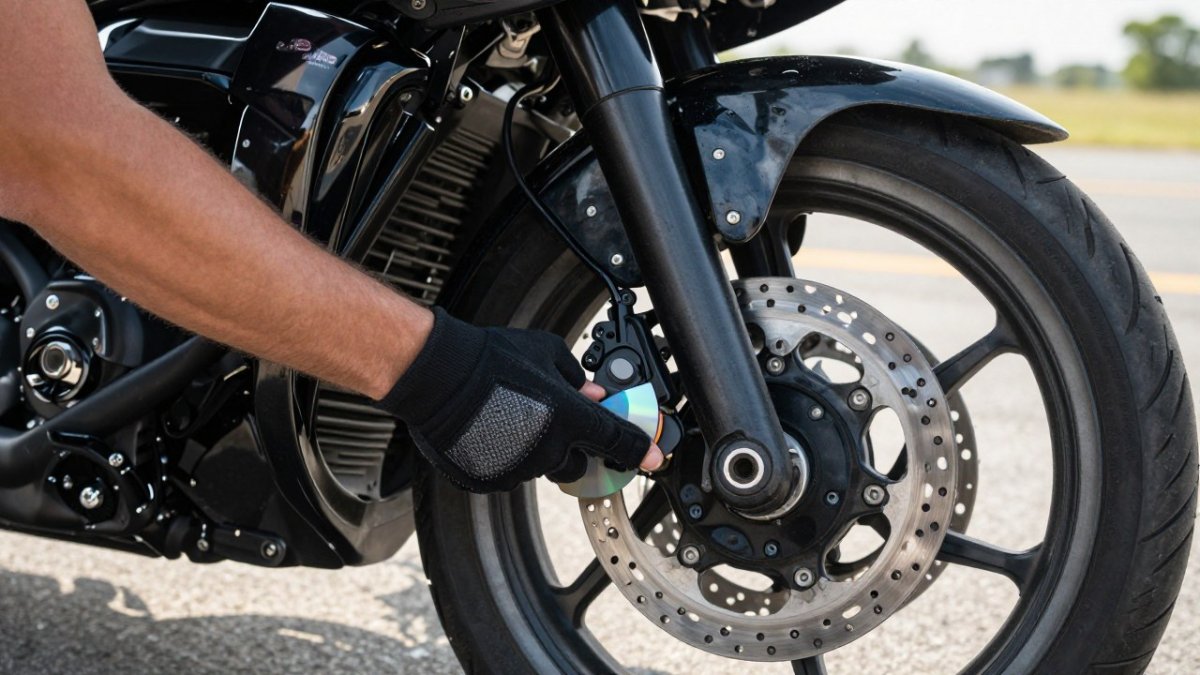
Best for: long-distance riders who want one compact device that locks and alarms. Skip if: you need GPS recovery tracking.
5. Robert Becker Design: Best for Securing GPS, Seats, and Saddlebags
Here's the gap most alarm roundups ignore: an alarm doesn't stop a thief from walking off with your GPS unit, saddlebag contents, or seat.
Our locks secure Garmin GPS units and mounting arms, protect factory and aftermarket seats including solo seats, and lock down saddlebags on stock and aftermarket models. Our products are designed by an avid Harley rider.
Think of it as the layer an alarm can't provide. A siren tells you something happened; a locked GPS mount means there's nothing loose to grab.
Pros: dedicated GPS, seat, and saddlebag security; broad Garmin compatibility; touring-focused fitment. Cons: it's hardware, not an electronic alarm, so pair it with one for alerts.
Best for: riders protecting high-value accessories and luggage. Skip if: you only want an audible alarm.
6. Urban UR10 and UR6: Budget Alarms With Trade-Offs
Best for: budget-conscious riders adding a basic alarm. Skip if: you need verified weather sealing and documented range.
Motorcycle Alarm Installation: Hardwired vs. Battery-Powered
Motorcycle alarm installation comes down to one decision: wire it into the bike or run it on its own battery. For touring, that decision has consequences that don't show up in a garage, a hardwired system that behaves perfectly on a weekend ride can flatten your battery by morning at a campsite, and a battery-powered device can still fail you if you didn't plan for charging on the road.
Hardwired systems: coverage vs. current draw
A hardwired alarm taps the motorcycle battery through the harness, usually with an inline fuse and a ground to the frame. The upside is no recharging and full-system coverage, motion, tilt, ignition, and perimeter sensors all run off the bike's electrical system.
A common pattern among touring riders is to install a hardwired alarm with a dedicated inline switch or a relay tied to the ignition so the system can be fully isolated when the bike sits for days.
Watch out: a hardwired alarm with a bad ground will drain your battery overnight at a campsite, and you'll find out the hard way at sunrise.
Battery-powered devices: install in minutes, plan the recharge
Battery-powered trackers and alarm disc locks install in minutes and never touch the loom, which is why they suit touring riders who don't want to cut into a factory harness at a campsite. The trade-off is energy management: you're now responsible for charging or swapping batteries on the road. A rechargeable disc lock can top up from a USB power bank; a tracker with a user-replaceable battery may last a full season or need a mid-trip swap depending on how often it arms and reports.
Before a long trip, confirm three things for any battery-powered device: the published standby life, the charging method and cable, and whether the device warns you before the battery dies. A tracker that goes silent without notice is worse than no tracker, because you'll assume the bike is safe.
Fitment on touring motorcycles and luggage
Touring bikes bring fitment questions a generic install guide ignores. Panniers, top boxes, and tank bags change where you can mount a siren or sensor, and a hardwired alarm's wiring has to route around luggage frames and heated-gear leads without chafing. On Harley-Davidson and Indian touring models, accessory circuits and CAN-bus wiring mean you should use the manufacturer's accessory connector rather than probing random wires.
Alarm disc locks have their own fitment issue: rotor thickness and slot pattern vary, and a lock that fits a sportbike rotor may not seat on a touring bike's larger front disc. Check the lock's stated rotor compatibility before you rely on it.
False alarms and sensitivity tuning
A touring bike parked near a road, campsite path, or hotel entrance will get bumped by wind, passing traffic, and curious strangers. Most quality alarms let you adjust sensitivity, and some use a two-stage trigger: a warning chirp for a light bump, a full siren for a real roll attempt. Tune sensitivity down before a trip rather than up, a false alarm at 2 a.m. in a campground makes enemies, and a siren that cries wolf gets ignored when it matters.
Watch out: a perimeter sensor set too hot will trigger on rain and passing trucks, so test it for a night in your driveway before trusting it on the road.
The Verdict: Layer Your Security for the Road
No single device covers a touring bike, and the riders who keep their bikes stack layers matched to where the bike actually sits. An overnight hotel lot, a campsite, a roadside lunch stop, and an unfamiliar city street each call for a different combination. Here are stacks by scenario and budget, with the trade-offs stated plainly.
Overnight hotel or motel parking
The risk here is a loaded bike sitting in a well-lit but public lot for eight to ten hours. The practical stack is a hardwired full system for motion and tamper detection, plus a locked GPS mount and saddlebag locks from Robert Becker Design so nothing loose walks, plus an alarm disc lock as a visible second deterrent. The trade-off: hardwired install time and standby draw, offset by the fact that you're sleeping nearby and can respond to an alert.
Campsite and remote parking
At a campsite, noise etiquette matters as much as detection. A two-stage alarm with sensitivity tuned down, or a silent GPS tracker that alerts your phone without waking the neighbors, is the better fit. Pair it with a physical disc lock and component locks on GPS and luggage. The trade-off: a silent tracker doesn't scare anyone off, so the physical locks have to do the deterrence work.
Roadside breaks and short stops
For a 20-minute lunch stop, you don't want to arm a full system. A rechargeable alarm disc lock, or a Bluetooth disc lock that pushes a phone alert, is the right weight, visible, audible, and quick to click on. The trade-off: short Bluetooth range means you need to be close, and a disc lock alone won't stop a two-person lift into a truck.
Budget tiers
- Full stack ($250+): hardwired alarm, tracker, alarm disc lock, and component locks on GPS, seat, and saddlebags. The most coverage, the most install time, and the most to manage on the road.
The trade-offs worth accepting
Every layer costs something: money, install time, charging chores, or subscription fees. The mistake is buying one expensive device and calling it security. A siren tells you something happened; a tracker helps you find the bike after it moves; a physical lock means there's nothing loose to grab. Build the stack before your next trip, not after a loss.
Robert Becker Design makes the component locks that protect your GPS, seats, and saddlebags, engineered by riders for Harley-Davidson and Indian touring models. Get started with Robert Becker Design and secure the parts thieves target first.
Frequently Asked Questions
Do motorcycle alarms alert your phone?
Some do. Bluetooth alarm disc locks can send alerts to a paired smartphone, and some GPS devices push silent movement notifications through an app. Traditional hardwired sirens usually do not notify your phone unless they include a cellular or Bluetooth module. For touring, a phone alert matters most when you are asleep in a hotel or eating inside a restaurant, out of earshot of the siren.
Is a motorcycle alarm or GPS tracker better for touring?
They solve different problems. An alarm deters a thief in the moment with noise and attention; a GPS tracker helps recover the bike after it is gone. Touring riders benefit from both: an audible alarm or alarmed disc lock for overnight parking, plus a GPS tracker for real-time location if the bike disappears. Confirm any subscription and cellular coverage requirements along your route before buying.
What features should I look for in an alarm for a touring motorcycle?
Prioritize weather resistance, battery life measured in months rather than days, adjustable sensitivity to avoid false alarms from wind and passing traffic, and a phone alert that reaches you inside a hotel. Fitment matters too: check that the device clears your luggage, saddlebags, and aftermarket accessories. If you already run a Garmin zumo or Montana, look at mounting locks from Robert Becker Design to protect the GPS unit itself.
How hard is motorcycle alarm installation?
It depends on the type. Alarm disc locks and many battery-powered GPS units need no wiring at all: charge them, mount or clamp them, and ride. Hardwired systems require tapping into the bike's electrical system, which is often a shop job for most riders. If you tour on a CAN-bus Harley-Davidson or Indian, have a dealer or qualified technician handle any spliced installation to avoid triggering fault codes.
