
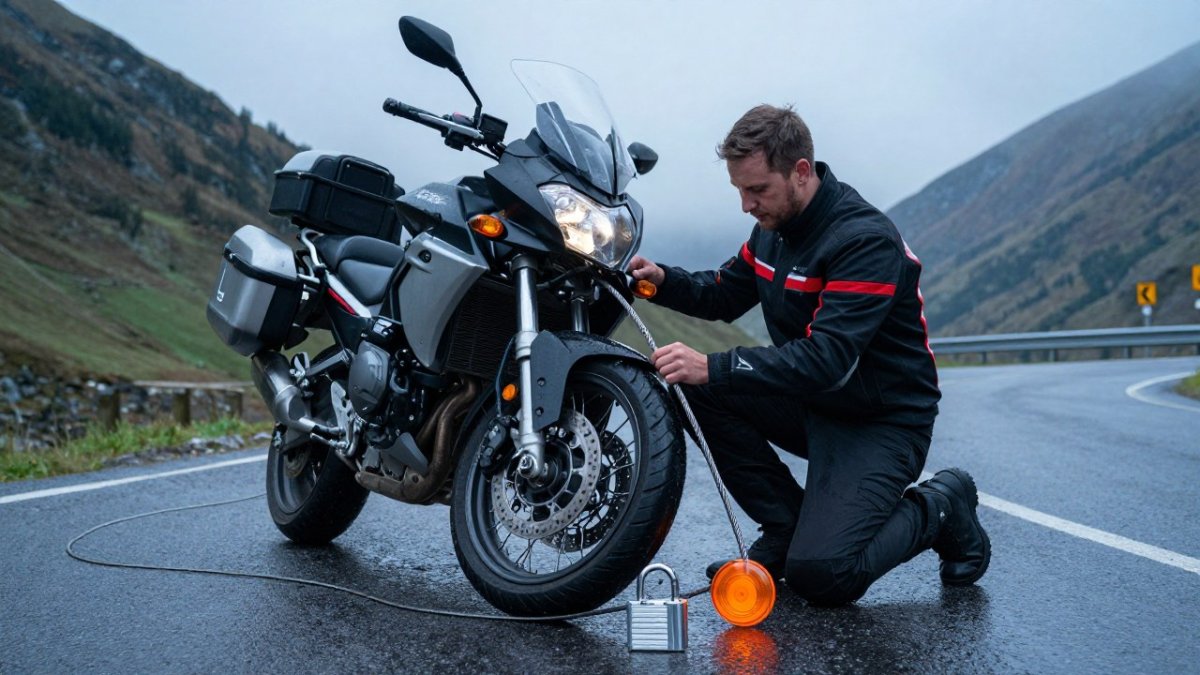
Quick Summary
The best motorcycle alarm for long-distance travel layers protection that works without a signal, such as a siren or disc-lock alarm, with a GPS tracker for recovery. Long trips leave your bike unattended in unfamiliar places, so a motorcycle alarm alone may not cover dead zones.
- GPS trackers depend on cellular coverage, so they may fail on remote routes.
- Wired siren alarms and disc-lock alarms keep working without a phone or signal.
- Factor annual cellular plan fees into the total cost of a tracker.
- Test alarm sensitivity at home to avoid false triggers at campsites and hotels.
- Check battery status each morning, as drain and cold weather reduce runtime.
Table of Contents
- Why Long-Distance Riders Need a Different Kind of Motorcycle Alarm
- Essential Security Features for Long-Distance Travel
- Best Motorcycle Alarm Systems Compared
- Motorcycle Security Devices for Touring: Layering Hardware Beyond the Alarm
- Power Planning, Connectivity Limits and Overnight Parking
- Choosing Your Setup Before the Next Ride
- Frequently Asked Questions
Why Long-Distance Riders Need a Different Kind of Motorcycle Alarm
Most motorcycle alarms are built for the rider who parks at home overnight. Long-distance travel changes the problem: your bike sits in unfamiliar lots, motel parking areas and roadside stops, often for days, with gear strapped on and your attention split.
A motorcycle alarm that works in a driveway may fail on the road. Signal coverage drops in rural stretches, batteries drain on long rides, and a loud siren means little if no one is nearby to hear it.
Essential Security Features for Long-Distance Travel
- Alert method. A siren deters a thief on the spot; a phone alert tells you the bike is being touched while you are inside a restaurant or motel. Many long-distance riders benefit from both.
- Location tracking. GPS tracking helps with recovery but depends on cellular coverage. Confirm the service works in the regions you plan to ride.
- Movement and tamper detection. Vibration or motion sensors catch attempts to move or tip the bike. Adjustable sensitivity reduces false alarms from passing trucks.
Watch out: an alarm that sounds constantly in busy parking lots trains people to ignore it. Test sensitivity settings at home before you rely on them on the road.
Best Motorcycle Alarm Systems Compared
The options below cover the main categories long-distance riders consider: GPS trackers with phone alerts, wired movement-detection alarms with sirens, and portable disc-lock alarms. The table compares travel-relevant specs: alert method, cellular subscription, power source, and portability. Prices shift often, so confirm current pricing and plan terms with the manufacturer before you buy.
| Product | Type | Alert Method | Power Source | Subscription Required | Portability | Best For |
|---|---|---|---|---|---|---|
| Monimoto 9 | GPS tracker | Phone push alerts + app location | Internal battery, user-replaceable | Yes, cellular plan | Small, mounts under seat or in fairing | Riders who want recovery and remote alerts |
| Monimoto 7 | GPS tracker | App alerts + location | Internal battery | Yes, cellular plan | Small, self-contained | Simple setup and long standby between charges |
| Scorpio SRX-900 | Wired movement alarm | Siren + optional remote | Wired to bike battery | No | Permanent install | Audible on-bike deterrence without a phone |
| ABUS Detecto 7000 RS1 | Disc-lock alarm | Siren | Replaceable battery | No | Pocket/saddlebag | Portable overnight and short-stop protection |
| YOHOOLYO Alarm Disc Lock | Disc-lock alarm | Siren | Rechargeable | No | Pocket/saddlebag | Budget portable alarm with USB charging |
Monimoto 9 and Monimoto 7: GPS Tracking With Phone Alerts
Monimoto GPS trackers are designed to send a push alert to your phone when the bike moves and then report location so you can recover it.
The travel-relevant consideration is how these devices behave when you are far from the bike.
Pros: Phone alerts when the bike is disturbed and location reporting for recovery.
Skip if: your route runs through long stretches with weak cellular service and you need protection that works without a signal.
Scorpio SRX-900: Hands-Free Movement Detection and Siren
The Scorpio SRX-900 is a wired siren alarm with movement detection.
The trade-off is installation.
Pros: Siren works without a phone or cellular connection, movement detection catches attempts to move or tip the bike, and no recurring subscription.
Cons: Permanent installation, no location tracking, and a siren only helps if someone is close enough to hear it and respond.
Skip if: you need to locate a stolen bike or receive alerts when you are away from it.
ABUS Detecto 7000 RS1 and YOHOOLYO: Disc Lock Alarms
Disc-lock alarms combine a brake-disc lock with a motion-triggered siren. They are the most portable option here: they fit in a saddlebag or jacket pocket, move between bikes, and need no wiring.
Check current listings for pricing before buying. A disc-lock alarm protects the bike on the spot but offers no tracking.
Pros: Portable, no permanent wiring, and an immediate siren at the bike.
Cons: No location tracking.
Skip if: you need recovery tools or a permanent installation.
How to Read This Comparison on the Road
Spec sheets do not tell you how a device behaves on a multi-day trip. Three practical checks matter more than the marketing copy:
- Does it work without a signal? A siren or disc-lock alarm keeps working in a dead zone; a GPS tracker does not. If your route includes mountain passes or rural highways, plan for at least one no-signal layer.
- What does it cost over a year? Add the purchase price to any subscription, replacement batteries, and charging accessories. A cheaper tracker with a higher annual plan can cost more over three seasons than a wired alarm with no recurring fee.
- Can you move it between bikes? Portable devices suit riders who swap bikes or rent on trips; wired systems suit a single touring bike.
Watch out: a device that alerts you but cannot be heard or acted on at 2 a.m. in an unfamiliar lot is not real protection. Match the alert method to how far you will actually be from the bike when it goes off.
Motorcycle Security Devices for Touring: Layering Hardware Beyond the Alarm
No single device covers every risk on a long trip. Layering several types of protection gives you more options if one fails. A common approach pairs an alarm with physical hardware that keeps the bike and its contents in place.
- Alarm plus disc lock. An alarm alerts you, while a disc lock slows a thief who gets close to the bike.
- Locks on saddlebags and seats. Securing saddlebags and seats keeps gear from being taken even when the bike itself is not stolen. Robert Becker Design makes locks for saddlebags, seats and mounting arms for Harley-Davidson and Indian touring models.
- Protection for GPS units and accessories. Mounting hardware and GPS units are frequent targets on touring bikes. Locking them down closes an easy opening.
Match the number of layers to the parking situation. A secured hotel garage may need only a light deterrent, while an overnight stop on a busy street justifies alarm, disc lock and locked gear together.
Power Planning, Connectivity Limits and Overnight Parking
Most alarm reviews stop at the spec sheet. On a multi-day trip, the questions that decide whether your security actually works are about power, signal, and where you park.
Power Planning for Multi-Day Trips
Battery-powered trackers and disc-lock alarms need planning on the road, because runtime depends on temperature, alert frequency, and how often you check the app. A few planning habits prevent the common failures:
- Know the standby versus active runtime. A tracker may last weeks in standby but drain quickly once it starts sending alerts and location updates. Cold weather reduces battery capacity, so a device that lasts a month in summer may last noticeably less on a cold-weather trip.
- Carry the right charging gear. Disc-lock alarms with rechargeable batteries need a USB charger and cable; some trackers use replaceable batteries you should carry as spares.
- Watch for drain on wired alarms. A wired siren alarm draws from the motorcycle battery. Check the bike's battery health before a long trip and consider a maintainer or jump pack.
Connectivity Limits on the Road
GPS trackers and phone alerts depend on cellular coverage, and coverage is not uniform along touring routes. Mountain passes, national parks, rural highways, and some campgrounds have gaps.
Outside coverage, a cellular-based tracker generally cannot send an alert or report a location. That does not make it useless, but it changes how you use it: the tracker becomes a recovery tool for when you return to coverage, not a live alarm.
Overnight Parking and False Alarms
Where you park matters as much as what you carry:
- Choose light and foot traffic when you can. A bike parked in a lit area near an entrance is a harder target than one in a dark corner.
- Position for audibility. If you rely on a siren, park where the sound will be heard by someone who might respond.
- Tune sensitivity before the trip. Wind, passing trucks, and other travelers bumping the bike can trigger motion sensors. Test settings at home and set sensitivity to catch tampering without constant noise.
Watch out: a siren that goes off repeatedly at a campsite can get you asked to leave, and it teaches everyone nearby to ignore the alarm. Adjust sensitivity before you park, not after the first false trigger.
Layering by Travel Scenario
No single device covers every risk. Match the layers to the parking situation:
- Touring on remote routes. A wired siren alarm plus a disc lock gives you protection that works without a signal; add a tracker if you want a recovery path once you return to coverage.
- Roadside stops and meal breaks. A disc-lock alarm is fast to deploy and portable; a tracker adds remote notification if you will be out of sight for a while.
- Overnight at a hotel or motel. A disc lock on the front wheel, a tracker for recovery, and locked saddlebags and gear cover the most common risks. Park in light and foot traffic when possible.
Total Cost and Realistic Expectations
Budget for more than the purchase price. Add any annual cellular plan, replacement batteries, charging accessories, and the cost of a second layer such as a disc lock. Over a few seasons, a cheaper tracker with a higher plan can cost more than a wired alarm with no recurring fee.
Set realistic expectations, too. An alarm deters and notifies; a tracker helps with recovery; neither guarantees you get the bike back.
Choosing Your Setup Before the Next Ride
Start with the risk you face most often. If you park in busy urban lots, a siren and disc lock may serve you best.
Check the current price and compatibility of each product with your model before buying. For locks on saddlebags, seats and mounting hardware for Harley-Davidson and Indian touring bikes, visit the Robert Becker Design website for current pricing or a quote.
Frequently Asked Questions
What are the most effective anti-theft devices for motorcycles?
Most experienced touring riders combine two or more layers: a disc lock or chain to immobilize the bike, an audible alarm to deter tampering, and a GPS tracker to support recovery. No single device stops every thief, but layering raises the time and noise a thief must accept. For long trips, prioritize devices with alerts that reach your phone, since you will not be near the bike at most overnight stops. Pricing varies by model and subscription terms, so confirm current costs with each manufacturer before buying.
Is a GPS tracker or an alarm better for motorcycle security?
They solve different problems. An alarm deters tampering and alerts you when someone moves the bike, which helps while you are nearby or within earshot. A GPS tracker helps you locate the motorcycle after it has been stolen, which matters most when the bike is parked far from where you are staying. Many long-distance riders use both. Check whether a GPS tracker requires a subscription and whether cellular coverage exists along your route, since coverage gaps in rural areas can interrupt location updates.
Can a motorcycle alarm drain the battery while touring?
A motorcycle alarm draws power continuously while armed, so battery drain is a real concern on multi-day trips. Battery-powered units avoid draining the motorcycle battery, but they need recharging or battery replacement on their own schedule. Before a trip, check the rated standby life, carry a charger or spare batteries if the device uses them, and confirm whether the alarm can be disarmed or set to a low-power mode when the bike is parked for long periods. Verify these details against the manufacturer's specifications, since the supplied research does not confirm battery figures for each model.
How can I secure a motorcycle during overnight stops?
Park in a well-lit area where other vehicles and people are present, and avoid leaving the bike on quiet streets. Use a disc lock or chain through a solid anchor point, and arm an alarm before you walk away. Remove or lock saddlebags and any detachable items, since loose gear is a common target. If you have a GPS tracker, confirm it is active before you leave the bike. Where the parking area allows it, a secure garage or motorcycle-specific parking spot reduces risk more than any single device.
