
Quick Summary
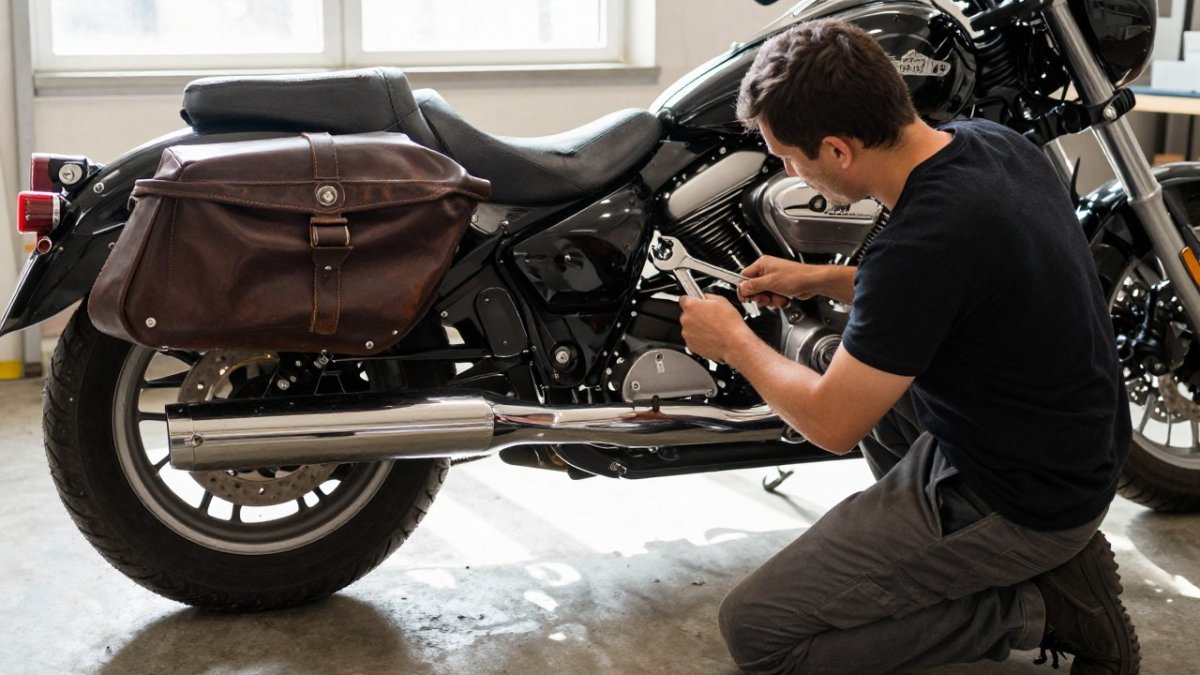
The best saddlebag security combines three layers: a lock on the bag, secure mounting so the bag cannot be lifted off, and a deterrent or tracker at the bike level. A factory lid lock alone rarely protects the bag, because thieves often attack the mounting bracket instead.
- Factory lid locks often leave the mounting bracket exposed, which is the weak point thieves target.
- Locking mounting pins or brackets are the best first purchase for removable hard cases.
- Cable or strap locks through the carry handle suit soft bags and act as a secondary layer.
- Dry-fit aftermarket hardware before drilling, since misaligned locks can give false security.
- Pair a locking attachment with an alarm or GPS tracker for theft recovery.
Table of Contents
- Why Saddlebags Are a Target and What Security Has to Cover
- Motorcycle Saddlebag Locks Compared: Built-In, Aftermarket and Universal
- Harley-Davidson Saddlebag Security: Fit, Mounting Points and Compatibility
- Saddlebags Without Built-In Locks: Securing Soft Bags, Hard Cases and Removable Luggage
- Motorcycle Alarm and Tracker Options That Complement a Saddlebag Lock
- Real-World Attack Resistance and Where Each Product Falls Short
- Choosing Your Saddlebag Security Setup and Getting Pricing From Robert Becker Design
- Frequently Asked Questions
Why Saddlebags Are a Target and What Security Has to Cover
Saddlebags are one of the most exposed parts of a touring motorcycle. They sit at waist height, they're often packed with valuables, and many riders leave them loaded while they grab coffee or check into a hotel. The question isn't whether to secure them, but how much protection you need and which hardware delivers it.
A good saddlebag security setup covers three things: the bag, the contents, and the bike it attaches to. A lock that keeps the lid shut does little if a thief can slice the bag off the mounting rails in seconds. Effective security works in layers, a locking mechanism, secure mounting, and some form of deterrent or tracking.
Motorcycle Saddlebag Locks Compared: Built-In, Aftermarket and Universal
Saddlebag locks are not interchangeable, because a saddlebag is not a single object. It is a lid, a closure, a shell, and a mounting system, and each can be the point a thief attacks. The right lock depends on which of those four your bag relies on.
Start with the bag's construction. Hard cases, molded plastic or aluminum, usually have a hinged lid with a latch and a separate mounting bracket. Soft bags, leather, vinyl, or textile, close with zippers, buckles, or roll-tops and hang from straps or a rigid frame.
| Lock Type | Best For | What It Actually Secures | Main Drawback |
|---|---|---|---|
| Built-in factory lid lock | Stock hard bags on a stock bike | The lid latch only | Often the weakest point; the mounting bracket is still exposed |
| Aftermarket lid or latch lock | Hard bags with a weak factory latch | The lid and, on some designs, the latch mechanism | May require drilling or fitting; alignment is critical |
| Locking mounting pins or brackets | Removable hard cases and quick-release bags | The bag-to-bike attachment | Does not protect the lid or contents |
| Cable or strap lock | Soft bags, roll-tops, and bags with a carry handle | The bag as a unit, anchored to the frame | Limited cut resistance; best as a secondary layer |
| Zipper or closure lock | Soft bags with two-way zippers | The closure itself | Only as strong as the zipper slider and fabric |
Built-in factory locks are convenient, but most are designed to keep an honest rider honest. On many touring bags the factory lock secures the lid latch while the mounting bracket remains a separate, often plastic, component. A thief who understands the bag will attack the bracket, not the lock.
Locking mounting pins and brackets address the attachment directly. These replace or supplement the factory quick-release hardware so the bag cannot be lifted off the bike without a key.
Cable and strap locks are the flexible option for soft bags. A coated steel cable looped through the carry handle and around a frame member keeps the bag from being carried off, but it does not stop a thief from opening the bag where it hangs.
Watch out: a lock that does not align with your bag's existing mounting points can be worse than no lock, because it gives a false sense of security while leaving the bracket exposed. Dry-fit any aftermarket hardware before you commit to drilling.
Many riders combine two approaches, a locking bracket for the attachment and a cable or closure lock for the bag, then add an alarm or tracker at the motorcycle level. That layering is covered later.
Locking Saddlebags Versus Aftermarket Add-On Security
The real comparison is between a bag whose security is built into its design and a bag secured with add-on hardware. Built-in locks protect the lid; add-on security can protect the attachment, the closure, or the bag's relationship to the bike, often all three at once.
Add-on security earns its place when a factory lock is weak, when the bag is removable, or when you want a visible deterrent that makes a thief move on. Common add-ons include coated cables looped through the carry handle and anchored to the frame, hardened pins that block the quick-release bracket, and locking straps that replace the factory retention strap. The trade-off is real: every add-on adds weight, a step at every stop, and something else to lose. A lock you skip because it takes two minutes is not security.
For most touring riders, the practical setup is a sound factory or aftermarket lid lock plus one added layer that makes removal slow, usually a locking bracket on removable cases or a cable on soft bags. Two well-chosen layers beat four fussy ones.
Harley-Davidson Saddlebag Security: Fit, Mounting Points and Compatibility
Harley-Davidson touring models use a range of saddlebag designs across model years, and mounting points are not identical from bike to bike. Before buying any security product, confirm the fit for your specific model and year. A product that fits a 2019 touring bike may not align with a newer frame or with aftermarket bags you've installed.
Compatibility questions to check before ordering:
- Does the product match your bag style, hard or soft?
- Does it use existing mounting points, or does it require new holes?
- Will it interfere with aftermarket accessories, such as a rack or a trunk?
- Are the installation steps something you can do with basic tools?
Robert Becker Design designs its saddlebag and seat locks for Harley-Davidson and Indian touring models. If you've already added custom mounting points, contact us with your model year and a description of your setup so we can confirm fit before you buy. For current prices, check the website or request a quote.
Saddlebags Without Built-In Locks: Securing Soft Bags, Hard Cases and Removable Luggage
Not every saddlebag has a lock, and the ones that don't fail in different ways. A soft throw-over bag, a removable hard case, and a rigidly mounted aftermarket bag each present a different attack surface, so the security approach should change with the bag type rather than defaulting to a cable.
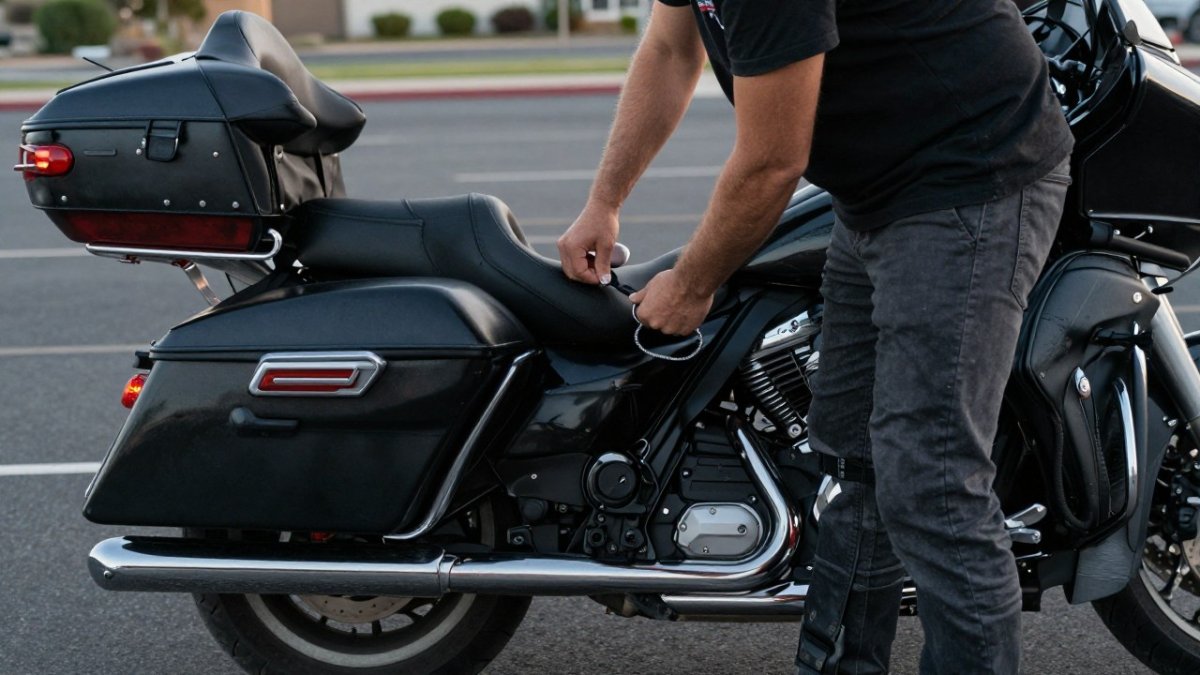
Soft bags (leather, vinyl, textile). These usually attach with straps over the seat or a rigid yoke, close with zippers, buckles, or roll-tops, and carry a handle or D-ring. The bag itself is the weak point: fabric and stitching cut faster than any lock.
Removable hard cases. These are the highest-risk category because the whole case lifts off in seconds if the quick-release latch is not locked. The priority is the mounting system, not the lid.
Rigidly mounted aftermarket bags. Bolt-on bags are harder to remove but often have simple buckle or strap closures. Here the closure is the target. A locking strap that replaces the buckle, or a small padlock through the buckle tongue, slows entry.
Watch out: a cable routed through a soft bag's handle can tear the handle off before the cable fails, which leaves the bag undamaged but gone. Route through a reinforced D-ring or the mounting yoke when the bag has one.
Removable luggage also needs a habit change. If you will be away from the bike for more than a few minutes, a restaurant meal, a museum, an overnight hotel, take the bag with you or lock it in a secure location.
Finally, match the lock to the bag's material. A hardened padlock on a soft bag's zipper protects the slider but not the fabric; a cable through a hard case's handle protects the case but not the latch.
Motorcycle Alarm and Tracker Options That Complement a Saddlebag Lock
A saddlebag lock protects what's inside and the bag itself. Alarms and trackers protect the motorcycle and give you a way to recover it.
Here's how the main options compare:
- GPS trackers: A tracker doesn't stop a theft, but it can help you locate the bike afterward.
Garmin GPS units mounted on touring bikes are also a theft target. Robert Becker Design offers mounting solutions designed to secure GPS units.
Real-World Attack Resistance and Where Each Product Falls Short
No lock is theft-proof. Thieves with the right tools can defeat most consumer-grade security given enough time. The practical goal is to make your bike or bag a harder target than the one parked next to it.
Be realistic about limitations:
- Factory locks are usually the weakest part of a saddlebag and are often the first thing defeated.
- Cables can be cut with portable tools. Thicker, hardened cables and tight routing make attacks slower.
- Alarms deter some thieves and alert bystanders, but they can be ignored in busy areas and may generate false alarms.
- GPS trackers help with recovery, not prevention, and they depend on battery life and signal coverage.
- Mechanical locks are only as good as their installation. A poorly aligned lock can be more vulnerable than a simple one installed correctly.
For riders in high-theft areas or those who leave bikes parked overnight, layering matters most. Pair a hardened lock with an alarm or tracker, park in well-lit spaces, and remove high-value items from the bags whenever you leave the bike unattended.
Choosing Your Saddlebag Security Setup and Getting Pricing From Robert Becker Design
Start by matching your setup to your riding habits. If you travel often and park in busy urban areas, prioritize a strong lock plus a tracker. If you mostly ride locally and keep the bike in a garage, a well-fitted lock may be enough.
Checklist before you buy:
- Confirm the product fits your model year and bag style
- Check whether installation requires drilling
- Decide whether you need a deterrent, a tracker, or both
- Compare the total cost, including any subscription fees
- Verify the return or support policy
Robert Becker Design produces theft-prevention locks engineered for motorcycle saddlebags, seats, and mounting arms, along with mounting solutions for Garmin GPS units. Our line is built around Harley-Davidson and Indian touring models.
Pricing varies by product and quantity, and we don't publish a standard price range here. For current pricing, visit our website or request a quote directly, and we'll confirm fit for your bike before you order. Shop All on our site to see the full range.
Frequently Asked Questions
What are the most effective anti-theft devices for motorcycles?
Most experienced riders layer several devices rather than relying on one. A disc lock or chain is a mechanical deterrent that slows a thief down, while an alarm draws attention and a GPS tracker helps with recovery if the bike is taken. For saddlebags specifically, a lock on the bag itself or a lock that secures the bag to the frame adds protection that a general motorcycle lock does not. Check each device's fit with your model and whether it works with your existing mounting points before buying.
Are motorcycle saddlebag locks universal?
No. Saddlebag locks are generally designed around specific bag designs and mounting hardware, so a lock that fits one Harley-Davidson touring model may not fit another or an Indian. Aftermarket saddlebags and hard cases can also differ in latch design. Confirm the model year, bag type and mounting points against the product specifications before ordering, and ask the manufacturer for compatibility details if the listing does not state them clearly.
How can I secure Harley-Davidson touring saddlebags?
Start with the bag's own latch and lock, then add a second layer that prevents the bag from being removed from the frame. Stock locking saddlebags resist opportunistic theft, but aftermarket add-on security can cover bags that lack built-in locks or hardware that is easy to pry. Mounting-point compatibility matters, so check whether the solution installs without drilling new holes, particularly if your bike already carries aftermarket accessories.
Can a motorcycle alarm protect saddlebags from theft?
An alarm can deter a thief by sounding when the bike or bags are disturbed, but it does not physically stop removal of a bag. Pair an alarm with a lock that secures the bag itself. A GPS tracker adds recovery capability if the whole motorcycle is taken. Battery life, subscription costs and whether the alarm triggers on bag movement are worth confirming before you buy.
