
Last Updated: November 16, 2026
Quick Summary
Keep a chrome finish bright by rinsing off road grime and salt after every ride, washing with a pH-neutral soap, drying fully, and applying wax every few weeks. Harsh cleaners, abrasive scrubbing, and water spots are the most common causes of damage. Most chrome failure comes from neglect, so small, regular care prevents it.
- Rinse parts after every ride to remove road grime, salt, and moisture.
- Use a pH-neutral wash soap instead of dish soap or household cleaners.
- Dry chrome immediately with a clean microfiber towel to prevent water spots.
- Apply protective wax every few weeks to shield the metal underneath.
- Test polish on a small hidden area first; deep pitting needs professional repair.
Table of Contents
Most chrome finish damage on motorcycle parts comes from neglect, not bad luck. Riders often lose their chrome finish to the same few mistakes again and again. The good news is that each mistake is easy to avoid once you know what to watch for.
Chrome is a thin layer of plating over a base metal. Once that thin layer breaks down, the base metal underneath starts to rust and pit. Road grime, salt, moisture, and harsh cleaners all wear down that layer over time.
Here are the most common causes of chrome failure:
- Washing with dish soap or household cleaners that strip the finish
- Scrubbing with abrasive pads or dry rags that leave fine scratches
- Leaving water spots and mineral deposits to dry on the surface
- Riding through salt, rain, or winter road treatment without rinsing
- Skipping protective wax, which leaves the metal exposed
A common mistake is treating chrome like painted metal. Chrome needs gentler products and more frequent care than most riders expect.
| Cause | What It Does | How to Prevent It |
|---|---|---|
| Harsh cleaners | Strips the plating | Use a pH-neutral chrome cleaner |
| Abrasive scrubbing | Creates fine scratches | Use a soft microfiber cloth |
| Water spots | Etches the surface | Dry parts fully after washing |
| Road salt | Speeds up corrosion | Rinse parts after every ride |
| No protection | Exposes bare metal | Apply wax every few weeks |
Watch out: Using a scouring pad on chrome can leave swirl marks that are hard to remove later.
How to Tell Chrome Plating From Chrome-Look Finishes
Before you pick a cleaner, you need to know what your parts are made of. Many motorcycle parts look like chrome but use a different finish.
Real chrome plating is a hard, mirror-bright metal layer. Chrome-look finishes include painted parts, powder-coated parts, and stainless steel with a polished surface. Each one needs different care.
A simple test helps. Chrome-plated parts are usually cold and reflect sharply. Painted or coated parts often feel slightly warmer and show a softer reflection.
- Real chrome: hard, cold, sharp reflection, scratches show as bright lines
- Chrome-look paint: softer reflection, can chip or peel at edges
- Stainless steel: sharp reflection with a gray tint, rarely pits
Knowing the difference matters because a strong polish that is safe on stainless can damage a painted part.
Tools and Supplies You Need for Chrome Care
You do not need a large workshop to care for chrome. A small kit covers most jobs.
Here is a basic list:
- A pH-neutral wash soap made for motorcycles
- Two or more soft microfiber cloths
- A soft-bristle detailing brush for tight spots
- A chrome cleaner or fine metal polish
- A paste or liquid automotive wax with protection
- A bucket and a hose or spray bottle for rinsing
Keep separate cloths for washing, polishing, and waxing. Mixing them can carry grit from one job into the next.
Best Motorcycle Chrome Cleaner: How to Choose One
Look for a cleaner labeled safe for chrome and motorcycle finishes. Avoid anything with strong acids or heavy abrasives unless the label says it is designed for chrome.
Good cleaners usually do three things. They lift road film, remove light oxidation, and leave a thin protective layer. Check the label for these details before you buy.
Many riders buy a cleaner with a higher price tag and assume it works better. Price alone does not tell you much. Read the label and choose a product made for chrome.
How to Clean Chrome Without Scratching It
Follow these steps to clean chrome safely:
- Rinse the part with plain water to remove loose dirt and grit.
- Mix a pH-neutral wash soap with water in a bucket.
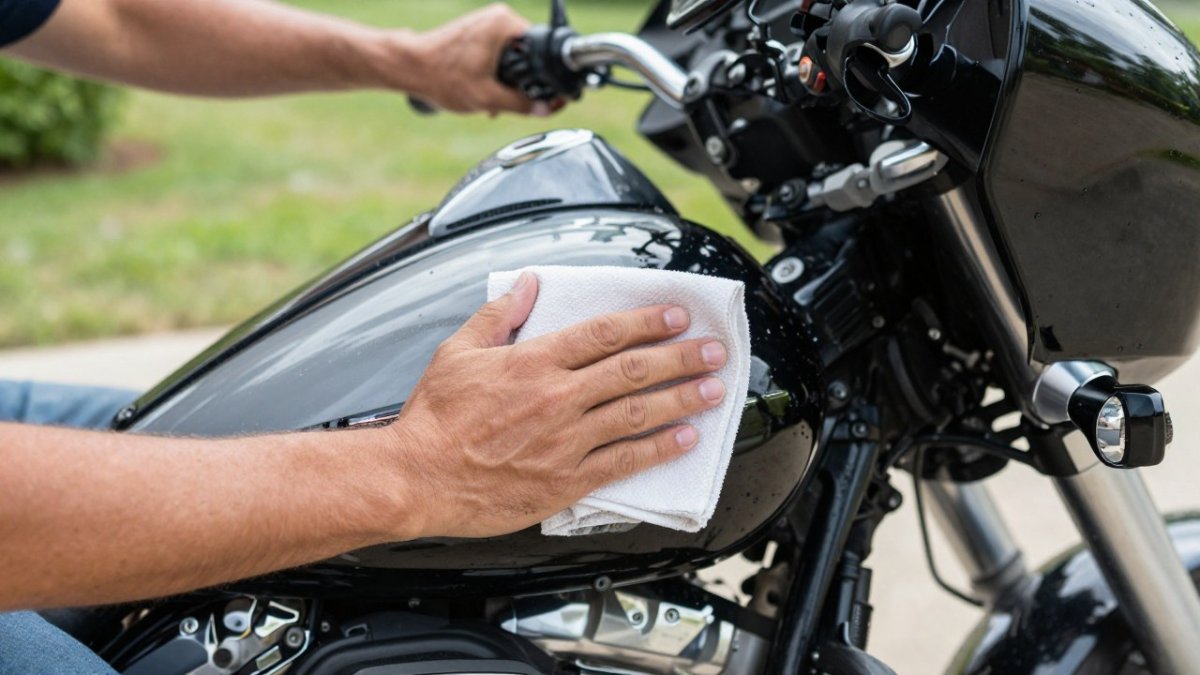
- Wash the part with a soft microfiber cloth, using light pressure.
- Rinse thoroughly with clean water.
- Dry immediately with a clean microfiber towel to prevent water spots.
- Inspect the surface in bright light for any remaining film.
Never let soap dry on chrome. Work on one section at a time, especially on hot days.
How to Clean Oxidized Chrome and Polish It by Hand
Light oxidation looks like a dull haze or faint spotting. Heavier oxidation shows as rust freckles or pitting.
For light haze, apply a small amount of chrome polish to a soft cloth. Rub in small, straight strokes. Wipe away residue with a clean cloth and check your progress.
For heavier spots, repeat the process several times. Test any new product on a small, hidden area first. If the spots are deep or the plating has worn through, polishing will not fix them and you will need professional repair.
Building a Chrome Care Routine for Rain, Winter and Coastal Riding
Your riding environment shapes how often chrome needs care. A simple routine by frequency keeps things under control.
- After every ride: rinse off road grime, salt, and moisture
- Weekly in dry weather: wash, dry, and inspect
- Every few weeks: apply wax for protection
- Before storage: clean, dry fully, and coat with wax
Riders in rain, winter, or coastal areas should rinse more often. Salt air and road treatment speed up corrosion. Park in a covered space when possible.
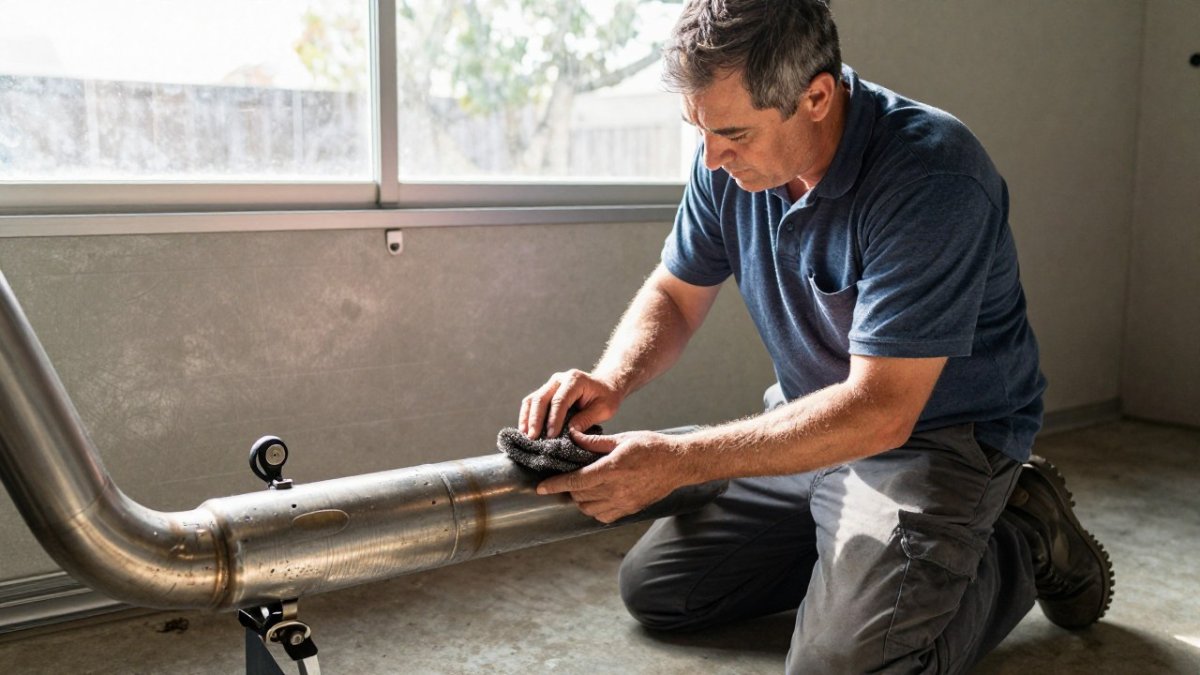
Heat-exposed parts, like exhaust-adjacent chrome, need extra care. Let them cool before cleaning, and avoid spraying cold water on hot metal.
Start Your Chrome Care Routine With the Parts You Ride Most
Begin with the chrome you see and touch most often, such as handlebars, mirrors, and fork tubes. These parts take the most wear and the most grime.
Set a simple schedule and stick to it. A few minutes after each ride prevents most chrome problems. Once you build the habit, your chrome will keep its shine for years.
For a full range of theft prevention hardware built for touring models, see what Robert Becker Design offers and request current pricing on our website.
Frequently Asked Questions
How do you clean motorcycle chrome without scratching it?
Rinse the part with water first to lift grit, then wash with a pH-neutral motorcycle soap and a soft microfiber cloth or wash mitt. Avoid steel wool, abrasive pads and dry rags, since trapped grit causes fine scratches. Rinse thoroughly, dry with a clean microfiber towel, and only then apply a chrome polish in light, straight strokes. Test any new cleaner on a small hidden area before using it across a visible part.
What is the best cleaner for motorcycle chrome?
The best choice is a non-abrasive chrome cleaner or metal polish labeled safe for chrome plating, used with a soft cloth. Mild cleaners handle road grime and light tarnish, while a finer polish restores shine on lightly dulled chrome. Avoid acidic or heavily abrasive products, which can thin the plating. Check the label for compatibility with your parts and read the application instructions before use.
How do you clean oxidized chrome on a motorcycle?
Start with a gentle wash to remove surface dirt, then use a fine chrome polish on a microfiber cloth to work on the discolored area. Light, repeated passes are safer than heavy pressure. If the oxidation has pitted the surface, polishing will not remove the pits, and the part may need professional re-chroming.
Does WD-40 protect chrome?
WD-40 can remove light grime and leave a thin film that slows moisture contact, but it is not a dedicated chrome protectant and does not provide lasting shine. For ongoing protection, use a metal polish or a paste wax designed for chrome, applied after cleaning and buffed off. Keep any product off painted surfaces and rubber seals, and wipe away excess so it does not attract dust.
