
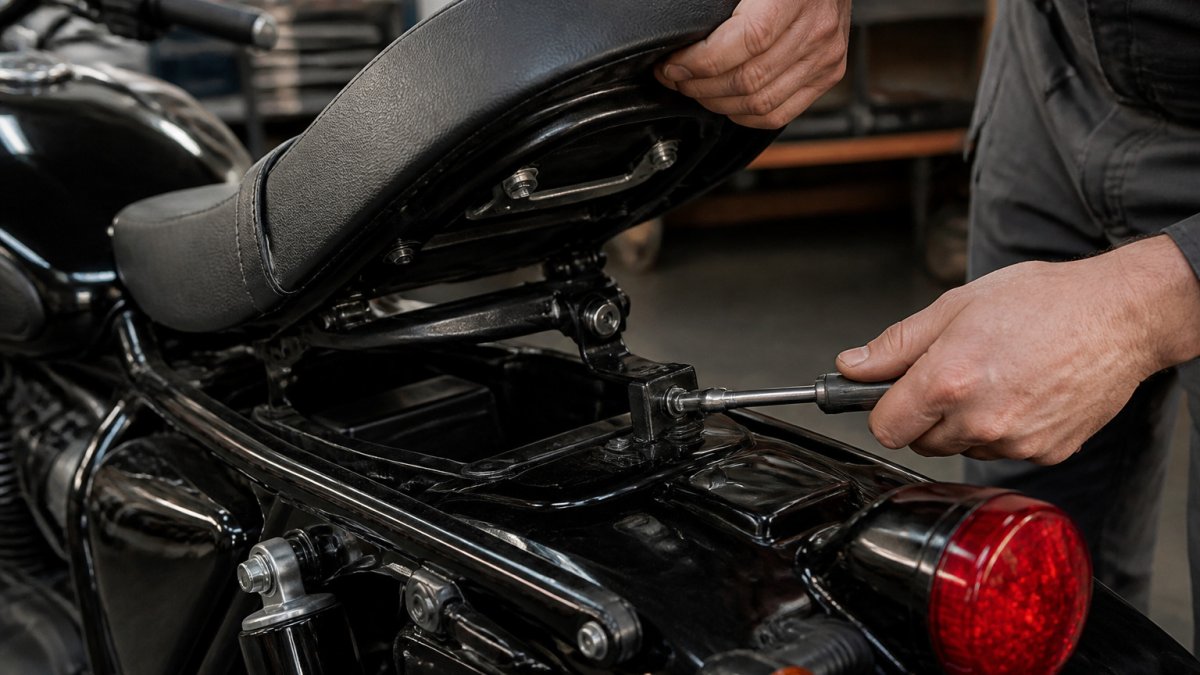
Last Updated: November 2, 2026
Quick Summary
Effective motorcycle seat security starts with replacing the stock seat bolt with a keyed or tamper-resistant security bolt, then adding a dedicated seat lock or secondary locking device for overnight parking. Match the hardware to your risk, measure your stock bolt before ordering, and torque to spec.
- Keyed fasteners use a physical key, while magnetic fasteners hide the release under a cap that looks stock.
- Measure thread diameter and pitch, length, head style, and material before buying a replacement seat bolt.
- Where no spec is published, a common torque pattern is roughly 5-9 ft-lb for M6 and 12-18 ft-lb for M8.
- The most common install failure is mixing thread sizes across brands or forcing a bolt that does not thread by hand.
- Check the fastener every few rides and lubricate the lock cylinder each season to fight corrosion.
Table of Contents
- Why Motorcycle Seat Security Matters More Than You Think
- Choosing a Seat Security Approach Before You Buy
- Motorcycle Seat Security Bolts: Replacing the Stock Bolt
- Picking a Motorcycle Seat Lock for Harley Touring Models
- How to Install a Motorcycle Seat Lock Step by Step
- Motorcycle Saddlebag Security and Under-Seat Storage
- Tools, Fitment Checks, and Safe Fastening
- Shop Seat Security Hardware for Your Touring Bike
- Frequently Asked Questions
Why Motorcycle Seat Security Matters More Than You Think
Your seat is the master key to your bike. Pop it off, and a thief has your battery, your ECM, and anything you stashed underneath. That is why motorcycle seat security deserves more attention than most riders give it. This guide from Robert Becker Design walks through the DIY upgrades that actually hold up.
Stock seats usually fasten with a single bolt or a plastic tab. A determined thief can defeat that with a screwdriver or a quick tug.
Below, we cover the main upgrade paths, how to install each one, and where the real limits sit. Robert Becker Design has developed theft-prevention hardware for touring motorcycles since 2012.
Choosing a Seat Security Approach Before You Buy
Start with your threat model, not the catalog. Ask two questions: who is likely to touch your bike, and how long will it sit unattended?
Three approaches cover most riders:
- Replacement security bolt: swaps the stock fastener for a keyed or tamper-resistant one. Best for quick stops and low-risk parking.
- Dedicated seat lock: adds a locking mechanism at the seat pan. Best for touring bikes that park overnight in cities.
- Secondary locking device: a cable or clamp that backs up the primary fastener. Best as a layered defense.
A common mistake is buying the heaviest option for a bike that never leaves a locked garage. Match the hardware to the risk. You will save money and installation time.
Magnetic and Keyed Fasteners Compared
Magnetic and keyed fasteners both replace the stock bolt, but they stop different attacks.
Keyed fasteners use a physical key to release the bolt. A thief without the key has to cut or drill the hardware. That takes time and noise.
Magnetic fasteners hide the release under a magnetic cap. The cap looks like a plain bolt head, so a casual thief does not even know there is a lock. The trade-off is that you must keep track of the magnetic key.
| Feature | Keyed Fastener | Magnetic Fastener |
|---|---|---|
| Visible to thief | Yes, looks like a lock | No, looks stock |
| Defeats casual tampering | Yes | Yes |
| Key to carry | Physical key | Magnetic key |
| Best for | Overnight parking | Theft-heavy street parking |
Neither option stops a thief with power tools and time. Both raise the effort enough that most walk away.
Motorcycle Seat Security Bolts: Replacing the Stock Bolt
Replacing the stock seat bolt is the fastest DIY win. It takes minutes, needs one or two tools, and costs far less than a dedicated lock. The trade-off is that a bolt swap is a deterrent, not a theft-proof lock.
Motorcycle seat security bolts are direct replacements for the OEM seat bolt. They use a keyed or tamper-resistant head so a standard wrench, hex key, or screwdriver will not turn them.
Identify your stock bolt before you buy
Pull the stock bolt first and measure it. Write down four numbers:
- Thread diameter and pitch: metric bolts are marked like M8 x 1.25 (diameter x pitch in millimeters); inch hardware is sold by diameter and threads per inch, such as 5/16-18. A coarse or fine mismatch will not seat.
- Length: measure from under the head to the tip. Too long and the bolt bottoms out in a blind hole; too short and it barely grabs.
- Head style and clearance: confirm the new head fits under the seat without rubbing the pan or foam.
- Material and finish: stainless steel resists corrosion but can gall in aluminum threads; zinc-plated steel is cheaper but rusts faster in wet climates. Use an anti-seize compound sparingly on stainless-to-aluminum threads.
If the bolt does not thread by hand, stop, forcing it can damage the seat pan or frame threads.
Torque and safe fastening
Seat bolts are small fasteners threading into thin pans or frame tabs, so torque matters more than most riders expect. Follow the service-manual spec for your model; where no spec is published, a common pattern is to snug the bolt to roughly 5-9 ft-lb (about 7-12 N·m) for an M6 fastener and 12-18 ft-lb (about 16-24 N·m) for an M8, then stop. These are general ranges, not a substitute for your manual.
Apply a drop of medium-strength thread lock compound to the threads, not the head, and torque in one smooth pull rather than a series of jerks. Overtightening a security bolt can strip the seat pan threads or crush a plastic tab; you are locking a seat, not clamping a cylinder head.
Cost and tools
The job needs only a socket set or hex keys, a torque wrench, and thread lock compound. Pricing depends on the keying system and finish; check Robert Becker Design's website for current prices.
Where the bolt swap stops working
A keyed or tamper-resistant bolt defeats a thief with a screwdriver and a minute to spare. It does not defeat a thief with a cordless drill, a cutoff wheel, or time alone with the bike. If your bike parks overnight on a street or in a shared garage, treat the bolt as one layer and pair it with a dedicated seat lock or a secondary locking device rather than relying on it alone.
Picking a Motorcycle Seat Lock for Harley Touring Models
Touring models often need more than a bolt, since the seat can cover a large storage area.
A motorcycle seat lock for Harley touring models should do four things:
- Fit the stock mounting points without drilling
- Lock the seat to the frame, not just the pan
- Survive vibration and weather
- Leave seat removal quick for you
Fitment is where most buyers get burned. Aftermarket seats, solo seats, and custom pans all change the mounting geometry. Measure your current setup before ordering. If you run a solo seat or a custom pan, confirm the lock brackets match your bolt pattern.
Indian touring owners should check compatibility for their specific model before ordering.
How to Install a Motorcycle Seat Lock Step by Step
Installation is typically a bolt-on job for most riders with basic hand tools and a clean work surface.
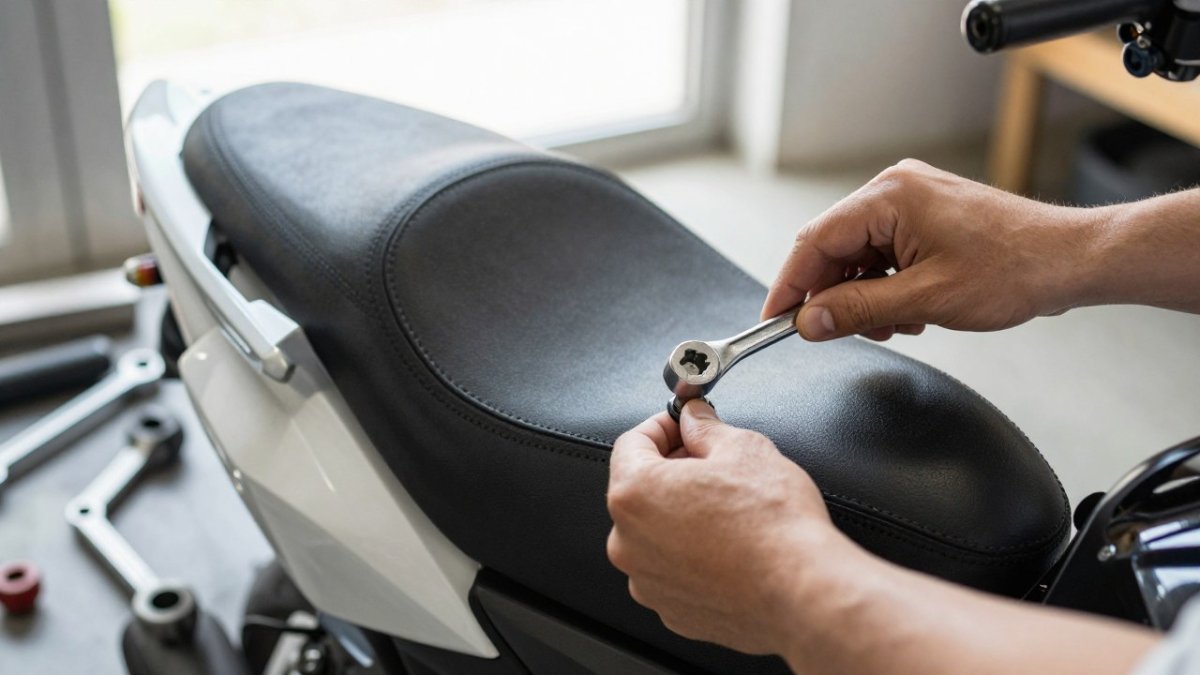
What you'll need:
- Socket set and hex keys in the sizes your bike uses
- Torque wrench rated for low values (most seat hardware is under 20 ft-lb)
- Your new lock or security bolt and its mounting hardware
- A clean rag, thread lock compound, and a small amount of anti-seize if mixing stainless and aluminum
- A soft towel or moving blanket to protect the seat pan
Step 1: Remove the seat. Take out the stock bolt or release the stock latch and lift the seat off the frame.
Step 2: Identify your mount style and check the mounting points. Look at the seat pan and frame tabs.
Step 3: Test-fit the lock. Set the lock in place without tightening. Check that the seat still sits flush, the release works, and the lock does not bind against the pan, foam, or any under-seat component.
Step 4: Apply thread lock and tighten. Add a drop of medium-strength thread lock to the bolt threads, then snug it to the service-manual spec.
Step 5: Reinstall the seat and test. Seat it fully, lock it, then try to lift it. It should not budge. Unlock it and confirm it releases smoothly.
Step 6: Check access to under-seat storage. With the seat locked, confirm you can still reach the battery, fuses, and any tools or registration you keep under the seat when you unlock it.
Removing and Reinstalling the Seat
Once the lock is on, seat removal works the same way, just with a key. Unlock, remove the fastener or release the latch, lift the seat. Reinstall in reverse. Keep the key on your main ring so you never ride off without it. A lock you cannot open at a gas stop is a bad day.
Fitment notes by mount style
- Single-bolt: the simplest swap; confirm thread size and length before ordering, and check that the new head clears the seat pan.
- Two-bolt: measure both bolts; they are often different lengths, and mixing them up can bottom out one side.
- Tab-and-latch: the lock usually replaces or supplements the rear latch; confirm the front tongue still engages fully and the seat does not rattle.
- Aftermarket or solo seats: mounting geometry changes, so measure your current setup and confirm the lock brackets match your bolt pattern before ordering.
Watch out: the most common install failure is mixing thread sizes across brands or forcing a bolt that does not thread by hand. Stop and re-measure rather than damaging the pan or frame threads.
Motorcycle Saddlebag Security and Under-Seat Storage
Your seat protects more than foam and vinyl. Under-seat storage often holds your tools, registration, and sometimes a GPS or comms unit.
Motorcycle saddlebag security matters for the same reason. Saddlebags on touring models are easy targets, and stock latches are not locks. A thief can pop a bag and walk with your gear in under a minute.
Layer your defense:
- Lock the seat to keep the under-seat cavity closed
- Consider saddlebag locks to secure the bags themselves
- Consider a GPS mount lock if you run a Garmin zumo or Montana unit
The goal is to make every target slow and loud. Thieves pick the easy bike.
Tools, Fitment Checks, and Safe Fastening
Fitment errors cause most seat security problems. A bolt that threads wrong or a lock that binds will fail when you need it.
Run this checklist before you install:
- Stock bolt measured for thread size and length
- New hardware matches OEM specs
- Seat pan and frame tabs clean and undamaged
- Lock clears the seat when closed
- Release works smoothly before final tightening
- Thread lock applied, torque to spec
- Seat locks and will not lift
Watch out: mixing thread sizes across brands is the most common install failure. If the bolt does not thread by hand, stop. Forcing it damages the pan.
Maintenance is simple. Check the fastener every few rides, and add a drop of lubricant to the lock cylinder each season. Corrosion is the quiet killer of security hardware.
Shop Seat Security Hardware for Your Touring Bike
DIY seat security comes down to three moves: replace the stock bolt, add a dedicated lock, and layer in saddlebag and GPS protection. Each one is a bolt-on job you can do at home.
Robert Becker Design builds theft-prevention locks for seats, saddlebags, and mounting arms, designed by riders for Harley-Davidson, Indian, and other touring models. Our hardware is designed for stock and aftermarket setups, including solo seats. We have been at this since 2012.
Visit Robert Becker Design's website to shop the current lineup and get pricing.
Frequently Asked Questions
Can I secure a motorcycle seat with security bolts?
Yes. Replacing the stock seat bolt with a keyed or tamper-resistant security bolt is the simplest upgrade. Match the thread size and length to your bike, torque it to spec, and keep the removal key somewhere other than the bike. A security bolt stops a quick grab, but pair it with a seat lock if you park in high-theft areas.
Will a seat lock fit my Harley touring model?
Fitment depends on the seat pan and mounting points. Check compatibility for your specific model before ordering, and measure your bolt location if you run a custom seat.
What is the most effective theft deterrent for a motorcycle?
Layered security works better than any single device. Add saddlebag locks and a GPS mount lock if you run a zumo or Montana unit.
How do I protect items stored under the seat?
The seat itself is the door to under-seat storage, so locking it down protects what is inside. Keep high-value items out of the bike overnight, and treat any lock as a delay rather than a guarantee.
