
Table of Contents
- What Motorcycle Locks Actually Do to a Thief
- Types of Motorcycle Locks: Strengths and Weaknesses
- Layered Security: Why One Lock Is Never Enough
- Motorcycle Theft Prevention Tips for Travel
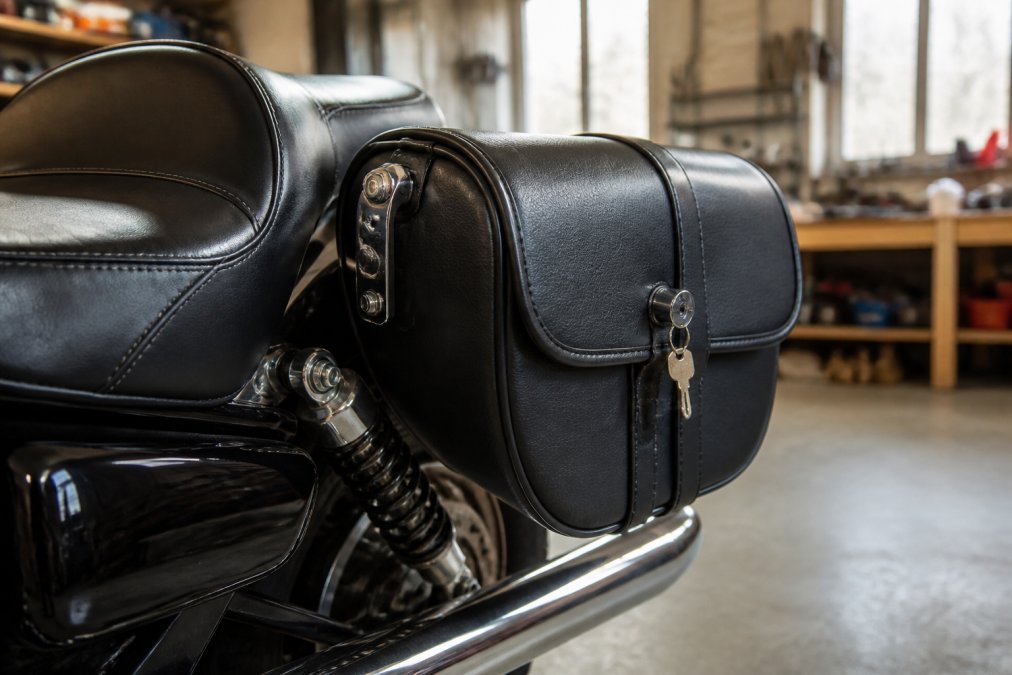
- How to Secure Motorcycle Saddlebags
- Motorcycle Seat Lock Security: Protecting Your Seat and Accessories
- Choosing the Right Lock: Materials, Ratings, and Smart Tech
- Frequently Asked Questions
Last Updated: September 2, 2026
What Motorcycle Locks Actually Do to a Thief
Motorcycle locks are physical and psychological tools that raise the cost of theft high enough that most thieves move on to an easier target. No single lock stops a truly determined, well-equipped thief. What locks do, when chosen and used correctly, is make your bike the wrong choice.
Most motorcycle theft is opportunistic. Thieves scan a parking area, identify the easiest target, and act fast. A bike with visible, high-quality locks is simply not worth the time, noise, and risk compared to the unprotected bike two spaces over.
According to the National Insurance Crime Bureau motorcycle theft data, motorcycles are stolen at a disproportionately high rate relative to other vehicles, with summer months seeing the sharpest spikes. The vast majority of those thefts share one characteristic: the bikes were either unsecured or secured with a single, low-quality lock.
Psychological Deterrence vs. Physical Resistance
Physical resistance is how long a lock can withstand a direct attack: bolt cutters, angle grinders, freeze spray, or brute force. Hardened steel shackles and heavy-gauge security chains provide physical resistance measured in time.
Psychological deterrence works before the attack even starts. A visible alarmed disc lock or brightly colored security chain communicates risk to a thief. Many theft prevention professionals argue this is the more important function for everyday parking, because most thieves never attempt a lock they have to defeat, they just find a different bike.
The smartest security strategy uses both. Deterrence filters out opportunists. Physical resistance stops the ones who aren't deterred.
The 12-Second Rule and Why It Matters
A common benchmark in motorcycle security circles is the 12-second rule: if a thief can't begin moving your bike within 12 seconds, the risk calculation shifts against them. Noise, exposure, and the chance of being seen all increase with time. This is why immobilization matters as much as lock quality. Each layer of security adds seconds, and enough seconds means the thief walks away.
Types of Motorcycle Locks: Strengths and Weaknesses
Choosing the right motorcycle lock starts with understanding what each type actually does and where each one fails.
| Lock Type | Physical Resistance | Deterrence Value | Portability | Best For |
|---|---|---|---|---|
| Disc Lock | Medium-High | High (especially alarmed) | Excellent | Daily parking, travel |
| U-Lock | High | Medium | Good | Urban parking, secondary lock |
| Security Chain | Very High | Very High | Low-Medium | Home storage, long-term parking |
| Ground Anchor | Maximum | Very High | None | Garage and fixed locations |
| Cable Lock | Low | Low | Excellent | Low-risk areas only |
| Fork Lock | Low-Medium | Medium | Built-in | Supplement only |
Disc Locks and Alarmed Disc Locks
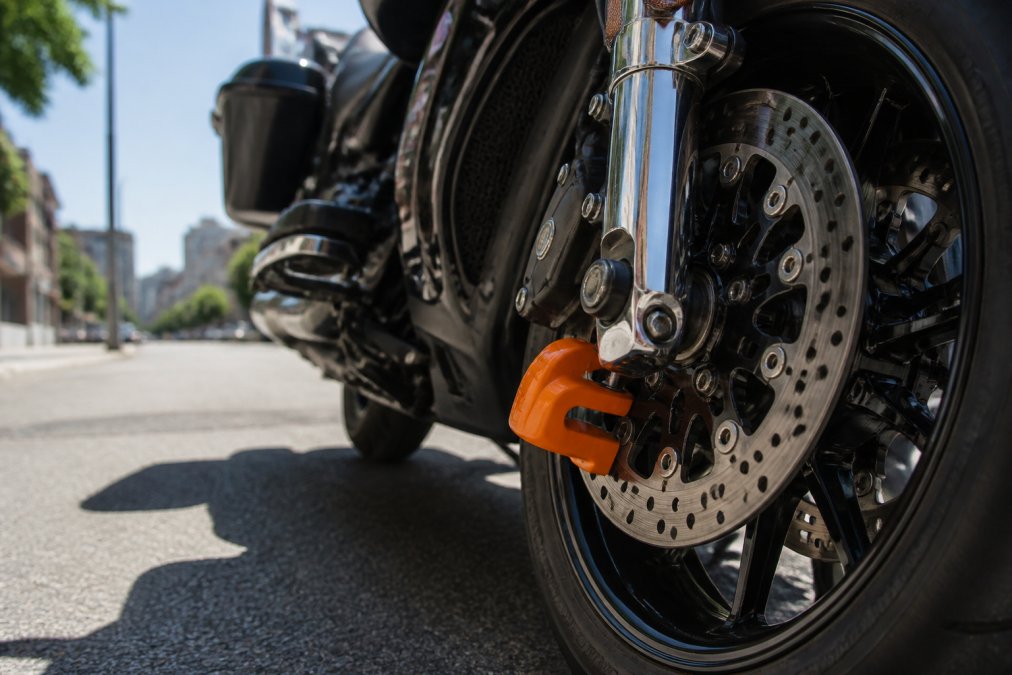
A disc lock clamps onto the brake rotor, physically preventing the wheel from rotating. Quality disc locks use hardened steel bodies and anti-pick cylinders. The alarmed variant adds a motion-sensitive siren, signaling to the thief that the bike is actively monitored and changing the risk calculation immediately.
The weakness of a disc lock used alone: a bike can still be lifted and carried. This is why disc locks are most effective as part of a layered security approach.
Pros: Compact, highly portable, fast to deploy, alarmed versions add strong deterrence. Cons: Does not prevent lifting; a reminder cable is essential to avoid riding off with it attached.
U-Locks, Security Chains, and Ground Anchors
U-locks offer a rigid, tamper-proof shackle in a compact form. The best models use hardened steel that resists bolt cutters and is difficult for angle grinders to penetrate due to the shape.
Security chains are the heaviest option and the hardest to defeat. A thick, hardened steel chain with a quality padlock through the rear wheel and around an immovable object forces a thief to either cut the chain or the anchor point. High-grade security chains resist bolt cutters entirely; an angle grinder is required, which takes time and generates sparks and noise.
Ground anchors are the gold standard for fixed locations. Bolted into concrete in a garage floor or wall, a ground anchor gives you an immovable object to chain to regardless of what's nearby. According to the Insurance Information Institute's vehicle theft guidance, secured storage significantly reduces theft risk and can affect insurance premiums.
Pros: Maximum physical resistance, especially when chained to a fixed point. Cons: Chains are heavy and impractical for travel; ground anchors require installation.
Cable Locks and Fork Locks
Cable locks are defeated in seconds by a determined thief with basic tools. Use a cable lock only as a supplemental layer in genuinely low-risk environments.
Fork locks, built into many motorcycles, lock the steering in a turned position. They're useful as a deterrent but don't prevent lifting and are not a substitute for external locks.
Layered Security: Why One Lock Is Never Enough
The biggest mistake most riders make is treating security as a single-device problem. One lock presents a thief with a single problem to solve. Two locks of different types require two separate tools. Three locks, a disc lock, a chain to an immovable object, and a visible alarm, require multiple tools, significant time, and dramatically increased exposure.
A practical layered approach for touring motorcycles looks like this:
- Layer 1, Immobilization: An alarmed disc lock on the front rotor
- Layer 2, Anchoring: A security chain through the rear wheel and around a fixed object
- Layer 3, Deterrence signals: A steering lock engaged and a visible alarm indicator
- Layer 4, Component security: Dedicated locks for saddlebags, seats, and mounted accessories
That last layer is where many riders leave a significant gap. The bike itself might be secured, but saddlebags, GPS units, and seats are often left completely vulnerable.
Urban vs. Rural Security Needs
Urban environments, dense parking areas, city centers, event venues, are where most motorcycle theft happens. An alarmed disc lock is non-negotiable, a chain to a fixed anchor point is strongly recommended, and component locks for saddlebags and GPS units are essential because accessory theft is extremely common.
Rural environments present a different profile. Opportunistic theft is less frequent, but isolated locations can be higher risk for extended stops because there are fewer witnesses.
Motorcycle Theft Prevention Tips for Travel
Motorcycle theft prevention starts before you leave home. A few principles that experienced touring riders apply consistently:
- Park in well-lit, high-traffic areas. Thieves avoid exposure.
- Use your locks every time, without exception. The one time you skip the disc lock is statistically when theft happens.
- Vary your parking spot. A bike parked in the same location daily becomes a known target.
- Consider a GPS tracker as a recovery layer. Locks prevent theft; a tracker helps recover the bike if prevention fails.
- Lock component accessories separately. Saddlebag contents, GPS units, and seats are high-value, easy-to-remove targets.
According to the National Highway Traffic Safety Administration's vehicle security resources, visibility and layered security measures are consistently cited as the most effective theft deterrents.
How to Secure Motorcycle Saddlebags
Saddlebag security is one of the most overlooked aspects of motorcycle theft prevention. The bags themselves, and everything inside them, are often more accessible than the bike.
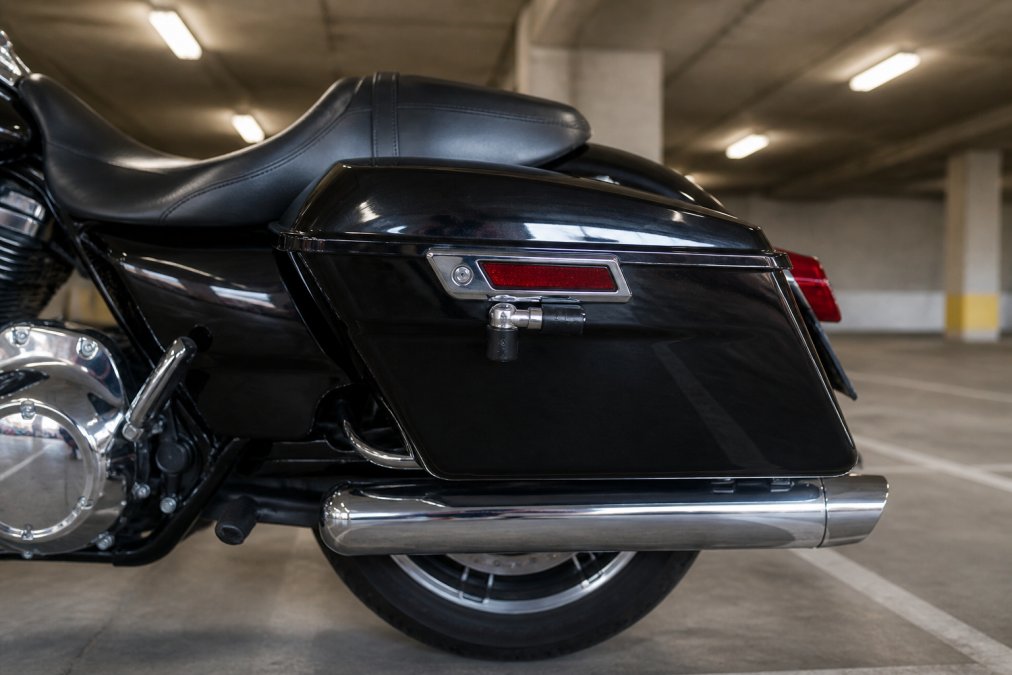
Factory saddlebag latches on most touring motorcycles are not designed as security devices. They keep the bags closed during riding; they don't resist a determined attempt to open them. A thief with a screwdriver or pry tool can access an unsecured saddlebag in seconds.
The solution is a dedicated saddlebag lock that replaces or supplements the factory latch mechanism. Robert Becker Design offers these specifically for touring motorcycles, with hardware designed to fit stock and aftermarket saddlebag configurations without requiring new mounting holes on most common models.
What to look for in a saddlebag security solution:
- Hardened steel construction that resists pry attacks and cutting
- A keyed locking mechanism rather than a push-button or snap closure
- Model-specific fitment that works with your existing hardware
- Weather resistance so the lock functions reliably in rain, heat, and cold
A common mistake is assuming that locking the bike secures the bags. It doesn't. The two are separate security problems requiring separate solutions.
Motorcycle Seat Lock Security: Protecting Your Seat and Accessories
Seat theft is a specific and underappreciated problem for touring motorcycle owners. Aftermarket seats represent a significant investment and are easy to remove. On many models, the factory seat mounting system offers minimal resistance to someone with basic tools and a few seconds.
Motorcycle seat lock security addresses this gap directly. A quality seat lock replaces or augments the factory seat mounting hardware with a keyed locking mechanism that prevents removal without the correct key. For Harley-Davidson Trike owners, Tri Glide, Freewheeler, and Road Glide 3 models, specialized seat locking hardware accounts for the unique mounting geometry these platforms use.
The same logic applies to helmet locks. A helmet left on a parked bike without a lock is essentially left unattended. A dedicated helmet lock secures the helmet to the bike, eliminating one more easy target.
The practical hierarchy for seat and accessory security:
- Install a dedicated seat lock on any aftermarket or high-value factory seat
- Use a helmet lock whenever you leave the bike unattended
- Secure saddlebag contents rather than leaving valuables inside unlocked bags
- For GPS units mounted on handlebars or windshields, use a dedicated GPS lock
Robert Becker Design's lineup covers each of these categories with hardware designed specifically for touring platforms, including extensive compatibility with Garmin zumo, Montana, and Monterra GPS units that are common targets for accessory theft.
Choosing the Right Lock: Materials, Ratings, and Smart Tech
The lock market ranges from hardware that provides genuine security to hardware that only looks like it does. Knowing the difference requires understanding what the specifications actually mean.
Hardened Steel, Shackles, and Angle Grinder Resistance
Hardened steel is the baseline material for any lock worth using on a motorcycle. The hardening process increases resistance to cutting tools. Shackle or body thickness matters enormously. A thin shackle, even in hardened steel, is more vulnerable than a thick one simply because there's less material to cut through.
Angle grinder resistance is the most relevant test for high-value targets. Some high-security locks use additional materials or geometries that make angle grinder attacks particularly difficult. Security ratings from independent organizations tested against recognized standards give you a benchmark that doesn't rely on manufacturer claims alone.
Smart Locks and Integration with Alarms
Smart lock technology is an emerging layer in motorcycle security. GPS-enabled locks, Bluetooth-connected alarm systems, and app-controlled immobilizers all add a monitoring dimension that traditional mechanical locks can't provide.
Smart technology complements physical security; it doesn't replace it. A GPS tracker tells you where your stolen bike is. A hardened steel disc lock makes it much harder to steal in the first place. For riders who travel frequently, app-connected alarm systems that notify your phone when the bike is disturbed add a meaningful deterrence layer.
As noted in the Insurance Institute for Highway Safety's theft research, visible security devices and electronic immobilizers together represent the most effective combination for reducing vehicle theft risk.
The practical checklist for choosing motorcycle locks:
- Hardened steel construction confirmed in specifications
- Shackle or chain diameter appropriate for the threat level
- Independent security rating or certification available
- Alarmed version for maximum deterrence in urban environments
- Weather-resistant keyway and body
- Portability appropriate for your travel style
- Component-specific locks for saddlebags, seats, and GPS units
Motorcycle theft is a solvable problem, not a guaranteed risk. Most riders treat it as an afterthought until something gets stolen. Robert Becker Design builds hardware specifically for touring motorcycle owners who want to protect the full investment, the bike, the accessories, and the components that make a long-distance ride work. From saddlebag locks and seat locks to helmet locks and GPS security mounts, the lineup covers the gaps that general-purpose locks leave open. Shop all security solutions at Robert Becker Design and ride with the confidence that comes from genuine protection.
Frequently Asked Questions
Q: Do motorcycle locks actually stop professional thieves?
A: No lock stops a truly determined professional, but motorcycle locks are highly effective at discouraging opportunistic theft. Most bike thefts are crimes of convenience. A disc lock, security chain, or alarmed lock adds enough time and noise that thieves typically move on to an easier target. Layering two or more security devices increases that deterrence significantly. The goal is to make your motorcycle the hardest target on the block, not to create an impenetrable vault.
Q: What is the best motorcycle theft deterrent for touring bikes?
A: For touring bikes carrying saddlebags, GPS units, and aftermarket seats, the best approach combines multiple security layers: a disc lock or alarmed disc lock on the wheel, a dedicated saddlebag lock on each bag, and a seat lock to prevent seat and tool-kit theft. Chaining the frame to an immovable object whenever possible adds a further barrier. Specialized locks designed for specific mounting points on Harley-Davidson and Indian models fit more securely than generic hardware.
Q: How can I secure my saddlebags and seat from theft?
A: Standard saddlebag latches on most touring motorcycles can be popped open quickly without a proper lock. Purpose-built saddlebag locks replace or reinforce the factory latch hardware and require a key to open. For seats, a seat lock secures the seat pan directly to the frame, preventing thieves from lifting it to access the battery, tools, or storage. Look for locks made from hardened steel with a tamper-proof cylinder and a weather-resistant finish for long-term reliability.
Q: Do helmet locks provide enough security for long-term parking?
A: Helmet locks are a convenience feature, not a high-security solution. A cable lock or small D-ring attached to the frame can deter a casual grab, but a bolt cutter or strong pull can defeat most of them quickly. For short stops, a helmet lock works fine. For extended parking in high-theft areas, carry your helmet with you or use a dedicated locking bag. Relying on a helmet lock alone for overnight or all-day security is not recommended.