
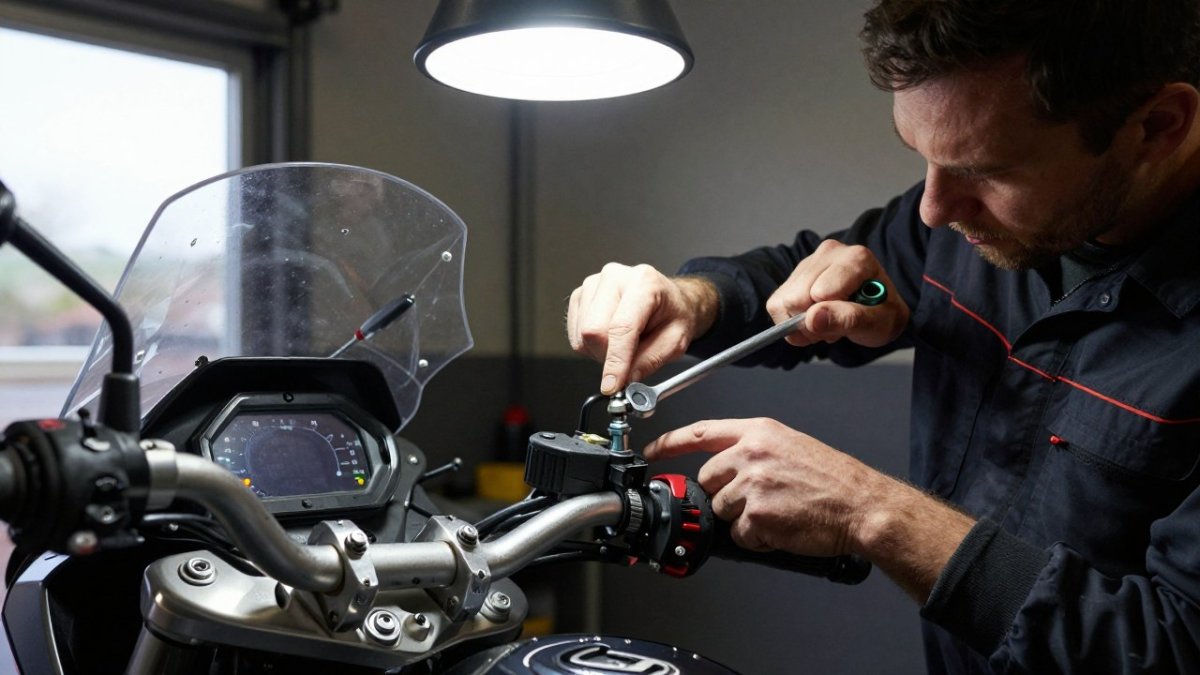
Last Updated: November 7, 2026
Quick Summary
The best tamper-resistant gps mount hardware depends on the threat you face. Security Torx and one-way fasteners are the most affordable upgrade, locking cradles stop removal entirely, and wired harnesses with tamper alerts add notification. Match the hardware to your GPS model and parking habits.
- Standard Phillips or hex screws can be undone with a common screwdriver in under a minute.
- Security Torx screws with a center pin block standard drivers and need matching pattern bits.
- Break-away nuts shear at a set torque and are single-use, so keep spares on hand.
- Check the hole pattern and enclosure depth against your GPS model before buying any mount.
- Stainless steel fasteners resist corrosion and vibration better than plain steel on a touring bike.
Table of Contents
- Why Standard GPS Mounts Fail Against Thieves
- Comparing Tamper-Resistant GPS Mount Hardware Types
- Tamper-Resistant Security Screws and Fasteners
- Locking GPS Mounts and How They Stop Removal
- Garmin Zumo Locking Mount Fit and Compatibility
- Magnetic Mounts, Wired Harnesses and Tamper Alerts
- Installing Secure GPS Mount Hardware: Tools and Cost
- Choosing Your GPS Mount Security Setup
- Frequently Asked Questions
Standard GPS mounts are built for convenience, not security. On a touring bike parked outside a hotel or a restaurant in a busy city, a thief with a basic toolkit can often pop off a GPS unit in under a minute. Robert Becker Design builds theft prevention hardware for touring motorcycles. The gap between a mount that holds a GPS in place and one that resists deliberate removal is wider than most riders expect.
GPS mount tamper-resistant hardware options are not all equal. Some rely on fasteners that a rider can undo with a common screwdriver. Others use specialized heads, one-way fasteners, or locking mechanisms that take specific tools to defeat. Knowing which option fits your bike and your parking habits is the first step toward a setup that actually deters theft.
Why Standard GPS Mounts Fail Against Thieves
Most factory and aftermarket GPS mounts use standard Phillips or hex fasteners. Those fasteners are designed for easy installation and removal, which is exactly what a thief wants. A rider who wants to remove a unit for a firmware update and a thief who wants to take it are using the same tool.
Tamper-resistant hardware changes the math. It forces a thief to bring specialized bits, extra time, and more noise. Each added step raises the odds that the attempt gets noticed or abandoned.
Watch out: a mount that is only tamper-resistant at the bracket still leaves the GPS unit itself exposed if the cradle can be lifted off. Check every point of attachment, not just the visible screws.
Comparing Tamper-Resistant GPS Mount Hardware Types
The useful comparison is not the product name but four variables: what tool defeats it, how long removal takes, whether it works with your tracker's enclosure, and what it costs over the life of the bike. The table below frames the categories that way.
| Hardware type | Defeated by | Typical removal time for a prepared thief | Fits which tracker form factors | Lifecycle cost pattern |
|---|---|---|---|---|
| Standard Phillips/hex screws | Common screwdriver | Under a minute | Any cradle with exposed fasteners | Lowest upfront, no security value |
| Security Torx (center-pin) | Matching security bit | Several minutes, requires specialty tool | Any cradle with countersunk screw holes | Low upfront; bit replacement if lost |
| One-way bolts | Special extractor | Slow and noisy; often damages bracket | Flat mounting plates with through-holes | Reusable but extractor cost |
| Break-away nuts | Extractor after shear | Slow; single-use fastener | Bracket-to-bike joints | Recurring replacement cost |
| Keyed locking cradle | Key or code plus bracket defeat | Depends entirely on bracket fasteners | Model-specific; check hole pattern | Highest upfront; key replacement |
| Magnetic mount | Hand pressure | Seconds | Device-specific magnetic plate | Low upfront, highest loss risk |
| Wired harness with tamper alert | Wire cut triggers notification | Fast removal but generates alert | Requires powered cradle and alert-capable unit | Harness plus possible subscription |
Read the table by threat model rather than by price.
Compatibility is the second filter. Trackers and GPS units differ in enclosure depth, hole spacing, and whether the cradle grips the sides or the back. Measure the hole pattern center-to-center and the enclosure depth before ordering, and match the mount to the model number rather than the brand.
The third filter is installation effort. Screws and one-way fasteners install with hand tools in minutes. A keyed cradle usually requires removing the handlebar clamp or drilling the bracket, which is a shop job for many riders. Wired harnesses require routing to a switched power source and, on some units, a configuration step in the device menu to enable disconnect alerts. Budget the effort honestly; a mount that is too fiddly to install correctly ends up loose, and a loose mount is a stolen mount.
Tamper-Resistant Security Screws and Fasteners
Security fasteners are the most affordable upgrade for most riders. They replace the standard screws on a GPS mount without changing the mount itself.
Torx and Matching Pattern Bits
Torx security screws use a six-point star head. The standard Torx pattern is widely available, so a determined thief can buy the bit. Security Torx variants add a center pin that blocks standard Torx drivers, which raises the bar considerably. Matching pattern bits are the only way to drive those screws, and they are less common in consumer toolkits.
When buying security Torx hardware, look for stainless steel. It resists corrosion and vibration better than plain steel, which matters on a bike that sees rain, road salt, and heat cycles.
One-Way Bolts and Break-Away Nuts
One-way bolts can be tightened with a standard tool but resist loosening. Break-away nuts are designed to shear off at a set torque, leaving a stub that requires an extractor to remove. Both options make removal slow and messy.
The trade-off is that break-away nuts are single-use. Once they shear, you need a replacement. Keep spares on hand if you remove the GPS often. One-way bolts are reusable but require a specific tool for removal, so keep it with your bike's paperwork.
Locking GPS Mounts and How They Stop Removal
A locking GPS mount holds the unit in a cradle that can only be released with a key or code. This approach stops removal without requiring a thief to defeat the fasteners at all. Even if they carry the right bits, they cannot pull the GPS out of a locked cradle.
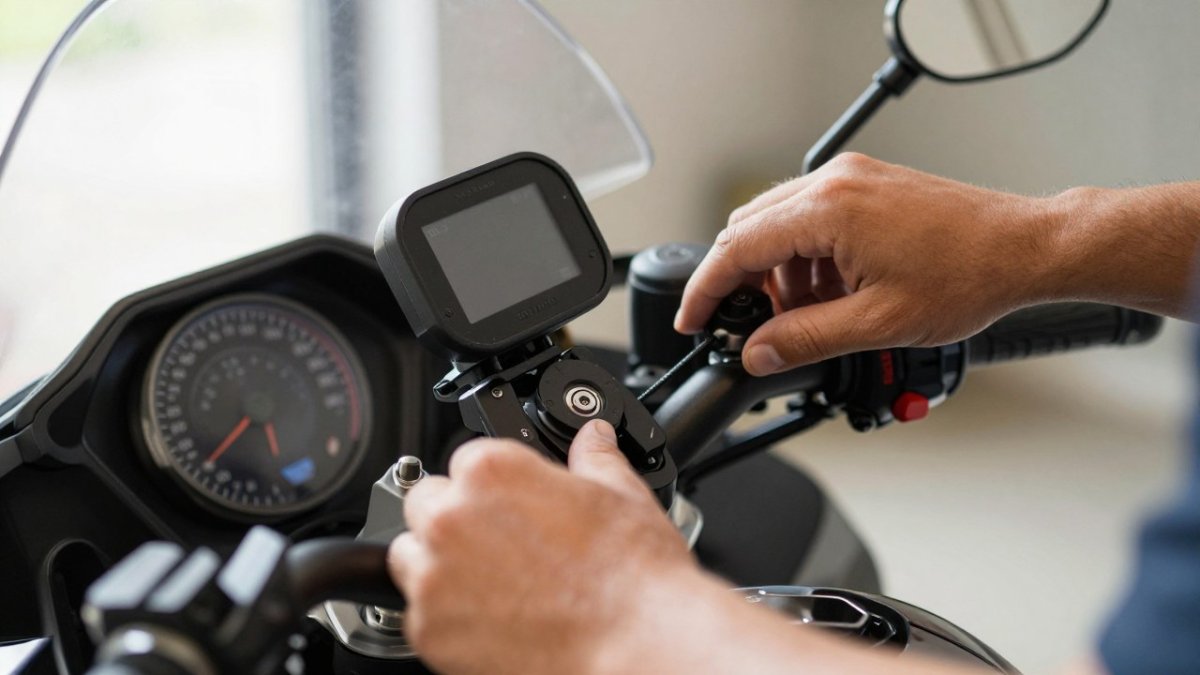
Locking mounts can be an effective option for theft prevention when they lock to a fixed point on the handlebar or frame. A locking cradle on a removable bracket is only as strong as the bracket's fasteners.
Garmin Zumo Locking Mount Fit and Compatibility
Garmin zumo units are common on touring bikes, and fit matters. Before buying any locking or tamper-resistant mount, confirm that it is designed for your specific zumo model and that the mounting points line up with your bike's handlebar or bracket.
Check the mount's compatibility list against your unit's model number, not just the brand name. A mount designed for one zumo generation may not fit another. If you are unsure, measure the unit and compare it to the mount's specifications before ordering.
Magnetic Mounts, Wired Harnesses and Tamper Alerts
Tamper alerts depend on the GPS model and its settings, so check your unit's manual to confirm what it can do.
Installing Secure GPS Mount Hardware: Tools and Cost
Installation is where most tamper-resistant hardware either works or becomes a nuisance. The tools are simple, but the sequence matters.
Lifecycle considerations. Factor in the cost of a lost device, the cost of false alerts that train you to ignore notifications, and the cost of replacement keys or bits.
Choosing Your GPS Mount Security Setup
Start with how and where you park. A rider who leaves the bike in a secured garage has different needs than one who parks on city streets for hours. Match the level of security to your actual risk.
A practical layered setup for most riders:
- Replace standard screws with security Torx or one-way fasteners.
- Add a locking cradle if the GPS is removed often or the bike is parked in high-theft areas.
- Connect a wired harness with tamper alerts if your GPS supports them.
- Keep spare break-away nuts and the correct drivers in your saddlebag.
Layered security can make theft slower and more difficult. For a setup built around your specific bike and GPS model, the Robert Becker Design team can help you choose the right combination. Shop all of our theft prevention hardware and protect the gear you rely on every ride.
Frequently Asked Questions
Are locking GPS mounts effective against theft?
Locking GPS mounts raise the effort a thief needs to remove a unit, but they do not make it impossible. A mount with tamper-resistant fasteners forces a thief to use specialty tools or spend more time at the bike, which many opportunistic thieves will avoid. Check that the mount fits your specific GPS model, since a loose fit defeats the locking feature.
What types of tamper-resistant screws can secure a GPS mount?
Common options include Torx security screws, which need a matching pattern bit, and security-head screws with pin or spanner recesses. One-way bolts and break-away nuts are also used on mounting points because they can be tightened but not loosened with standard tools. Stainless steel fasteners resist corrosion and vibration better than plated steel, which matters on touring bikes ridden in rain and road salt. Use fasteners that match the mounting holes on your bike and mount.
Can a GPS unit be removed from a locking mount?
A locking mount can still be defeated by a determined thief with cutting tools or by pulling the entire mount off the bike if the mounting hardware is weak. That is why the fasteners holding the mount matter as much as the lock on the unit itself. Choosing tamper-resistant screws and a secure bracket reduces this risk.
Do GPS mount security screws fit every motorcycle?
No. Security screws come in different head styles and sizes, so the fasteners must match the threads and mounting points on your specific bike and GPS mount. Many touring bikes have existing bolt patterns that require adapters or replacement hardware. Measure the thread size and length before buying, and confirm compatibility with your Garmin zumo or Montana model before you order. For current options and a quote, visit the Robert Becker Design website.
