
Last Updated: November 1, 2026
Quick Summary
Harley Davidson theft targets easy-to-remove parts like saddlebags, seats, and GPS mounts as much as the bike itself, so lock the parts, not just the frame. Layer a disc lock, chain lock, and fork lock, and use dedicated saddlebag and seat locks to remove the opportunity thieves look for.
- A free-standing bike can be lifted into a van in under a minute, so chain it to something solid.
- Stacking a disc lock, chain lock, and fork lock turns a thirty-second theft into a five-minute fight.
- A GPS tracker is a recovery tool, not a prevention tool, and helps police find the bike after theft.
- File the police report within the first hour and open your insurance claim the same day.
- Keep receipts for aftermarket accessories, or an insurer may pay only for stock parts.
Table of Contents
- Why Harley-Davidson Theft Is a Growing Concern for Touring Riders
- Motorcycle Theft Prevention Tips That Actually Work
- Harley-Davidson Anti-Theft Devices: Alarms, GPS, and Mounting Locks
- Harley-Davidson Saddlebag Locks and Seat Security for Touring Models
- What to Do if Your Motorcycle Is Stolen: First 12 Hours
- Filing the Police Report and Insurance Claim Without Delays
- Build Your Theft-Prevention Checklist Before Your Next Ride
- Frequently Asked Questions
Why Harley-Davidson Theft Is a Growing Concern for Touring Riders
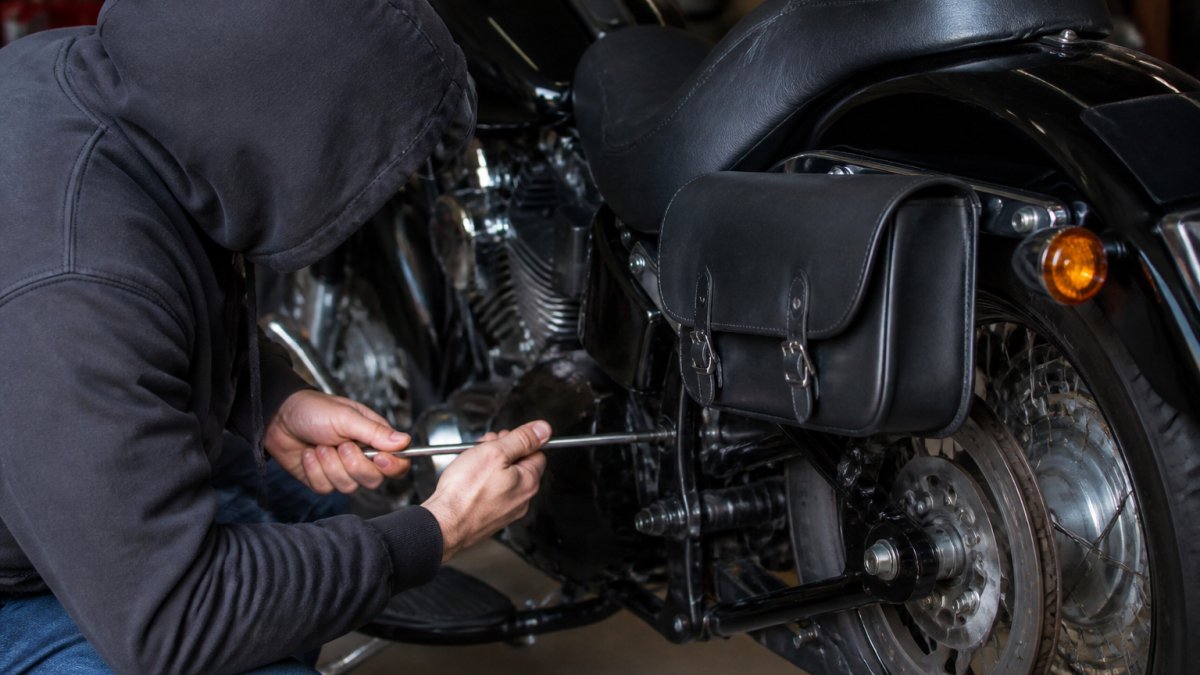
Harley Davidson theft hits touring riders harder than almost any other group of motorcyclists. Your bike carries saddlebags, a GPS unit, a custom seat, and hundreds of dollars in accessories that walk away fast when nobody is watching. Robert Becker Design has built locks for these exact components since 2012, and riders often describe the same problem: the bike was parked for a short time, and the bag was gone.
A touring bike is a rolling collection of easy-to-remove parts. Thieves know this. They also know that most riders protect the ignition and nothing else.
The result of Harley Davidson theft is predictable. A stolen saddlebag, a ripped-out GPS mount, or a cut seat costs real money and ruins a trip. Worse, a stolen motorcycle rarely comes back in one piece.
Below, we break down what actually stops thieves, what to do in the first twelve hours after a theft, and how to build a checklist you will use before every ride.
Motorcycle Theft Prevention Tips That Actually Work
The best motorcycle theft prevention tips share one trait: they slow a thief down and make noise. No lock stops a determined pro forever. But most thefts are crimes of opportunity, and opportunity disappears when a bike is hard to move and hard to strip.
Think in layers.
- Lock the bike to something solid. A free-standing bike can be lifted into a van in under a minute.
- Cover it. A plain cover hides what the bike is and signals that the owner cares.
- Park where people pass. Thieves avoid foot traffic and cameras.
- Lock the parts, not just the frame. Bags, seats, and GPS mounts are the fastest items to steal.
- Take the key fob with you. Keyless ignition makes a forgotten fob a gift.
Layer Your Locks: Disc, Chain, and Fork
A disc lock clamps over the front brake rotor and stops the wheel from turning. It is small, cheap, and easy to carry. The catch is that a thief can sometimes roll the bike on one wheel, so pair it with something that anchors the frame.
A chain lock wraps around a fixed object like a pole or rack. Use a hardened chain and a lock that resists cutting. This is the layer that stops the bike from leaving entirely.
A fork lock is built into many Harley-Davidson models. It turns the front wheel and locks the steering. Treat it as a low-speed deterrent only, because a strong pair of hands can defeat a fork lock by lifting and dragging the front end.
Stack all three when you can. A disc lock plus a chain plus the fork lock turns a thirty-second theft into a five-minute fight.
Parking Strategy for Home, Street, and Dealership Lots
Where you park changes which risks matter most.
At home, park inside a garage or behind a locked gate when possible. If you park in a driveway, chain the bike to a ground anchor and keep it covered. A motion light helps.
On the street, choose well-lit spots with foot traffic and cameras. Avoid the same space every night, since thieves watch patterns.
At a dealership or event lot, use designated motorcycle parking and lock the bike even for short stops. Crowded lots feel safe but give thieves cover.
Watch out: a "secure" apartment garage with a rolling gate is a favorite target, because thieves follow a resident's car in and have privacy once inside.
Harley-Davidson Anti-Theft Devices: Alarms, GPS, and Mounting Locks
Harley-Davidson anti-theft devices fall into three groups: alarms that make noise, GPS trackers that help recovery, and mounting locks that protect the parts bolted to your bike.
Alarms. A good alarm flashes lights and sounds a siren when the bike moves or the ignition is tampered with. Many factory systems also pair with a pager or phone alert. The noise is the point, since it draws attention and pushes a thief to leave.
GPS trackers. A tracker hidden on the bike sends location data if it moves without you. This is a recovery tool, not a prevention tool. It helps police find the bike after a theft. Recovery odds improve when you can give officers a live location.
Mounting locks. This is where most riders leave a gap. A GPS unit on a RAM-style arm pops off in seconds unless the arm itself is locked. The same goes for phone mounts and accessory brackets.
Robert Becker Design builds theft prevention locks and security devices for the motorcycle industry, including mounting arm locks. Products are designed for Garmin zumo, Montana, and Monterra GPS units.
National Highway Traffic Safety Administration motorcycle safety resources
Harley-Davidson Saddlebag Locks and Seat Security for Touring Models
Harley-Davidson saddlebag locks close the biggest open door on a touring bike. Stock hard bags use a latch that a determined thief can pop, and aftermarket bags often have no lock at all. A dedicated saddlebag lock secures the lid and the bag-to-bike mount so the whole bag cannot be lifted off.
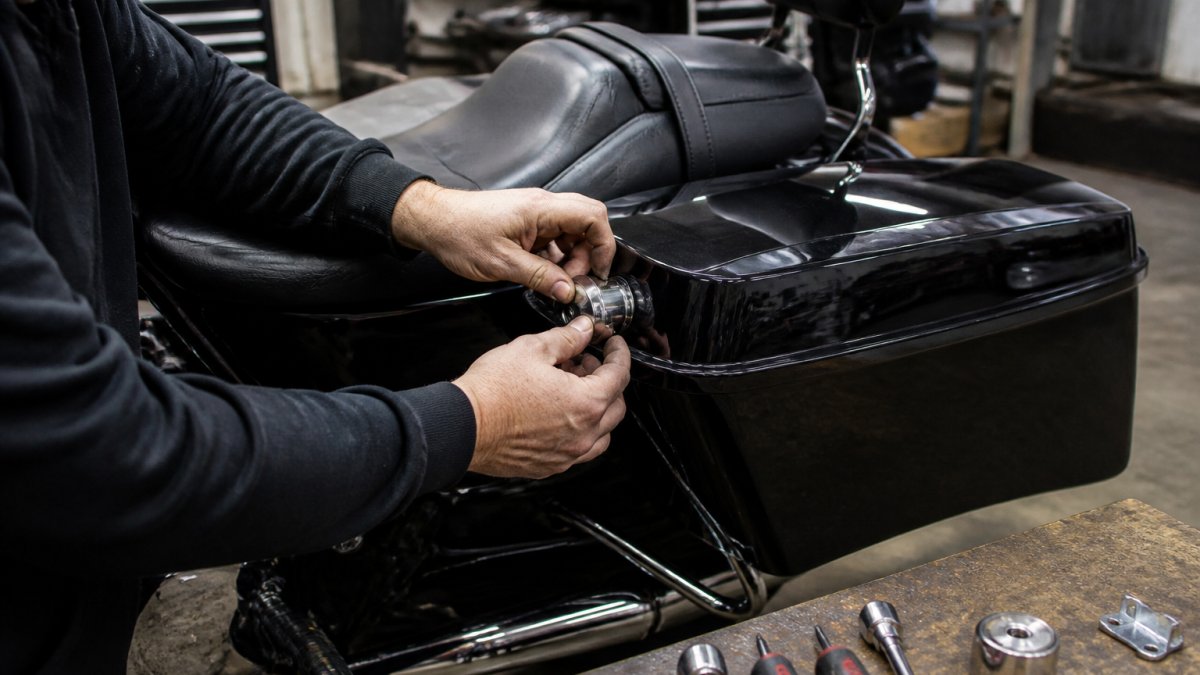
Seat security matters just as much. A solo seat or a two-up touring seat comes off with a key or a quick-release lever, and a thief can resell it in a day. Locking hardware that replaces or reinforces the release mechanism keeps the seat on the bike.
For Tri Glide, Freewheeler, and Road Glide 3 owners, seat locking deserves extra attention because trike seats are large, expensive, and easy to grab.
A common mistake is locking the bags but leaving the seat and GPS arm open. Thieves take the easiest item first, then come back for the rest.
What to Do if Your Motorcycle Is Stolen: First 12 Hours
What to do if your motorcycle is stolen comes down to speed, documentation, and avoiding risk. The first twelve hours matter most, because stolen bikes are often moved or stripped quickly.
First 30 minutes: confirm and secure evidence. Confirm the bike is actually gone. Check with building security, the lot attendant, or a neighbor, and look for a tow notice before you panic.
Within the first hour: call the police. File a theft report and get the case number. Do not wait until morning. Give the dispatcher the VIN, plate number, make, model, and color, and tell them about any distinctive modifications, stickers, or damage that would help an officer identify the bike.
Within the first few hours: gather paperwork and notify your insurer. Have the title, registration, VIN, plate number, and photos ready for the officer. Then call your insurer and open the claim. Most policies require prompt notice, so do this the same day. Ask what documents they need and whether aftermarket parts are covered.
Same day: share information safely. Post a community alert with clear photos and the plate number in local rider groups. Share only what helps identification, and avoid posting your full VIN or home address publicly. Do not name or accuse anyone.
Never chase a suspect or try to recover the bike alone. Report what you see and let law enforcement handle it. A witness report helps an arrest and conviction far more than a confrontation.
Filing the Police Report and Insurance Claim Without Delays
A police report is the backbone of your insurance claim. The report creates an official record with the date, time, location, and VIN. Insurers rely on it, and so do prosecutors if a suspect is caught.
Give the officer every identifying detail you have:
- VIN and license plate
- Make, model, and color
- Photos from several angles
- Serial numbers for the GPS, bags, and aftermarket parts
- A list of accessories with estimated value
Then call your insurer and open the claim. Ask three questions: What is my deductible? Will you cover aftermarket parts? How long before a settlement offer?
Keep receipts for aftermarket accessories. Without proof of purchase, an insurer may pay only for stock parts. A simple folder of receipts and photos makes the claim faster and fairer.
Insurance Information Institute guide to auto and motorcycle claims
Build Your Theft-Prevention Checklist Before Your Next Ride
Use this checklist before you walk away from the bike. It takes two minutes and covers the gaps most riders miss.
| Check | What to Do | Why It Matters |
|---|---|---|
| Frame anchored | Chain lock to a fixed object | Stops the bike being lifted |
| Wheel locked | Disc lock on the front rotor | Stops it rolling away |
| Steering locked | Fork lock engaged | Slows a drag-away attempt |
| Electronics secured | Locking GPS and phone mount | Stops the fastest theft |
| Bags locked | Saddlebag locks on both sides | Protects gear and bags |
| Seat locked | Seat locking hardware in place | Stops seat theft |
| Covered | Plain cover fitted | Hides the target |
| Documented | Photos and serial numbers saved | Speeds recovery and claims |
Print it, tape it in the garage, and run through it every time. A rider who locks the parts as carefully as the frame removes most of the opportunity a thief looks for.
National Insurance Crime Bureau vehicle theft prevention guidance
Theft rarely happens because a thief is brilliant. It happens because a bike was easy. Lock the bags, the seat, the GPS arm, and the frame, and you turn an easy target into a hard one.
Robert Becker Design builds theft prevention locks and security devices for the motorcycle industry, including locks for saddlebags, seats, and mounting arms. Designed by riders for riders, these products are made for Harley-Davidson, Indian, and other touring models. Shop All at Robert Becker Design to see the current lineup.
Frequently Asked Questions
How can I prevent my Harley-Davidson from being stolen?
Use layered security: a disc lock on the front wheel, a chain lock through the frame to a fixed anchor, the factory fork lock, and an anti-theft alarm with a GPS tracker. Add Harley-Davidson saddlebag locks and seat locks so accessories are not taken separately. Park in well-lit, high-traffic areas and use a cover. No single device stops every thief, but each layer adds time and visibility, which is what makes a bike a poor target.
What should I do if my motorcycle is stolen?
Call local law enforcement immediately and file a police report with the VIN, license plate, and a photo of the bike. Notify your insurer the same day, since many policies require prompt reporting. Share the theft on community alert groups and check surveillance video from nearby businesses. Provide identifying details like aftermarket parts, scratches, or custom paint. A police report number is usually required before an insurance claim can move forward.
Are motorcycle disc locks effective against theft?
Disc locks stop a bike from being rolled away, which defeats the most common theft method. They work best as part of a layered setup: a disc lock plus a chain lock plus an alarm. A determined thief with an angle grinder can cut through almost any lock, so the goal is to slow them down and make noise. Choose a lock with a built-in alarm and always use it, even for short stops.
Does motorcycle insurance cover theft, and what documentation is needed?
Comprehensive coverage typically includes theft, while liability-only policies do not. Report the theft to police first, then contact your insurer with the police report number, VIN, title, and photos of the bike and any aftermarket parts. Keep receipts for accessories like GPS units and saddlebags, since they may be covered separately. Ask whether the claim covers recovery costs and rental reimbursement.
