
Quick Summary
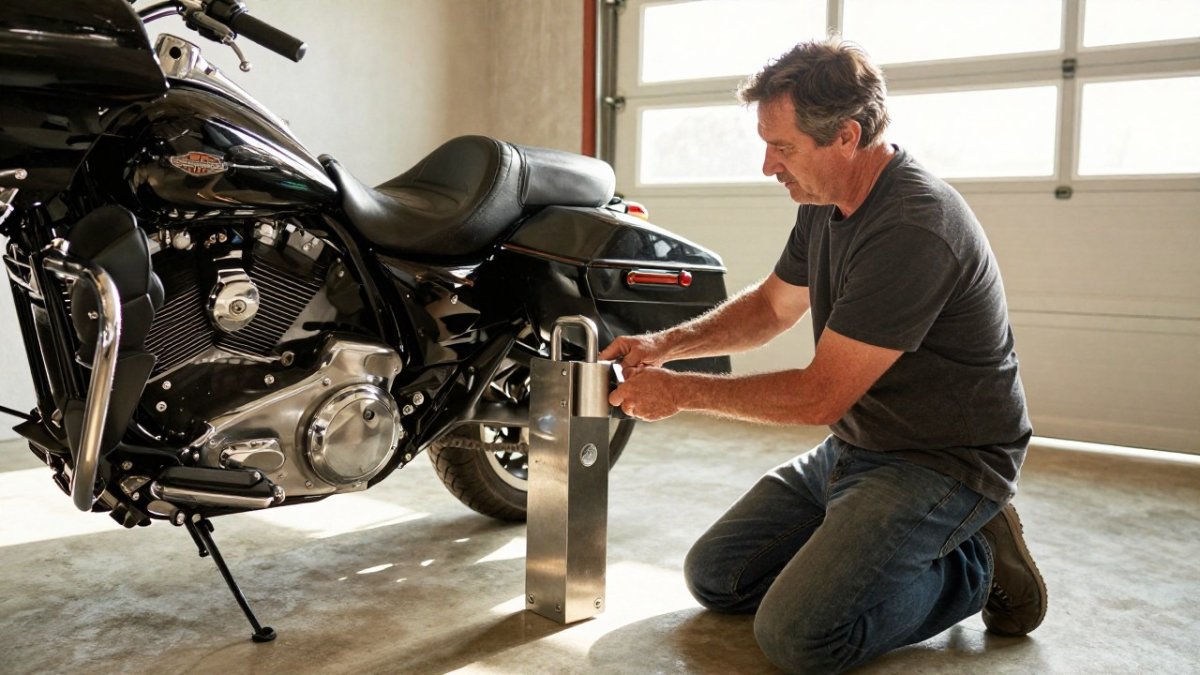
Effective theft prevention for a Harley touring bike layers mechanical locks, electronic alarms and tracking, and careful parking habits, especially on overnight stops. Start with a disc or U-lock, park in a well-lit spot near the entrance, and secure saddlebags and detachable accessories every time.
- Start with a disc lock and a visible parking habit, then add a chain or U-lock and ground anchor.
- Use both mechanical locks and electronic layers, since neither works well alone on a touring bike.
- Park in a well-lit spot near the entrance, avoiding dark corners of hotel back lots.
- Lock saddlebags, use a seat lock, and remove detachable accessories like GPS mounts overnight.
- Test your GPS tracker and assemble a documentation folder with VIN and insurance details before each trip.
Table of Contents
- Why Harley Touring Bikes Are Targeted and Where Theft Happens
- Building a Prioritized Security Plan by Budget and Risk
- Mechanical vs. Electronic Security: Choosing the Right Layers
- Securing Saddlebags, Seats, and Detachable Accessories
- Protecting Your Bike on Overnight Stops and Everyday Parking
- Motorcycle Anti-Theft Alarms, Tracking, and Recovery Preparation
- Your Pre-Ride and Overnight Security Checklist
- Frequently Asked Questions
Why Harley Touring Bikes Are Targeted and Where Theft Happens
Harley touring bikes are a favorite target because they are expensive, easy to recognize, and often loaded with factory and aftermarket parts that sell well on the resale market, so theft prevention should be a priority for any owner.
Theft tends to happen where bikes sit unattended for hours. Hotel lots, rest stops, and city parking garages are common spots. Dim corners, busy-looking but unwatched lots, and street parking after dark all give thieves time they need.
Watch out: a bike that looks secure from the front can still be vulnerable from behind. Check every side before you walk away.
Building a Prioritized Security Plan by Budget and Risk
Not every owner needs the same level of protection. Start by asking two questions: how much is the bike worth, and where do you usually park it?
A practical plan works in layers:
- Budget tier: Start with a disc lock and a visible parking habit.
- Mid tier: Add a chain or U-lock, a ground anchor, and a motion alarm.
- High-risk tier: Add tracking, a locked garage, and a full cover that hides the bike.
If you travel often, put the most money into the protections you use every night. A locked garage at home matters less than a secure spot at the hotel where you spend three nights in a row.
Mechanical vs. Electronic Security: Choosing the Right Layers
Mechanical locks stop a thief by physical force. They are simple, don't need batteries, and work even when a signal drops. Ignition locks, disc locks, U-locks, and chain locks all fall in this group. A mechanical lock is a sensible first layer on every ride.
Electronic security adds detection and recovery. Alarms warn you and nearby people when someone moves the bike. GPS trackers help you locate a stolen bike, and they are most useful when you can report the location to police quickly.
Use both. A mechanical lock slows a thief down, and an electronic layer gives you a chance to act. Neither works well alone for a touring bike.
Securing Saddlebags, Seats, and Detachable Accessories
Saddlebags, seats, and removable accessories are often the easiest targets on a touring bike. Thieves can pop a seat or grab a bag in seconds if nothing holds it in place.
Here is a simple routine for accessories:
- Lock saddlebags shut and keep valuables out when parked.
- Use a seat lock or secure the seat with a locking mechanism when available.
- Remove small detachable items like GPS mounts or mirrors when you leave the bike overnight.
- Store loose gear in your room, not on the bike.
Watch out: a locked bag does nothing if the bag itself can be pried or unclipped from the frame. Check mounting hardware every few months.
Protecting Your Bike on Overnight Stops and Everyday Parking
Overnight stops are where most touring theft happens, and the routine that works at a hotel is not the same one that works at a campground or a roadside pull-off. Build a stop-specific routine instead of repeating the same parking advice everywhere.
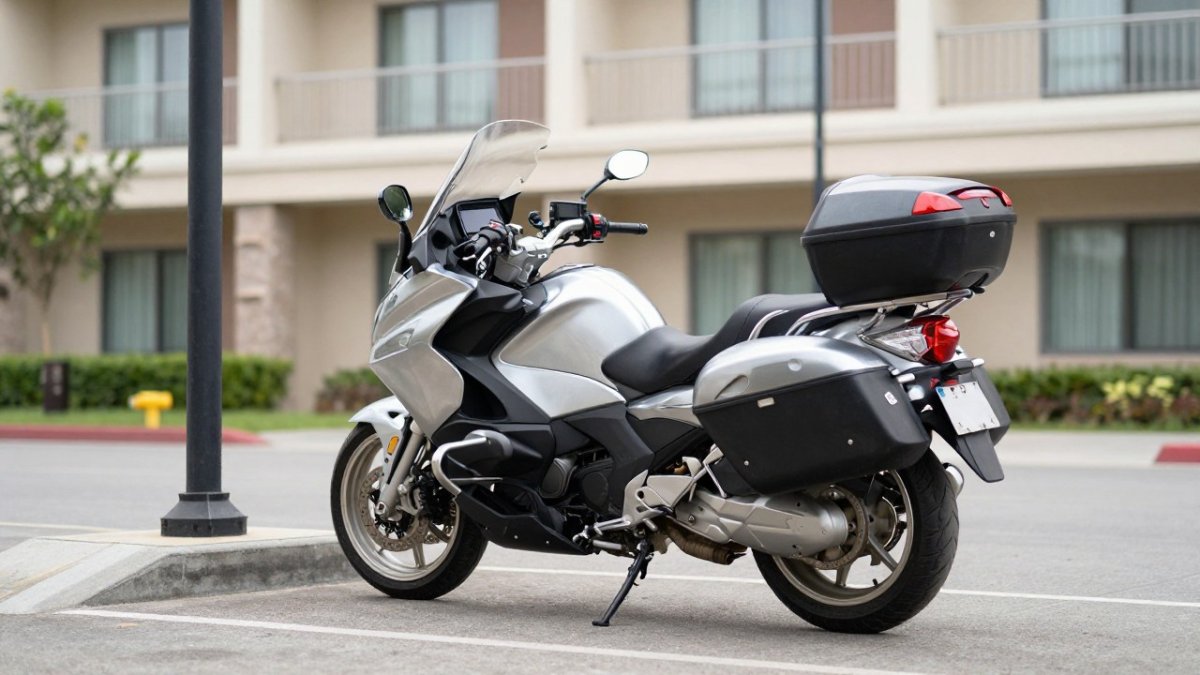
Hotel and motel stops. Ask the front desk whether they allow parking under the portico or near the lobby entrance, and whether security cameras cover that area. A well-lit spot within sight of the front desk is a better choice than a dark corner of the back lot. Otherwise, lock the bike to a fixed post or ground anchor, cover it, and set the alarm. Keep the key and any detachable accessories in your room, not in a saddlebag.
Campgrounds and RV parks. Campgrounds are a mixed bag: the bike is often within sight of your tent or cabin, which is a real advantage, but the site is usually dark and the perimeter is open. Park the bike between your shelter and the road so anyone approaching has to pass you. Lock it to a picnic table, a tree, or a post if the campground allows it, and use a cover to signal that the bike is not a quick grab. If you are in a cabin or RV, bring the saddlebags and any detachable electronics inside for the night.
Roadside stops and rest areas. These are the highest-risk short stops because you are away from the bike for only a few minutes and assume it is safe. Park in the line of sight of the building entrance or a security camera, lock the ignition, and take the key with you. Do not leave a helmet, GPS, or jacket on the seat, those items disappear in seconds and are the easiest things for a thief to resell. If you are stopping for more than a few minutes, use a disc lock even for a quick meal.
Unfamiliar destinations. When you are in a new town, ask the hotel or campground staff where bikes get stolen and where they do not. Local knowledge beats any general rule. If you are unsure, pay for a secured garage or a valet service rather than parking on the street.
Watch out: a cover on a sparkling touring bike can draw attention in a dark lot, so use it to hide valuable parts rather than as a substitute for a lock, and never leave the cover loose enough to be pulled off in one motion.
The right parking choice depends on where you stop, so here is how to adjust your routine at each type of overnight or short stop.
| Stop type | Best practice | Key risk |
|---|---|---|
| Hotel or motel | Well-lit spot near the front desk, or under the portico | Dark corners of the back lot |
| Campground or RV park | Park between your shelter and the road, lock to a fixed object | Dark site with an open perimeter |
| Roadside or rest area | Park in view of the entrance or a camera, take the key | Items left on the seat disappear in seconds |
| Unfamiliar destination | Ask local staff, or pay for a secured garage or valet | Street parking in an unknown area |
Motorcycle Anti-Theft Alarms, Tracking, and Recovery Preparation
Alarms and trackers only help if you have prepared the paperwork and the response plan before the theft happens. Most owners focus on the hardware and skip the recovery preparation, which is where the real time is lost.
Alarms and motion sensors. A motion sensor alarm warns you and nearby people when someone bumps or lifts the bike. Mount it where it detects movement without setting off false alarms from wind, passing traffic, or a cover flapping in the breeze. Test the sensitivity before you rely on it, and keep the remote or app handy so you can disarm it quickly when you return.
GPS trackers. A GPS tracker gives you a real-time location after a theft, but only if the subscription is active and the app is tested before you need it. Check the battery level and the reporting interval before every trip. Keep the tracker hidden and do not advertise it on the bike.
Documentation to prepare before a theft. Keep a folder, paper or digital, with the following: your VIN, title or registration, insurance policy number and claims phone line, photos of the bike from every angle including the odometer, photos of accessories and serial numbers, and a list of aftermarket parts with receipts. Store a copy in your luggage and a copy in the cloud.
Insurance checks. Before your next trip, confirm that your policy covers theft, that your deductible is one you can live with, and whether aftermarket parts and accessories are covered or need a rider.
If a theft is in progress. Do not confront anyone. Move to a safe place, call 911, and give the dispatcher your location, the bike's description, the plate number, and any tracker location data. Do not chase the bike or block the thief's exit. Once the police arrive, give them the VIN, the tracker information, and your documentation folder. Preserve any camera footage from the hotel or campground and share it with the responding officer.
After the theft. Report the theft to local police and get a copy of the report number. Notify your insurer the same day and provide the report number, VIN, and photos. If you have a tracker, share the live location with the police and keep the app open until they confirm they have the data. Consider posting the theft to local rider groups and forums with the VIN and photos.
Watch out: a tracker that is not tested and a documentation folder that is not assembled before the trip are the two most common reasons owners lose time and money after a theft, so build both into your pre-trip routine.
Your Pre-Ride and Overnight Security Checklist
Use this checklist before you ride and before you leave the bike overnight:
Pre-ride checklist
- Confirm the ignition lock works and the key is in your pocket
- Check that saddlebags and seat latches are closed and secure
- Confirm your GPS tracker is charged and reporting
- Check that the alarm is armed if you plan to leave the bike
Overnight checklist
- Park in a well-lit, visible spot near the entrance
- Lock the ignition and remove the key
- Secure the bike to a ground anchor or fixed object with a disc or U-lock
- Remove or lock detachable accessories and valuables
- Use a motorcycle cover to hide valuable parts if you have one
- Set the alarm and keep your phone nearby for location alerts
Following this routine every time builds the habit that matters most: consistent theft prevention on every stop, not just the trips you worry about.
Frequently Asked Questions
What is the best deterrent for motorcycle theft?
No single device stops every thief, so the best deterrent is layering. Start with a disc lock or heavy chain anchored to an immovable object, add a steering or ignition lock, and park in a visible, well-lit spot. Thieves usually pick the easiest bike on the block, so making yours harder to move quickly is the goal. A motion-sensing alarm adds another layer by alerting you or nearby people when someone starts handling the bike. Combine two or three of these measures rather than relying on one product, and keep your ownership records and VIN in a safe place in case you need to report the theft.
Does covering a motorcycle help prevent theft?
A motorcycle cover helps mainly by hiding the bike's make, model, and accessories, which can make it less attractive to someone scouting a parking area. It does not stop a determined thief, and a cover can actually make a bike easier to move if the thief simply lifts it off. Use a cover as one part of a layered plan, not as your main protection. Pair it with a physical lock and secure parking, and remove or lock down expensive detachable items like saddlebags and GPS units before you leave the bike unattended.
How can I secure Harley saddlebags and a motorcycle seat?
Saddlebags and seats are common targets because they hold valuables and can be pried or unbolted. Lock saddlebags and remove anything valuable before parking overnight. For the seat, use a seat lock so the seat cannot be lifted or removed without the key. Check that any aftermarket mounting hardware is tight and that quick-release parts are locked or stored. Keeping luggage inside your room at night is the simplest step most touring riders overlook.
What should I do if my motorcycle is stolen?
Report the theft to local police right away and provide the VIN, make, model, color, and any aftermarket parts or serial numbers. Keep copies of your title, registration, and receipts for accessories so you can prove ownership. Notify your insurance company promptly, since many policies require quick reporting. If you have a GPS tracker or alarm service, share the location data with police. Do not confront anyone who appears to be taking your bike; let officers handle recovery.
