
Quick Summary
Protect custom motorcycle parts from weather by drying the bike after every wet ride, wiping chrome and aluminum, and sealing exposed hardware against moisture. Use a breathable, water-resistant cover, shade the bike from sun, and avoid household cleaners that strip protective finishes.
- Dry the bike fully after every wet ride, then wipe down metal and paint.
- Dry crevices around bolts, clamps and mounting points to stop rust.
- Check fasteners monthly for early signs of corrosion.
- Choose breathable, water-resistant covers that let moisture escape.
- Never cover a wet or warm bike; let it dry completely first.
Table of Contents
- Why Weather Damages Custom Motorcycle Parts Faster Than Stock
- Protecting Custom Paint and Finishes From Rain and Moisture
- Preventing Rust on Chrome, Aluminum and Steel Components
- Motorcycle UV Protection for Paint, Plastics and Seats
- Choosing a Motorcycle Cover for Rain and Sun
- Preparing Your Custom Bike for Motorcycle Winter Storage
- Building Your Weather Protection Routine for Custom Parts
- Frequently Asked Questions
Why Weather Damages Custom Motorcycle Parts Faster Than Stock
Custom parts are where most weather damage starts, and custom motorcycle parts are often the ones owners care about most. Chrome risers, billet controls, aftermarket fenders and painted tanks usually have thinner protective layers than factory finishes. Once that layer is breached, water and salt get straight to the metal.
Stock bikes are built with factory coatings and sealed components. Many custom parts are not. Chrome-plated accessories and aluminum mounts can corrode where they meet steel hardware when left exposed to moisture.
Here's what makes custom builds more vulnerable:
- Thin finishes: Chrome and powder coat can chip, exposing the base metal underneath.
- Mixed metals: Aluminum and steel in contact can speed up galvanic corrosion when moisture is present.
- Exposed hardware: Custom mounts often have bolt heads and joints that trap water.
- Hard-to-reach spots: Many custom parts sit where drying is slow and wiping is awkward.
Protecting Custom Paint and Finishes From Rain and Moisture
Rain is less damaging than the mineral deposits it leaves behind. Water that dries on a custom paint job or chrome surface can leave spots that etch the finish if they sit long enough.
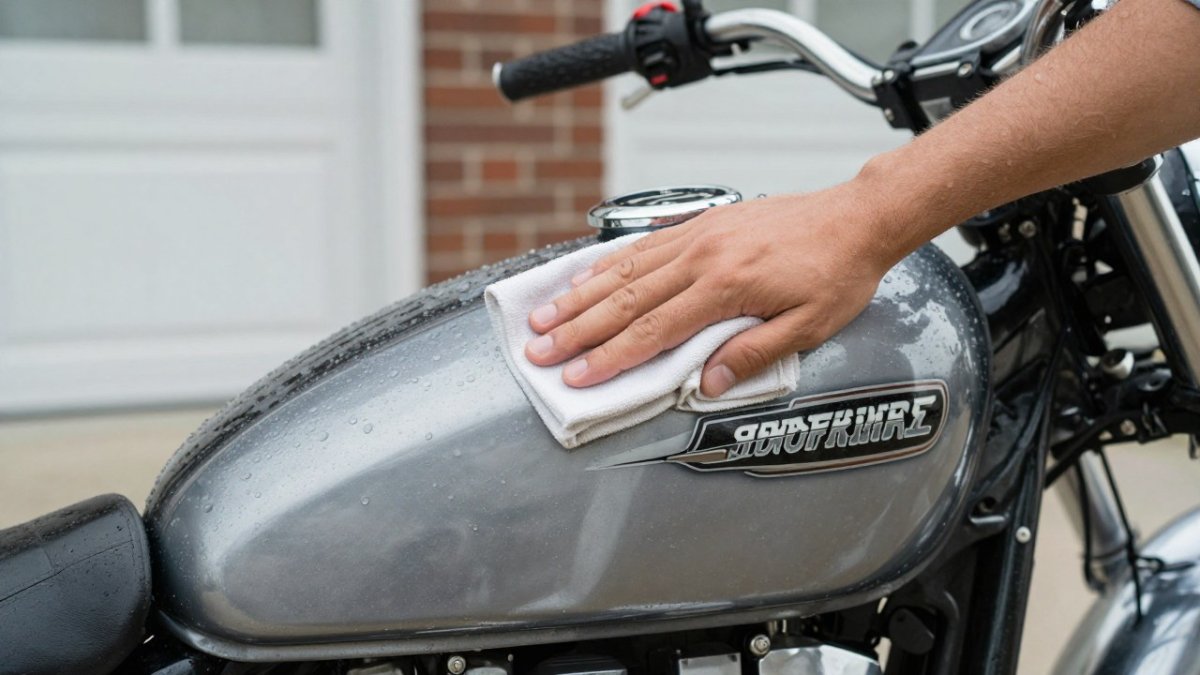
The simplest routine is to dry the bike after every wet ride.
A common mistake is parking a wet bike under a cover and forgetting about it. Trapped moisture can cause more harm than the rain did. Let the bike dry fully before covering it.
Watch out: Don't use household cleaners or dish soap on custom paint. They can strip protective layers and dull the finish.
Preventing Rust on Chrome, Aluminum and Steel Components
Rust forms when iron or steel is exposed to oxygen and moisture. Chrome plating looks protective, but it can crack or pit, and once water reaches the base metal, rust spreads underneath.
Aluminum resists rust but corrodes in its own way. Oxidation can leave a dull, chalky surface, and contact with steel fasteners can accelerate pitting.
-
Wipe down chrome and aluminum after each wet ride.
-
Dry crevices around bolts, clamps and mounting points.
-
Check fasteners monthly for early signs of corrosion.
Motorcycle UV Protection for Paint, Plastics and Seats
Sunlight can gradually degrade clear coat, plastics, vinyl and leather over time.
Material-specific protection:
Parking in shade, such as in a garage or carport, can reduce UV exposure.
Watch out: Do not use household cleaners, dish soap, or all-purpose sprays on custom paint, plastics or seats. They can strip protective layers, dull finishes, and dry out vinyl and leather.
Choosing a Motorcycle Cover for Rain and Sun
Waterproofing and breathability pull in opposite directions in a motorcycle cover: a fully waterproof shell can trap moisture that condenses on cool metal overnight.
Look for fabric described as breathable or vapor-permeable with a water-resistant coating, rather than a non-porous tarp.
Fit matters as much as fabric. A loose cover can flap in wind and rub paint, and a cover that is too tight can strain against aftermarket accessories. Measure your bike with its accessories installed and compare against the cover's stated dimensions.
- Breathable, water-resistant fabric that lets vapor escape while shedding rain.
- A snug fit sized to your build, including aftermarket fenders and bags.
- UV resistance so the cover itself does not degrade and shed fibers onto paint.
- Soft interior lining or a non-scratch inner surface at the tank, seat and windscreen.
- Secure fastening, straps, elastic hems or a belly strap, to stop wind lift.
- Vents or a vented panel to move humid air out from under the cover.
Watch out: Never cover a wet or warm bike. Let it cool and dry fully first, or you are sealing moisture against the exact parts you are trying to protect.
Best for: Riders who park outdoors daily and want one cover for rain and sun. Skip if: Your bike lives in a dry garage, where a basic breathable dust cover is enough.
The key features to compare when picking a cover are summarised below.
| Feature | Why it matters | Watch out |
|---|---|---|
| Breathable, water-resistant fabric | Lets vapor escape while shedding rain | Non-porous tarps trap condensation |
| Snug fit | Stops flapping that rubs paint | Too tight strains accessories |
| UV resistance | Keeps the cover from degrading | Degraded covers shed fibers onto paint |
| Soft inner lining | Protects tank, seat and windscreen | Rough interiors can scratch |
| Secure fastening | Prevents wind lift | Loose covers can rub paint |
| Vents | Moves humid air out | Sealed covers hold moisture |
Preparing Your Custom Bike for Motorcycle Winter Storage
Winter storage is where custom bikes take their worst hits. Condensation builds up, metal sits in damp air and batteries drain.
Before storing for the season:
- Wash and dry the bike thoroughly, including the underside.
- Apply a protectant to exposed chrome and steel.
- Fill the fuel tank and add a stabilizer to prevent varnish buildup.
- Disconnect or tend the battery to prevent drain.
- Place the bike on a stand or block to take weight off the tires.
- Cover it with a breathable cover that allows air circulation.
Check the bike once a month during storage. Look for condensation, rust spots and any signs that the cover has shifted.
Building Your Weather Protection Routine for Custom Parts
Protection works best as a routine, not a one-time project. Here's a simple schedule that covers most riders:
- After every wet ride: Dry the bike and wipe down metal and paint.
- Weekly: Check for early rust, chips and loose hardware.
- Monthly: Apply protectant to chrome, aluminum and exposed steel.
- Seasonally: Condition seats, inspect covers and prep for storage.
Last Updated: November 25, 2026
Frequently Asked Questions
Can a motorcycle cover damage custom paint or accessories?
A cover can cause harm if it is dirty, loose or made from abrasive material. Wind makes a loose cover flap against chrome, mirrors and painted tank edges, which leaves scuffs and scratches. Wipe the bike dry before covering it, and check the cover's fit after rides in windy weather.
Is WD-40 safe to use on motorcycle plastic?
WD-40 is a solvent-based product and can dull, streak or soften some plastics and painted surfaces, especially fairing and trim pieces. Check the manufacturer's care instructions for each component before applying anything.
How do you store a motorcycle outside in winter?
Wash and fully dry the bike, then apply a light coating of protectant to exposed metal parts such as chrome, aluminum and steel fasteners. Stabilize the fuel and connect a battery tender to keep the battery charged. Place the bike on a raised surface or a moisture barrier if possible, and use a breathable cover that lets condensation escape. Check the bike monthly for moisture, rust spots or cover damage, and wipe down any beads of condensation you find.
How often should you clean and protect motorcycle parts?
Rinse off road salt, bug residue and road grime after each ride in wet or coastal conditions, and dry the bike thoroughly before storing it. Inspect fasteners, cables and custom mounts once a month for early rust or loosening, and reapply protective coatings after each deep clean.
