
Last Updated: November 24, 2026
Quick Summary
A motorcycle disc lock is the better choice for quick, low-profile stops, while a chain lock gives you a stronger anchor when you need to secure a bike to something fixed. Neither stops a determined thief alone, so use either as one layer of a broader plan.
- A disc lock clamps the brake rotor, so the wheel cannot turn, and it installs in seconds.
- A disc lock secures the bike to nothing, so it can still be lifted into a truck or onto a trailer.
- Chain locks tether the bike to a fixed object and resist lift-and-carry theft better.
- For overnight street parking, use a chain to a fixed anchor plus a disc lock.
- Always remove a disc lock before starting the engine to avoid rotor damage or a fall.
Table of Contents
- Motorcycle Disc Lock vs Chain Lock: The Short Answer
- How Disc Locks Work and Where They Fall Short
- How Chain Locks Work and Why Riders Still Choose Them
- Portability, Attack Resistance and Immobilizing vs Tethering Compared
- Motorcycle Disc Lock vs Chain Lock for Harley-Davidson and Touring Bikes
- Choosing by Parking Scenario and Using Them Correctly
- Booking a Security Consultation for Your Touring Setup
- Frequently Asked Questions
Motorcycle Disc Lock vs Chain Lock: The Short Answer
A motorcycle disc lock is the better choice for quick, low-profile stops, while a chain lock gives you the stronger anchor when you need to secure a bike to something fixed. Theft prevention hardware for touring motorcycles comes in several forms, and the right lock depends on where you park, how long you leave the bike, and what you need to protect.
Most riders assume the heavier lock always wins. That is not quite true. A disc lock that stays on the bike every day gets used far more often than a chain that stays in a saddlebag because it is a hassle to carry. The best lock is the one you will actually use correctly every time.
Here is the short version. A disc lock immobilizes the wheel, so the bike cannot roll away. A chain lock can tether the bike to a fixed object, so the bike cannot be lifted and carried off as easily. Neither lock stops a determined thief with power tools in a few minutes, so think of them as one layer in a broader plan.
How Disc Locks Work and Where They Fall Short
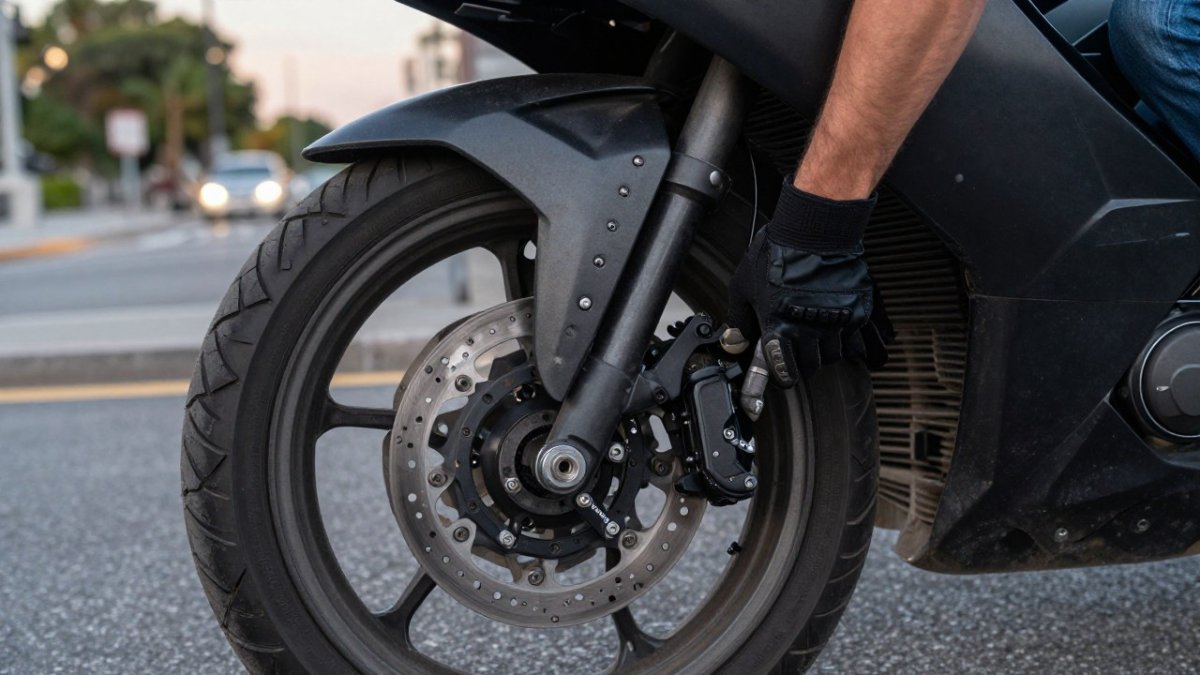
A disc lock clamps onto the brake rotor and prevents the wheel from turning. It is compact, it fits in a pocket or saddlebag, and it can be installed in seconds. For a rider who stops for coffee, fuel, or a short errand, that speed matters.
The trade-off is that a disc lock does not secure the bike to anything. A thief can still lift the motorcycle into a truck bed or tow it on a trailer. Disc locks also depend on the rotor and caliper geometry of your specific bike, so fit matters. Check compatibility before you buy.
Watch out: a disc lock left on the rotor while riding can cause serious damage or an accident, so always remove it before you start the engine.
How Chain Locks Work and Why Riders Still Choose Them
A chain lock wraps around a fixed object, such as a ground anchor, a heavy post, or a bike rack, and locks the motorcycle in place. Because the chain runs through the frame or a sturdy point on the bike, a thief has to deal with the anchor, the chain, and the bike together.
Chains are heavier and bulkier than disc locks. Length matters too. A chain that is too short cannot reach a solid anchor, and one that is too long drags on the ground and invites cutting attempts. Riders who park overnight in unfamiliar areas often accept the extra weight because the tethering protection is worth it.
Portability, Attack Resistance and Immobilizing vs Tethering Compared
Portability clearly favors the disc lock, which is compact enough to carry on the bike every day. A chain lock is a bigger commitment, since its bulk and weight take up real space and need somewhere to live when wet or dirty. That weight and bulk is a common reason chains get left at home.
Attack resistance is where the categories diverge, but the deciding variable is the individual product, not the label on the box. Think through the attacks a thief actually uses.
- Cutting. Bolt cutters defeat thin cable and light chain quickly. Hardened steel chain links and a shackle with a larger cross-section force bigger tools and more time. A disc lock's exposed body and shackle are the cut target; a chain's links are.
- Grinding. An angle grinder cuts almost anything given enough time and access. Thicker hardened material and a lock body that keeps the cutting wheel at an awkward angle buy time, but no portable lock is grinder-proof.
- Leverage and prying. A disc lock can be attacked by wedging tools into the rotor/caliper gap or by rocking the wheel against the lock. A chain resists prying better but can be attacked at the lock body or by cutting a single link.
- Lifting and carrying. This is the disc lock's structural weakness. It immobilizes the wheel but secures the bike to nothing, so two people and a truck bed or trailer can still take the motorcycle. A chain tethered to a fixed object removes that option.
On ratings and test methodology: treat security ratings as a starting point, not a guarantee. Independent testing regimes and manufacturer-published attack tests vary in what they measure, time-to-defeat with specific tools, resistance to a particular attack class, or pass/fail thresholds. A higher rating generally signals more resistance under the tested conditions, but it does not tell you how the lock performs against a different tool, in the dark, on your rotor, with your anchor. Ask what was tested, with what tools, and for how long, and be skeptical of claims that cannot be tied to a described method.
Immobilizing and tethering solve different problems, and that is the cleanest way to compare them. Immobilizing stops the bike from rolling, which defeats the ride-away and casual-roll thief. Tethering stops the bike from being lifted or dragged to a waiting vehicle, which is the higher-risk scenario.
Motorcycle Disc Lock vs Chain Lock for Harley-Davidson and Touring Bikes
Harley-Davidson and Indian touring models are heavy, and their factory and aftermarket components add value worth protecting. Saddlebags, seats, GPS units, and mounting hardware are common targets.
A disc lock can secure the wheel of a touring bike, but it does not protect the saddlebags or the seat from being removed. For those parts, you need locking solutions designed for those specific mounting points. Locks made for saddlebags, seats, and mounting arms address parts that a disc or chain alone does not cover.
If you ride a trike such as a Tri Glide, Freewheeler, or Road Glide 3, the same logic applies. Confirm that any lock you choose clears your frame, saddlebags, and aftermarket mounts before you commit.
Choosing by Parking Scenario and Using Them Correctly
Match the lock to where the bike actually sits, because risk and anchoring options change with the setting. A scenario-based decision guide is the fastest way to choose.
- Garage or secured home parking. Theft risk is lower and the bike is usually out of public view. A disc lock is often enough as a deterrent and a habit-builder; a chain to a floor or wall anchor adds protection if the garage is shared or accessible.
- Overnight street parking. This is the highest-risk common scenario: public access, time for a thief to work, and a real chance of a lift-and-load. Use a chain tethered to a fixed object plus a disc lock, and park where light and foot traffic work against the thief.
- Workplace or commuter lot. Risk depends on access control and visibility. A disc lock covers short, repeated stops; add a chain if the lot is open to the public or the bike sits all day in a low-traffic area.
- Short stops (coffee, fuel, errand). A disc lock is the practical choice because it goes on in seconds and gets used every time. A chain is usually overkill here unless a solid anchor is right at the curb.
Correct use matters as much as the product, and this is where most theft protection is won or lost.
Anchoring a chain. Pick a fixed object that cannot be lifted, unbolted, or cut away, a dedicated ground anchor, a heavy steel post set in concrete, or a sturdy bike rack bolted down. A signpost, a wooden fence, or a loose railing can be defeated or removed.
Positioning a disc lock. Fit it through the rotor openings where the lock body sits close to the rotor and the wheel cannot rotate far before the lock contacts the caliper or fork.
Avoiding slack and leverage. A chain left long enough to rest on the ground or loop loosely gives a thief a stable surface to cut against and room to pry. A disc lock that sits proud of the rotor with a wide gap invites wedging.
The ride-away mistake. Forgetting a disc lock is fitted and riding off can damage the rotor, caliper, fender, or fork and can cause a fall. Use a reminder cable or a bright tag on the bars, and make removing the lock the last step before you start the engine.
Layering. Pair the lock with the basics, well-lit parking, alarmed devices where practical, and a record of serial numbers and accessory details, so a single defeated lock is not the only thing between the bike and a thief.
The table below summarises which lock suits each parking scenario, using the article's guidance.
| Parking scenario | Recommended lock | Reason |
|---|---|---|
| Garage or secured home parking | Disc lock, optional chain to anchor | Lower risk; chain adds protection if garage is shared |
| Overnight street parking | Chain to fixed object plus disc lock | Highest-risk common scenario; lift-and-load possible |
| Workplace or commuter lot | Disc lock, add chain if lot is public | Depends on access control and visibility |
| Short stops (coffee, fuel, errand) | Disc lock | Goes on in seconds and gets used every time |
Booking a Security Consultation for Your Touring Setup
Every touring setup is different. Aftermarket mounts, custom saddlebags, and GPS installations all change what needs protecting and how. Pricing depends on quantity, model, and delivery, so visit the Robert Becker Design website for current prices or to request a quote.
If you want help deciding which combination fits your bike and your parking habits, reach out through the Robert Becker Design website. Bring your model year, your current accessories, and the places you park most often, and the team can help you think through a setup that fits.
Frequently Asked Questions
What is the most effective type of motorcycle lock?
No single lock stops every thief, so the most effective approach is layering. A disc lock is strong for immobilizing a wheel and is easy to carry, while a heavy chain or cable tethered to a fixed object makes the whole bike harder to roll away. Thieves usually choose the easiest target, so pairing a disc lock with a chain and parking in visible, well-lit spots raises the effort needed. Ratings from independent testers vary, so check the specific product's cut-resistance rating before you buy.
Can bolt cutters cut through a disc lock?
Bolt cutters can defeat some disc locks, especially lower-cost models with thin hardened pins or light steel bodies. Better disc locks use hardened steel and sit tightly against the brake disc, which limits leverage for cutting tools. No lock is cut-proof against a determined thief with enough time and tools, which is why a disc lock works best as one layer alongside a tethered chain or a fixed anchor point.
Are disc padlocks better than chain locks?
Disc padlocks are better when portability and quick use matter most, because they fit in a saddlebag and lock the wheel in seconds. Chain locks are better when you need to tether the motorcycle to a fixed object, since a disc lock alone allows the bike to be lifted or rolled with the wheel locked. For most touring riders the practical answer is to use both, with the disc lock for daily stops and a chain for overnight or high-risk parking.
Should I use a disc lock and a chain lock together?
Yes, combining them is the most common recommendation for layered security. The disc lock immobilizes the wheel, and the chain ties the bike to a fixed object so it cannot be easily rolled or loaded onto a truck. Route the chain through the frame or a rear wheel and keep it off the ground where tools can reach it easily. Check that the chain length fits your bike without scratching paint or finishes, and avoid overly loose chains that give thieves room to work.
