
Last Updated: November 21, 2026
Quick Summary
Motorcycle garage security means layering physical barriers, locks, and monitoring so a thief cannot move or dismantle your bike before someone notices. Harden the door, bolt a ground anchor into sound concrete with a short chain, then add disc, wheel, and steering locks plus an alarm and tracker.
- A standard overhead door's manual release can be opened from outside with a wire hook in seconds.
- A short chain is stronger than a long one because slack gives a thief room to swing a tool.
- Keep anchors away from slab edges and control joints, and re-check torque after a week.
- A detached metal garage can block cellular and GPS signals, so test tracker reporting from inside.
- Lock saddlebags, remove or lock the GPS, and use a seat lock on quick-release seats.
Table of Contents
- Start With a Threat Assessment for Your Garage Type
- How to Secure a Motorcycle in a Garage: A Step-by-Step Plan
- Choosing a Motorcycle Ground Anchor and Chain That Hold Up
- The Best Motorcycle Alarm and Tracker Combos for Garage Use
- Why a Motorcycle Alarm That Alerts Your Phone Changes Response Time
- Protect the Parts Thieves Actually Target: Seats, Saddlebags, and GPS
- Insurance, Documentation, and Recovery Preparation
- Build Your Layered Garage Security Checklist
- Frequently Asked Questions
Start With a Threat Assessment for Your Garage Type
Most riders treat motorcycle garage security as a shopping list: buy a chain, buy a lock, done.
Motorcycle garage security is the practice of layering physical barriers, locks, and monitoring so a thief cannot move or dismantle your bike before someone notices. A shared apartment garage has foot traffic and cameras but no privacy.
Start by answering three questions:
- Can a thief work unseen for ten minutes, or only two?
- Is the garage attached, detached, or shared?
- Does the bike sit out of sight, or near a window or door?
If a thief can back a van up to your door and work alone, you need door reinforcement and a ground anchor first. If neighbors and cameras overlook the space, focus on locks and alarms.
How to Secure a Motorcycle in a Garage: A Step-by-Step Plan
Here's the short answer: harden the door, anchor the bike to the floor, then lock the wheels and steering. Doing those three things in order addresses two common theft methods: riding the bike away and rolling it onto a truck.
Step 1: Harden the Garage Door and Entry Points
The door is the weakest point in most garages. A standard overhead door with a manual release can be opened from outside with a wire hook in seconds. Add these:
- A slide bolt or deadbolt on any side or back door
- A reinforcement bar across the overhead door's inside track
- A zip tie or clamp on the emergency release handle to stop hook attacks
Check the door's bottom seal too. A gap lets a thief see inside and plan. Close it.
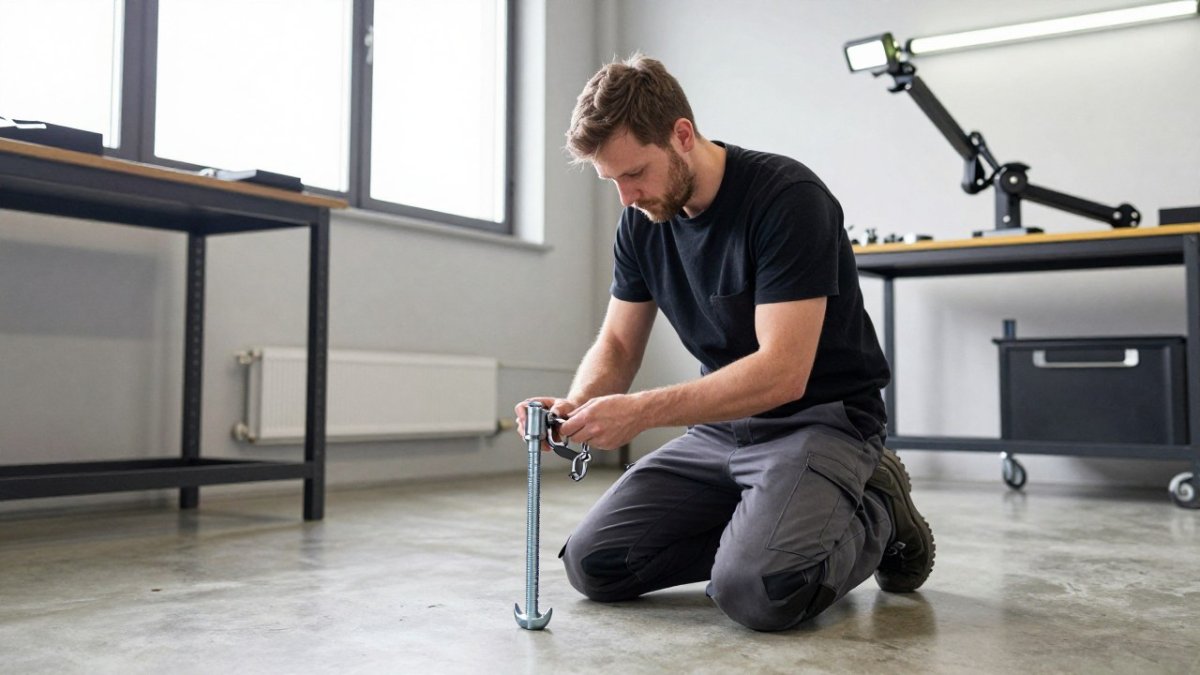
Step 2: Install a Motorcycle Ground Anchor and Chain
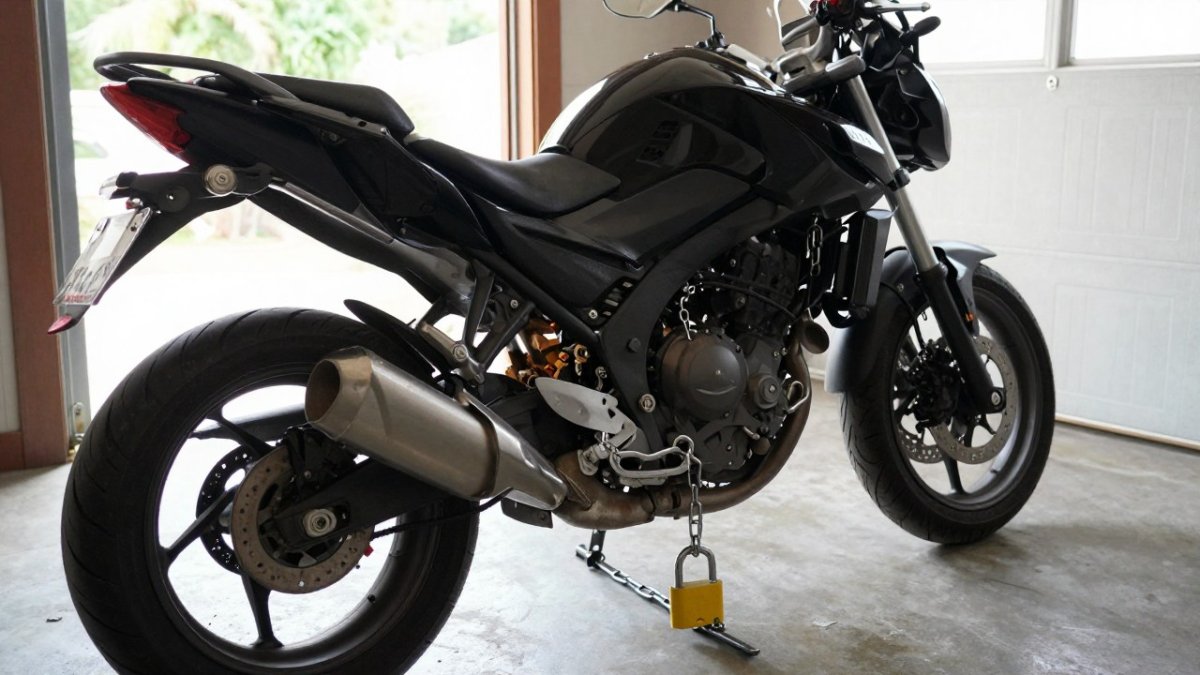
A ground anchor bolts into concrete and gives you a fixed point a thief cannot carry away. Install it where the bike sits, centered so the chain stays short and off the floor.
Watch out: a short chain is stronger than a long one. Leave slack and a thief gains use to swing a grinder or pry bar.
Step 3: Add Wheel, Disc, and Steering Locks
Locks on the bike itself stop the roll-away theft that beats a chain. A disc lock through the front brake rotor takes seconds to fit. A steering lock stops the bars turning. A wheel lock adds a visible second barrier.
Choosing a Motorcycle Ground Anchor and Chain That Hold Up
The best motorcycle ground anchor and chain combo is rated for the job, installed into sound concrete, and short enough to limit a thief's leverage. Thieves attack chains with bolt cutters, angle grinders, and pry bars. Make every attack slow, noisy, and awkward.
Match the Anchor to Your Slab, Not the Catalog
Anchor choice starts with what's under the bike. Most home garages have a poured concrete slab, but thickness and reinforcement vary. Before you drill, check three things:
- Slab thickness. A structural slab's thickness varies, and thinner topping over a post-tension or hollow-core deck may not hold a loaded anchor under a pry attack.
- Reinforcement. Rebar or mesh resists pull-out. Post-tension cables do not: drilling into one can damage the slab and create a safety hazard. If unsure, have a contractor scan the slab first.
- Moisture and coating. A damp floor corrodes mild-steel hardware. Stainless or galvanized anchors last longer in humid climates.
Anchor types fall into three practical families:
- Surface-mounted plate anchors bolt to the slab with wedge or sleeve anchors. Easy to install and inspect, but they sit proud of the floor and can be attacked at the bolt heads.
- Flush or recessed anchors sit in a pocket cut into the concrete, leaving only the eye exposed. Harder to pry and less of a trip hazard, but installation is more involved and the pocket must drain.
- Through-bolted anchors pass through the slab and are secured underneath where accessible. Strongest option on a thin slab, but not every garage allows access below.
Installation: The Mistakes That Undo a Good Anchor
A quality anchor installed badly is weaker than a cheap one installed well. The common failures:
- Drilling oversize. A hole larger than the specified diameter lets the wedge slip. Use the exact bit size and clean the hole, dust prevents full expansion.
- Hitting the edge. Anchors set too close to a slab edge or expansion joint can crack the concrete under load. Keep them well inside the slab and away from control joints.
- Skipping the torque check. Under-torquing leaves the anchor loose; over-torquing can strip the wedge. Re-check after a week as concrete and hardware settle.
Watch out: never anchor into a wooden floor, a floating deck, or a slab you haven't confirmed is structurally sound. An anchor that pulls out under load is worse than no anchor, because it gives false confidence.
Chain and Lock Selection That Actually Pairs
The chain and the padlock are a system, and the system is only as strong as its weakest part. Look for:
- Hardened steel links with a square or hexagonal cross-section that resist cutters and grinder wheels better than round mild steel.
- A sleeved or covered chain that protects paint and forces a grinder through fabric before steel.
- A closed-shackle padlock a pry bar cannot spread, with a shackle diameter matched to the chain link opening.
A common mistake is buying a heavy chain and a cheap padlock. The lock is usually the weakest link. Match the padlock's rating to the chain, and replace it at the first sign of shackle play or corrosion.
Chain Length: Shorter Is Stronger
A short chain is stronger than a long one: slack gives a thief room to swing a tool, twist the lock, or lift the bike for leverage. Measure from your anchor to the frame's locking point and buy the shortest chain that reaches with the bike in its normal spot. Keep it lifted off the concrete with a sleeve or bungee so it doesn't rattle, corrode, or become a trip hazard.
A Realistic Budget Tier
You don't need the most expensive hardware to raise the bar. A practical progression:
- Entry tier: a surface-mounted plate anchor, a hardened chain, and a closed-shackle padlock. Helps deter opportunistic roll-away and carry-away theft.
- Mid tier: a recessed or through-bolted anchor, a sleeved chain, and a matching padlock. Adds grinder resistance and reduces pry leverage.
- High tier: a through-bolted anchor with a rotating eye, a heavy sleeved chain, a high-security padlock, and a second anchor point so the bike is secured at two places.
Spend first on the anchor and padlock, since thieves attack those most. Upgrade the chain when the budget allows. Keep your receipts, since your insurer may ask what security was in place.
The Best Motorcycle Alarm and Tracker Combos for Garage Use
The best motorcycle alarm and tracker setup pairs a motion-triggered alarm with a GPS tracker that reports to your phone, installed so both keep working when the garage loses power. An alarm alone scares off casual thieves. A tracker alone tells you where the bike went. Together they cover deterrence and recovery.
What Each Piece Actually Does
- The alarm is a deterrent and a noise source. Motion and tilt sensors trigger on a lift, a nudge, or a wheel turn. A loud siren draws attention in a shared garage and buys time.
- The tracker is a recovery tool. GPS or cellular tracking with a live map and geofence alerts tells you the bike moved and where it is. It does nothing to stop the theft itself.
- The phone alert is the bridge. It turns a passive system into an active one by telling you something is happening while the thief is still working.
Garage-Specific Installation Trade-Offs
A garage is a harder environment than a parking lot, and the installation has to account for it:
- Power. A hardwired alarm drawing from the bike's battery can drain it during long storage. Use a maintainer or a low-power sleep mode. A tracker with its own backup battery survives a disconnected main battery.
- Signal. A detached metal garage can block cellular and GPS signals. Test reporting from inside the garage before relying on it. If weak, mount the tracker higher or near a window, or add a signal repeater if supported.
- False alarms. A garage sharing walls with a house or neighbors amplifies a siren. Tune sensitivity so wind, pets, or trucks don't trigger it, or you'll start ignoring alerts.
Watch out: a tracker with a dead backup battery is the same as no tracker at all. Put a battery check on your calendar and test the alert on your phone before you trust it.
Pairing an Alarm With a Camera and a Response Plan
An alert only helps if you know what to do with it. Set the alert to reach you at night, give a trusted neighbor access and a key, and decide in advance whether you'll check a camera, call a neighbor, or reach the garage yourself.
Pair the alert with a camera pointed at the bike. Footage helps police and your insurer, and it makes recovery far more likely. Keep the camera's storage local and backed up, since a thief who cuts power can take cloud-only footage offline.
Compatibility and Budget Tiers
Alarms and trackers range from simple motion sirens to subscription-based GPS services. A practical progression:
- Entry tier: a battery-powered motion alarm with a siren and phone alert, plus a basic GPS tracker with a prepaid data plan.
- Mid tier: a hardwired alarm with tilt and motion sensors, a tracker with geofence alerts and a backup battery, and a camera with local storage.
- High tier: a monitored alarm with professional response, a tracker with live tracking and redundant power, and a camera system with off-site backup. For high-value bikes or shared garages with repeated incidents.
Before buying, check that the alarm and tracker don't fight each other, some hardwired alarms interfere with tracker power, and some trackers need a data plan the alarm doesn't support. Read the compatibility notes, and keep the receipts for your insurer.
Why a Motorcycle Alarm That Alerts Your Phone Changes Response Time
A motorcycle alarm that alerts your phone turns a passive system into an active one. A siren tells a thief he's been noticed. A phone alert tells you, so you can check a camera, call a neighbor, or reach the garage while the thief is still working.
Pair the alert with a camera pointed at the bike. Footage helps police and your insurer, and it makes recovery far more likely.
Protect the Parts Thieves Actually Target: Seats, Saddlebags, and GPS
Whole-bike theft gets the headlines, but parts theft is just as common and often easier. Thieves pull seats, saddlebags, and GPS units because they resell fast and fit in a backpack.
This is where Robert Becker Design focuses. We build locks for saddlebags, seats, and mounting arms, designed for Harley-Davidson, Indian, and other touring models. Our products are designed to help secure GPS units, seats, and saddlebags.
A few habits that help:
- Lock saddlebags even when the bike is in the garage
- Remove or lock the GPS unit overnight
- Use a seat lock on any quick-release seat
Insurance, Documentation, and Recovery Preparation
Recovery starts before a theft happens. Photograph your bike from every angle, including the VIN plate and any aftermarket parts. Keep receipts for accessories, locks, and the alarm.
Then check your policy. Many motorcycle policies cover theft, and terms vary, so review yours with your insurer. Ask your insurer what they need to see, and keep a written record of the security you've installed.
A simple file helps:
- VIN, license plate, and title copy
- Photos of the bike and every accessory
- Receipts for locks, anchors, alarms, and trackers
Build Your Layered Garage Security Checklist
Layered security means no single failure lets a thief win. Use this checklist to audit your setup, then fix the gaps from the top down.
| Layer | What to Do | Why It Matters |
|---|---|---|
| Door and entry | Slide bolts, reinforcement bar, release clamp, motion lights | Stops the easiest break-in |
| Fixed anchor | Bolt a ground anchor into concrete, short chain | Stops the carry-away theft |
| Bike locks | Disc lock, steering lock, wheel lock | Stops roll-away theft |
| Alarm and tracker | Motion alarm plus GPS with phone alerts | Deters and aids recovery |
| Part locks | Seat, saddlebag, and GPS locks | Protects high-value parts |
| Records | Photos, receipts, insurer steps | Speeds recovery and claims |
Work down the list.
Garage security is a habit, not a purchase. The riders who keep their bikes are the ones who layer their defenses and lock the parts as carefully as the frame.
Frequently Asked Questions
What type of lock is best for securing a motorcycle in a garage?
No single lock does the job alone. A hardened steel ground anchor bolted into concrete paired with a heavy security chain and padlock secures the frame to an immovable object, which stops carry-away theft. Add a disc lock or wheel lock so the bike cannot roll, and a steering lock for a visible deterrent. Layering these makes a thief defeat several systems instead of one, which is the core principle behind any motorcycle garage security setup.
Should I use a motorcycle alarm and a tracker together?
Yes. An alarm that alerts your phone tells you something is happening in real time, while a tracker helps recover the bike if it is moved. An alarm that alerts your phone is most useful when you are nearby or asleep above the garage, since you can respond within seconds. A tracker covers the case where the bike leaves the property. Together they close the gap between detection and recovery, and both pair well with physical hardware like an anchor and chain.
How do I install a ground anchor without damaging my garage floor?
Most ground anchors bolt into a concrete slab using expansion bolts, so you drill into the concrete rather than cutting or replacing it. Pick a spot beside the bike's parked position so the chain stays short and off the floor, and check for pipes or rebar before drilling. Follow the anchor maker's bolt pattern and torque specs, and use a hammer drill with the correct bit size. If your garage floor is asphalt or a suspended deck, choose a wall-mounted anchor rated for the load instead.
Will aftermarket parts and accessories still be protected with these locks?
Physical locks protect the bike itself, but seats, saddlebags, and GPS units need their own hardware. Factory quick-release seats and stock saddlebags come off in seconds with the right technique, so dedicated locking mechanisms for those components matter as much as the chain. If you run a Garmin zumo, Montana, or Monterra, a locking mount keeps the unit attached when the bike is parked. Check compatibility with your model year and any custom mounting points before buying.
