

Table of Contents
- Why a Motorcycle Seat Lock Matters on Harley Touring Bikes
- Quick Comparison: Top Motorcycle Seat Lock Options for Harley Touring
- 1. Robert Becker Design Seat Security Hardware
- 2. Santoro Seat & Helmet Lock
- 3. WHIPLASH Anti-Theft Seat Bolt Kit
- 4. Magnetic Anti-Theft Seat Bolt for Harley
- 5. Generic 1/4-20 Thread Locking Seat Bolt
- Harley Davidson Seat Security Bolt: What to Look For
- How to Install a Harley Seat Lock
- Maintenance and Lubrication for Seat Lock Hardware
- Frequently Asked Questions
Last Updated: August 31, 2026
Motorcycle theft is more common than most riders want to admit. According to the FBI's National Incident-Based Reporting System, motorcycles are among the most frequently stolen vehicle types, and touring bikes with high-value aftermarket seats are prime targets. A motorcycle seat lock for Harley touring models is one of the simplest, most effective ways to protect a seat that may cost several hundred dollars to replace. At Robert Becker Design, we've been building motorcycle security hardware since 2012.
Quick Picks:
- Best Overall: Robert Becker Design Seat Security Hardware, purpose-built by a Harley rider, covers factory and aftermarket seats
- Best Dual-Purpose: Santoro Seat & Helmet Lock, secures both seat and helmet with one device
- Best Tamper-Resistant Bolt: WHIPLASH Anti-Theft Seat Bolt Kit, polished stainless steel with tamperproof design
- Best Magnetic Option: Magnetic Anti-Theft Seat Bolt, discreet, requires a magnetic key for removal
- Best Budget Entry: Generic 1/4-20 Thread Locking Seat Bolt, straightforward and affordable
Why a Motorcycle Seat Lock Matters on Harley Touring Bikes
A motorcycle seat lock is a tamper-resistant fastener or locking mechanism that replaces the standard seat bolt, preventing seat removal without the correct key or tool. On Harley touring models, the seat sits on a single rear bolt, which means anyone with a basic wrench can pull it off in under 30 seconds if that bolt is a standard OEM fastener.
Custom and aftermarket seats on touring models represent a significant investment. Touring riders frequently stop in urban areas and parking lots where bikes sit unattended for extended periods. A locking seat bolt also protects access to the battery compartment and storage areas located beneath the seat on most Harley touring platforms.
Quick Comparison: Top Motorcycle Seat Lock Options for Harley Touring
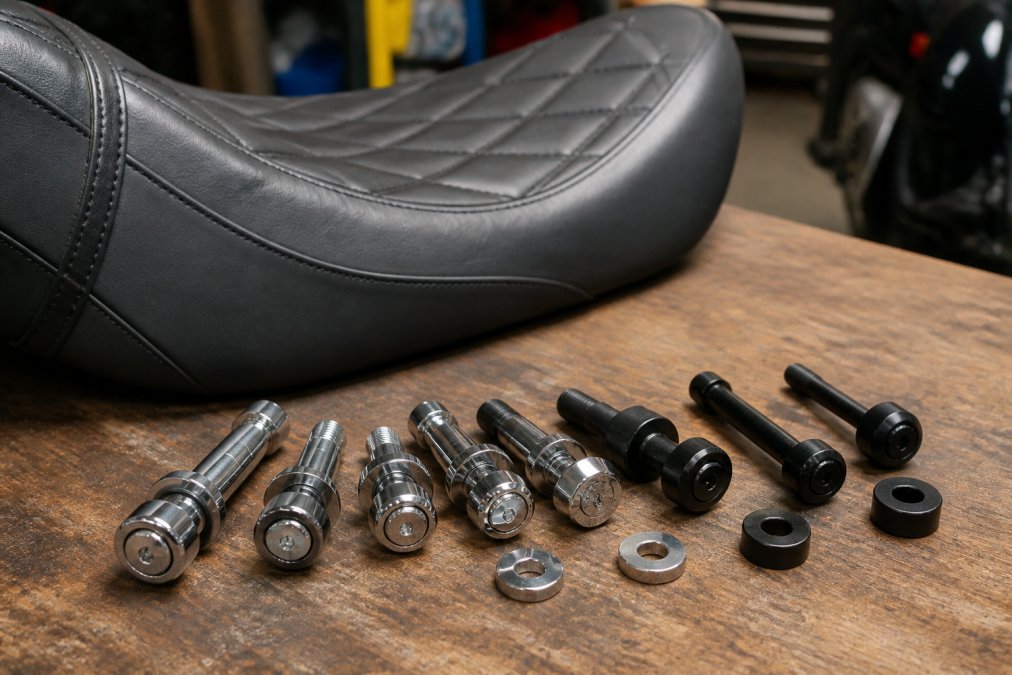
Choosing the right motorcycle seat lock comes down to three factors: locking mechanism type, material quality, and fitment compatibility.
| Product | Locking Mechanism | Thread | Finish Options | Best For |
|---|---|---|---|---|
| Robert Becker Design | Dedicated security lock | Model-specific | Varies | Full seat and accessory security |
| Santoro Seat & Helmet Lock | C-clip with Master Lock | Fender mount | Standard | Dual seat and helmet security |
| WHIPLASH Anti-Theft Bolt Kit | Tamperproof bolt | 1/4-20 | Polished stainless | Aftermarket seat protection |
| Magnetic Anti-Theft Seat Bolt | Magnetic key required | 1/4-20 | Chrome, black, multi-color | Discreet anti-theft |
| Generic 1/4-20 Locking Bolt | Keyed cylinder | 1/4-20 | Chrome or black | Budget-conscious riders |
1. Robert Becker Design Seat Security Hardware
Robert Becker Design is our top pick for Harley touring seat security. Since 2012, this company has developed security solutions specifically for the motorcycle industry, including dedicated locks for seats, saddlebags, and mounting hardware. The seat security hardware protects both factory and aftermarket seats, including solo seats, which many generic locking bolts do not address adequately.
What separates Robert Becker Design from generic options is the engineering intent. Robert Becker Design builds hardware around the security objective first, with fitment and durability following from that foundation.
Best for: Riders who want purpose-built seat security hardware from a specialist with a proven track record in motorcycle theft prevention.
2. Santoro Seat & Helmet Lock
The Santoro Seat & Helmet Lock uses a C-clip style device that mounts to the rear fender and secures both the seat and a helmet with a single Master Lock. Rather than replacing the seat bolt, it creates a physical barrier to seat removal, making it broadly compatible across Harley touring models without worrying about thread specifications.
The dual-purpose functionality is the real selling point. Riders who carry a helmet get two security functions from one device. The Santoro includes a Master Lock and key, and it carries a lifetime warranty.
Where it falls short: this is not a high-security solution. A determined thief with the right tools can defeat a C-clip style mechanism more easily than a keyed or magnetic bolt. For casual parking in lower-risk environments, it is practical and convenient.
Best for: Riders who want to secure both their custom Harley seat and a helmet with a single, easy-to-install device.
3. WHIPLASH Anti-Theft Seat Bolt Kit
The WHIPLASH Anti-Theft Seat Bolt Kit is made from polished 18-8 stainless steel and anodized billet aluminum. The design uses a tamperproof bolt head paired with a tapered washer that creates a secure fit against the seat mount. Standard removal tools cannot get purchase on the fastener head, which is the core of its theft deterrent function.
It fits most Harley-Davidson models and is positioned at riders who have invested in aftermarket seats and want hardware that matches the quality of the seat itself. The stainless steel and billet aluminum construction ensures corrosion resistance for touring riders who ride in varying weather conditions.
WHIPLASH recommends using threadlocker during installation to maximize security.
Best for: Harley-Davidson owners who want a stylish, corrosion-resistant tamperproof seat bolt that protects their investment in aftermarket seating.
4. Magnetic Anti-Theft Seat Bolt for Harley
The magnetic seat bolt uses a built-in magnetic device that requires a specific magnetic key to turn the screw. To anyone without that key, the bolt head looks like a standard fastener with no obvious removal point.
This discreet design is the main argument for the magnetic option. There is no visible keyhole to identify it as a security bolt. The bolt fits Harley models with 1/4-20 thread from 1996 through 2024, covering the majority of touring platforms. It is available in multiple finishes including chrome, black, blue, gold, orange, and red.
The limitation: the security level depends entirely on the magnetic key. The magnetic mechanism is not as resistant to a determined attack as a keyed cylinder with a hardened steel locking pin. For most parking situations, it is a solid deterrent.
Best for: Riders who want a discreet anti-theft seat bolt that does not advertise itself as a security device.
5. Generic 1/4-20 Thread Locking Seat Bolt
The entry point for motorcycle seat lock security is the generic keyed locking seat bolt with 1/4-20 thread. This category covers bolt-on replacements that swap the standard seat bolt for a keyed cylinder that requires a key for removal.
Quality examples use a locking cap machined from aluminum with a stainless steel bolt body to prevent rust. The 1/4-20 thread spec covers Harley touring models from 1984 through 2025, making fitment straightforward for the vast majority of riders. A key requirement for removal is a genuine deterrent against casual theft.
The tradeoff is security ceiling. A keyed aluminum cap is not as resistant to forced removal as a hardened steel locking pin. However, according to the National Insurance Crime Bureau's vehicle theft data, opportunistic theft accounts for the majority of vehicle component theft, and a visible deterrent reduces risk significantly.
Best for: Harley owners who want a straightforward, affordable locking seat bolt upgrade over the standard OEM fastener.
Harley Davidson Seat Security Bolt: What to Look For
Selecting the right Harley Davidson seat security bolt requires understanding three variables: locking mechanism type, thread compatibility, and material durability.
Locking Mechanism Comparison: Key, Magnetic, and Tamper-Resistant
Keyed cylinder locks use a traditional key-and-cylinder design. The bolt head contains a locking cylinder that engages a pin when locked. Security quality varies based on the cylinder grade and pin count. Look for hardened steel locking pins for the best resistance to forced removal.
Magnetic locks replace the key with a magnetic key that aligns internal pins through the bolt head. The advantage is a clean exterior with no visible keyhole. The limitation is that security depends on the uniqueness of the magnetic pattern.
Tamper-resistant bolt designs like the WHIPLASH kit use modified fastener heads that standard tools cannot grip. Paired with threadlocker, they are effective against opportunistic theft.
Fitment and Thread Compatibility Across Touring Models
The 1/4-20 thread specification covers the seat bolt on Harley-Davidson touring models from 1984 onward, including Road Glide, Street Glide, Electra Glide, Ultra Classic, and Tri Glide platforms. Any locking bolt listed as 1/4-20 compatible will thread into the stock seat mount without modification.
Verify compatibility with the manufacturer before ordering if you are on a trike platform or running a non-OEM seat, as some aftermarket seats use different mounting hardware.
| Harley Touring Model | Seat Bolt Thread | Locking Bolt Compatible | Notes |
|---|---|---|---|
| Road Glide (1998-2026) | 1/4-20 | Yes | Standard fitment |
| Street Glide (2006-2026) | 1/4-20 | Yes | Standard fitment |
| Electra Glide (1984-2026) | 1/4-20 | Yes | Standard fitment |
| Ultra Classic (1989-2026) | 1/4-20 | Yes | Standard fitment |
| Tri Glide / Freewheeler | 1/4-20 | Verify | Trike geometry differs |
| CVO Touring Models | 1/4-20 | Yes | Confirm with aftermarket seat manufacturer |
How to Install a Harley Seat Lock
Installing a motorcycle seat lock on a Harley touring bike is a straightforward process that most riders can complete without taking the bike to a shop.
What you will need:
- Replacement locking seat bolt (with key)
- Socket or wrench matching the existing bolt head (typically 3/8" or 7/16")
- Threadlocker (recommended for tamper-resistant designs)
- Clean rag
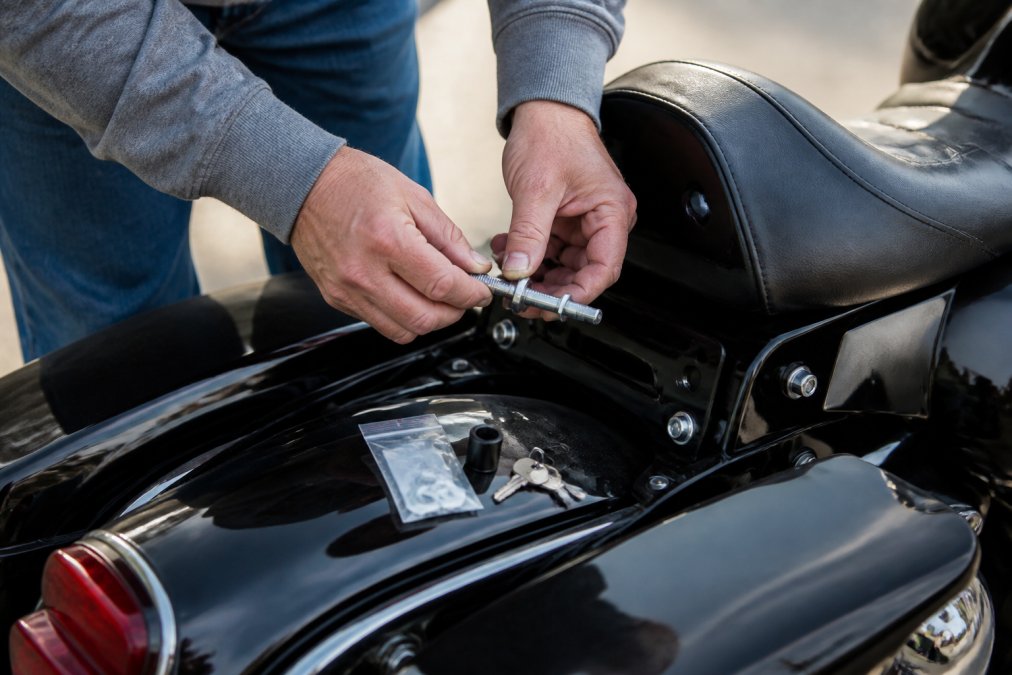
Step 1: Remove the existing seat bolt. Locate the seat bolt at the rear of the seat. Use the appropriate socket or wrench to remove it.
Step 2: Inspect the seat mount. Check the seat mount threads for debris or corrosion. Clean with a dry rag if needed. Do not use lubricant on the threads if you plan to apply threadlocker.
Step 3: Thread in the locking bolt. Hand-thread the locking seat bolt into the mount to confirm it seats correctly.
Step 4: Torque to specification. Most seat bolts on Harley touring models torque to between 10 and 15 foot-pounds. Refer to your service manual for the exact spec for your model year. Do not overtighten an aluminum locking cap.
Step 5: Test the locking mechanism. Insert the key, cycle through the lock and unlock positions, and confirm the seat does not lift when the bolt is in the locked position.
Step 6: Store your key safely. Keep the key on your primary keyring or in a designated location. Losing the key to a locking seat bolt requires drilling out the fastener.
Maintenance and Lubrication for Seat Lock Hardware
A locking seat bolt requires minimal maintenance, but neglecting it entirely leads to cylinder seizure and corrosion at the mounting threads.
For keyed cylinder locks, apply a small amount of graphite-based lock lubricant to the cylinder once or twice per season. Do not use oil-based lubricants inside the cylinder; they attract debris and gum up the mechanism over time. The American Motorcyclist Association's maintenance guidance consistently recommends graphite for lock cylinders on outdoor hardware.
For the bolt threads themselves, a light application of anti-seize on installation extends the life of the mount threads, particularly on older bikes. Stainless steel bolts in aluminum mounts are prone to galvanic corrosion in wet climates.
Magnetic bolt mechanisms require less maintenance than keyed cylinders, but inspect the magnetic key annually for demagnetization.
Protecting a high-value touring seat from theft does not require a complicated system. A quality motorcycle seat lock closes the most obvious vulnerability on any Harley touring platform in under ten minutes. Robert Becker Design's seat security hardware is purpose-built for this problem, engineered by riders who understand touring bike security from the ground up. Shop All security hardware at Robert Becker Design and protect what you have invested in.
Frequently Asked Questions
Q: Why do I need a seat lock for my Harley touring bike?
A: Custom and aftermarket seats on Harley touring models can cost several hundred dollars, making them an easy target in parking lots. A motorcycle seat lock replaces the standard seat bolt with a tamper-resistant or keyed locking bolt, so a thief cannot simply unscrew the seat and walk away. It adds a meaningful deterrent without modifying the bike's frame or requiring permanent changes to the OEM mounting points.
Q: Are Harley-Davidson seat bolts universal across touring models?
A: Most Harley-Davidson touring models from 1984 onward use a standard 1/4-20 thread seat bolt, which means the majority of aftermarket locking seat bolts and security bolt kits are compatible across Road Glide, Street Glide, Electra Glide, and Ultra Classic platforms. Always confirm the thread spec and bolt length against your specific model year before ordering, especially if you run an aftermarket seat with a different mounting bracket.
Q: What is the difference between a seat bolt and a seat lock?
A: A standard seat bolt simply fastens the seat to the frame and can be removed with a common screwdriver or socket in seconds. A seat lock replaces that bolt with a locking cylinder or tamper-resistant fastener that requires a specific key, magnetic key, or proprietary tool for removal. Some systems add a locking pin or C-clip mechanism to the rear fender rather than the front bolt, providing a secondary theft deterrent on top of the front fastener.
Q: How do I prevent my motorcycle seat from being stolen?
A: Start by replacing the OEM seat bolt with a keyed or magnetic anti-theft security bolt. For higher-value seats, add a secondary locking device at the rear mounting point. Park in well-lit, visible areas when possible, and consider pairing seat security with a disc lock or chain to make the entire bike harder to move. Keeping a record of your seat's serial number and any identifying marks also helps with recovery if theft does occur.
Q: Do aftermarket seat locks fit OEM and custom aftermarket seats on Harley touring models?
A: Most locking seat bolts designed for Harley touring bikes fit both OEM seats and common aftermarket seats, provided the front mounting tab uses the standard 1/4-20 thread. However, some heavily customized solo seats or seats with non-standard mounting brackets may need a different bolt length or a rear-fender locking device instead. Check the hardware kit's fitment chart and confirm your seat's mounting configuration before purchasing.
This article was written using GrandRanker