
Last Updated: November 9, 2026
Quick Summary
Seat security locks are worth it for commuters because a disc lock stops the wheels but does nothing to stop someone walking off with your seat, GPS unit, or saddlebag. These locks defeat the quick-release lever and exposed fastener a thief would otherwise beat in seconds, making your bike the harder target on the row.
- A seat lock defeats flipping the quick-release lever and backing out the exposed fastener with a socket.
- No lock in this category stops a determined thief with power tools and time.
- Confirm your exact model, year, and trim before buying, since seat retention varies.
- A bolt longer or shorter than stock can change the seat's clamp load and wear mounting tabs.
- Keep receipts and photos of your security setup in case you file a claim.
Table of Contents
- Why Commuters Need Seat Security Locks, Not Just a Disc Lock
- How Motorcycle Seat Locks Work and What They Stop
- Choosing a Motorcycle Seat Lock for Harley Touring and Indian Bikes
- Picking the Best Motorcycle Disc Lock for Daily Parking
- When the Best Motorcycle Security Chain Beats a Seat Lock
- Carrying Your Security Gear Without Scratches or Bulk
- Insurance-Approved Security and What Insurers Actually Ask For
- Building Your Commuter Locking Routine
- Frequently Asked Questions
Why Commuters Need Seat Security Locks, Not Just a Disc Lock
A disc lock stops the wheels from turning. It does nothing to stop someone from walking off with your seat, your GPS unit, or the saddlebag sitting next to it. That gap is exactly where seat security locks earn their place in a commuter's kit.
Seats and accessories disappear because fasteners a thief can defeat in seconds with a socket wrench hold them on.
Commuter parking makes this worse. You leave the bike in the same garage, street bay, or lot every weekday, and patterns get noticed.
So the question isn't whether a seat lock replaces a disc lock. It's whether you're covering the parts a disc lock ignores.
How Motorcycle Seat Locks Work and What They Stop
A motorcycle seat lock is a tamper-resistant mechanism that prevents the seat from being unlatched or unbolted without a key.
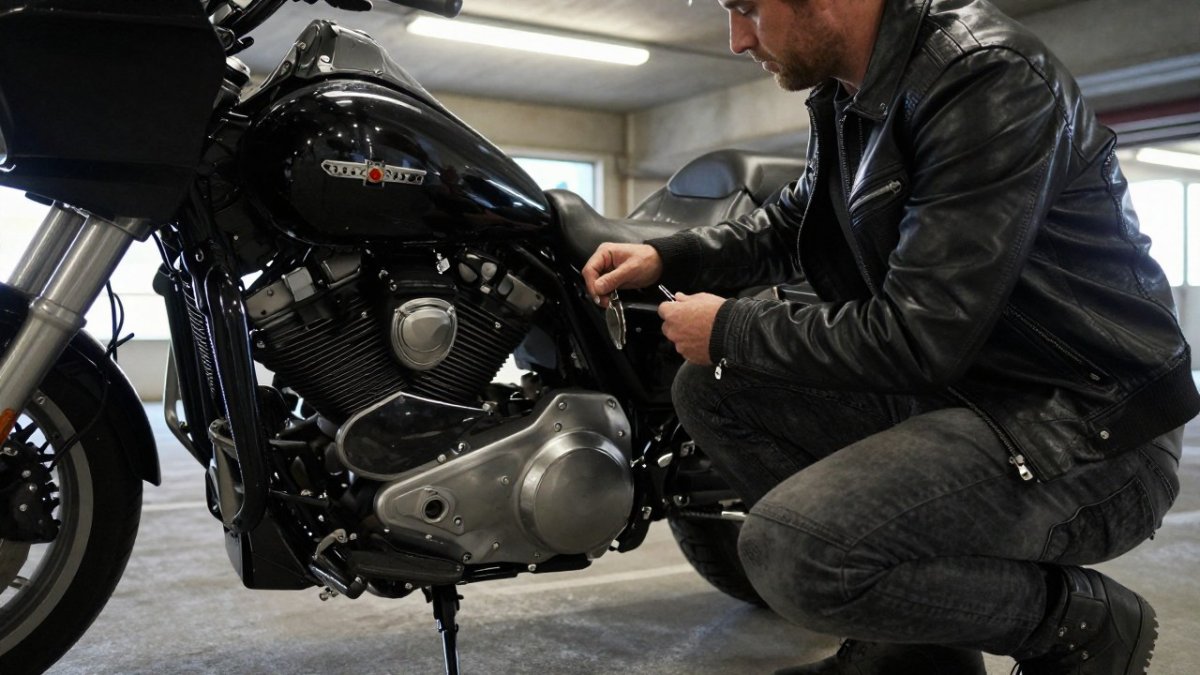
What they don't stop: a determined thief with power tools and time. No lock in this category is absolute. The point is to make your bike the harder target on the row.
There are three main approaches, and they fail in different ways.
Watch out: a seat lock that replaces the stock bolt can change the seat's clamp load.
Fitment matters, so check that any seat lock matches your bike's release mechanism.
Run through this list before checkout:
- Confirm your exact model, year, and trim
- Note whether your seat is factory or aftermarket
- Check if your bike has custom mounting points from prior upgrades
- Verify the lock replaces or works alongside the existing release
- Ask whether installation needs drilling or uses existing holes
- Confirm the return policy if fitment fails
That last one matters. Fitment surprises are common on modified touring bikes, and a seller who stands behind the product is worth more than a few dollars saved.
Here is what a seat lock is up against, and what it can and cannot do.
| Item | Detail | Note |
|---|---|---|
| What it stops | Flipping the quick-release lever | Defeats stock seat removal |
| What it stops | Backing out the exposed fastener with a socket | Keyed, hardened substitute bolt |
| What it cannot stop | A determined thief with power tools and time | No lock in this category is absolute |
| Main approaches | Three main approaches | They fail in different ways |
| Fitment check | Confirm exact model, year, and trim | Seat retention varies by model year and trim |
| Fitment check | Note factory or aftermarket seat | Aftermarket seats can change mounting points |
| Fitment check | Confirm return policy if fitment fails | Fitment surprises are common on modified touring bikes |
| Installation risk | Bolt length changes seat clamp load | Check thread pitch and length against factory part |
Choosing a Motorcycle Seat Lock for Harley Touring and Indian Bikes
Indian owners face a similar issue. A Roadmaster seat doesn't share geometry with a Harley, so a Harley-specific kit won't transfer. Ask the seller directly whether the product is confirmed for your model and year before you buy.
Fitment Checks Before You Buy
Run through this list before checkout:
- Confirm your exact model, year, and trim
- Note whether your seat is factory or aftermarket
- Check if your bike has custom mounting points from prior upgrades
- Verify the lock replaces or works alongside the existing release
- Ask whether installation needs drilling or uses existing holes
- Confirm the return policy if fitment fails
That last one matters. Fitment surprises are common on modified touring bikes, and a seller who stands behind the product is worth more than a few dollars saved.
Picking the Best Motorcycle Disc Lock for Daily Parking
The best motorcycle disc lock for a commuter is one you'll actually carry every single day. That means compact, alarmed, and loud enough to draw attention.
An alarmed disc lock clips through the brake rotor and sounds a vibration-triggered siren if someone moves the bike. For commuter parking, the alarm does more work than the lock itself. Most thieves want quiet and quick; a screaming siren ruins both.
What to look for:
- Shackle thickness that resists bolt cutters
- Vibration sensor with a sensitivity setting so wind doesn't set it off
- Weatherproofing, since the lock lives outside in rain and grit
- Keyway protection so the cylinder can't be picked or drilled easily
- A carry pouch that fits a jacket pocket or belt loop
Skip the heaviest option if you're carrying it daily. A lock left at home protects nothing. The right balance is a mid-weight alarmed disc lock you can pocket without thinking about it.
When the Best Motorcycle Security Chain Beats a Seat Lock
A motorcycle security chain wins when your bike sits in one place for hours and you have something to lock it to. A hardened steel chain threaded through the frame and around a fixed anchor point turns a ride-away theft into a much harder job.
This is the commuter's second layer. A disc lock stops the wheel; a chain stops the bike from leaving. Together they cover two different failure modes.
What separates a good chain from a bad one:
- Hardened steel links rather than mild steel
- A fabric sleeve so the chain doesn't scuff your paint
- A quality padlock or integrated lock with a protected shackle
- Enough length to reach a real anchor, but not so much that it hangs loose
Watch out: a heavy-duty chain is only as strong as what you wrap it around. A chain looped over a thin signpost or a loose railing gives a thief use. Look for a ground anchor or a solid fixed object before you trust the chain.
Carrying Your Security Gear Without Scratches or Bulk
The best lock in the world is useless if it lives in your garage. Commuter convenience is the deciding factor, and it's where most security setups fall apart.
The practical problem is weight and volume. A hardened steel chain and padlock can run several pounds, and an alarmed disc lock adds bulk to a jacket pocket.
A few approaches riders commonly use:
- Belt or pocket pouch for the disc lock, keeping it off your paint and within reach at every stop
- A dedicated tank bag or tail bag compartment for the chain, so the weight sits low and centered
- Saddlebag storage for the heavier hardware, since touring bikes already have the space and the load rating
- A small frame-mounted bag for the lock and key, out of the way of your legs
- A backpack or messenger bag as the fallback for sportbike commuters with no luggage
The scratch problem is real, and it's usually the lock body, not the chain, that does the damage. Wrap hardware in a soft sleeve or keep it in a lined pocket.
Watch out: a chain carried loose in a saddlebag can shift and abrade the bag's liner or the paint underneath.
Weight placement matters more than total weight.
For riders who commute to a fixed location, a second lock that stays at the destination is often the better answer.
Insurance-Approved Security and What Insurers Actually Ask For
Your insurer may also ask about the security you use, so it is worth checking what your policy requires.
What insurers typically want to know:
- Whether the bike is stored in a garage, lot, or on the street
- What locks you use, and sometimes the specific product
- Whether the lock was fitted at the time of loss
The practical move is to keep receipts and photos of your security setup. If a claim happens, proof that you used a lock can matter. Ask your insurer directly what documentation they require, and check whether they recognize specific security ratings.
If your insurer names an approved lock rating, confirm the exact standard before you buy. Requirements vary by insurer and policy, so a quick call beats a guess.
Building Your Commuter Locking Routine
A locking strategy beats any single lock. The routine below takes about a minute once you've practiced it.
- Park in a well-lit, visible spot when you have the choice
- Fit the disc lock through the front rotor and set the alarm
- Attach the chain through the frame to a fixed anchor if one exists
- Lock the seat so components stay put
- Take the key and never leave a spare on the bike
- Vary your parking spot occasionally to break the pattern
For touring riders, seat and component security is where Robert Becker Design focuses. Our seat locks and saddlebag security hardware are designed for Harley-Davidson and Indian touring models, and our mounting solutions protect GPS units such as the Garmin zumo and Montana.
Your bike sitting in the same spot every weekday is a pattern, and patterns get exploited. Layer your security: a disc lock for the wheel, a chain for the frame, and a seat lock for the components a thief can walk off with.
Frequently Asked Questions
How do motorcycle seat locks work?
Most seat locks replace or cover the stock seat bolt or latch so the saddle cannot be lifted off without a key. Bolt kits swap the factory fastener for a tamper-resistant one, while keyed latch covers block access to the release mechanism. On touring models, the seat often guards the battery and wiring, so locking it also slows anyone trying to reach those components. Pair a seat lock with a disc lock and chain for layered protection.
Should I use a seat lock with a disc lock or chain?
Yes. A seat security lock protects your saddle and whatever sits under it, but it will not stop a bike from being rolled away. A disc lock immobilizes the front wheel, and a hardened steel chain with a ground anchor ties the frame to something fixed. Use all three where you park all day: seat lock for components, disc lock for rollaway, chain for the frame. Each layer covers a gap the others leave open.
Are motorcycle seat locks universal?
No. Fitment depends on the seat bolt pattern, latch design, and whether your bike has a solo or two-up seat, plus any aftermarket mounting points you have added. Harley-Davidson Touring models and Indian baggers each use different hardware, and aftermarket seats can change the bolt location. Check the product's stated compatibility against your exact model and year before ordering, and contact the seller if your setup is custom.
Can a motorcycle seat lock prevent theft?
It prevents the specific theft of your seat and the parts underneath it, which is a common target on touring bikes because aftermarket seats and accessible batteries are easy to resell. It does not stop a determined thief with power tools, and no lock does. The practical goal is deterrence and delay: a visible, tamper-resistant lock pushes a casual thief to an easier bike. Combine it with an alarmed disc lock so noise draws attention.
How do I secure a motorcycle seat when commuting?
Lock the seat every time you leave the bike, even for a five-minute stop, and park where people pass by. Use a keyed seat lock or anti-theft bolt kit, add an alarmed disc lock on the front wheel, and carry a chain for longer stays. Take loose items like GPS units with you rather than leaving them under the seat. Consistency matters more than the brand: a lock you actually use every day beats a heavier one you skip.
