
Last Updated: October 24, 2026
Quick Summary
A security bolt is a hardened, key-operated locking fastener that replaces a standard axle or mounting bolt, immobilizing a component so a thief cannot simply unbolt it and walk away. Unlike a disc lock, which stops wheel rotation, a security bolt protects the part itself from removal, making it ideal for touring bikes left parked with removable luggage and accessories.
- A disc lock stops wheel rotation, while a security bolt stops component removal.
- A security bolt adds almost no weight because it replaces a bolt already on the bike.
- Match bolt thread diameter and pitch exactly, since forcing the wrong pitch damages threads.
- Layer a disc lock, chain, saddlebag locks, and a tracker for overnight city parking.
- Apply graphite lubricant to the keyway once a season and wipe down after riding through salt.
Table of Contents
- Why a Security Bolt Belongs in Your Touring Kit
- Motorcycle Security Bolts vs Disc Locks: How Each One Stops a Wheel
- Motorcycle Disc Lock Review: Cut Resistance, Bolt Cutters and Attack Time
- Weight, Storage and Carry Options for Long-Distance Riding
- Fit and Compatibility on Touring Brake Discs and Custom Mounting Points
- Harley-Davidson Saddlebag Locks and Layered Security for Overnight Stops
- Weather, Corrosion and Long-Term Durability on the Road
- Choosing Your Touring Security Setup from Robert Becker Design
- Frequently Asked Questions
Why a Security Bolt Belongs in Your Touring Kit
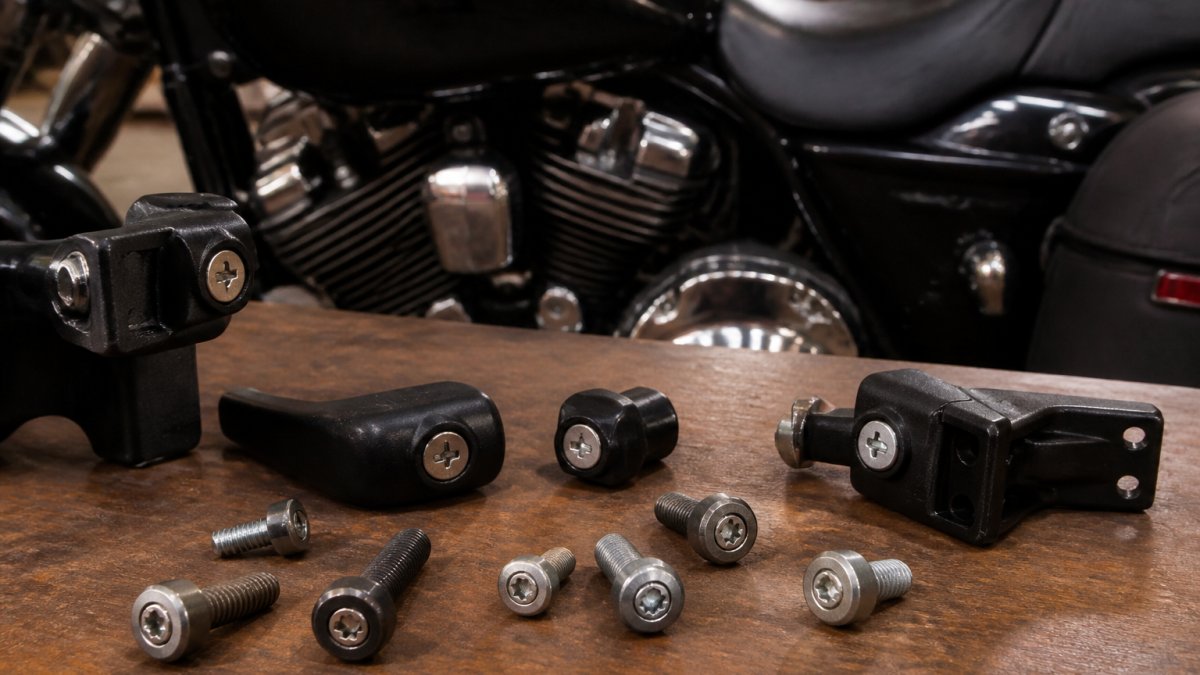
A security bolt is a hardened, key-operated locking fastener that replaces a standard axle or mounting bolt, immobilizing a component so a thief cannot simply unbolt it and walk away. At Robert Becker Design, we build these for riders who leave loaded touring bikes parked on city streets and motel lots for hours.
Touring bikes carry more removable value than almost any other motorcycle. Saddlebags, seats, GPS units, and mounting arms all come off with basic tools in under a minute. A determined thief rarely bothers defeating a lock. They look for the bike with nothing bolted down.
Below are the seven facts that matter when choosing security hardware for long-distance riding, from cut resistance to corrosion to weight.
Motorcycle Security Bolts vs Disc Locks: How Each One Stops a Wheel
These two products solve different problems, and most riders own only one. A disc lock is a compact shackle that clamps through brake disc holes, preventing wheel rotation. A security bolt is a replacement fastener with a keyed cylinder head, so the component it holds cannot be unthreaded without the key.
Think of it as motion versus removal. The disc lock immobilizes the wheel. The security bolt protects the part.
| Feature | Disc Lock | Security Bolt |
|---|---|---|
| Primary job | Stops wheel rotation | Stops component removal |
| Weight | Light, pocket-sized | Comparable to the bolt it replaces |
| Carry method | Jacket pocket or tank bag | Stays installed on the bike |
| Best against | Ride-away theft | Part theft and quick unbolting |
| Setup time | Seconds | Minutes, once |
That difference matters on tour: a disc lock is a deterrent you deploy at every stop, while a security bolt is protection you install once and forget, exactly why it suits long-distance riding.
Motorcycle Disc Lock Review: Cut Resistance, Bolt Cutters and Attack Time
Shackle diameter, steel hardness, and cylinder shielding decide cut resistance.
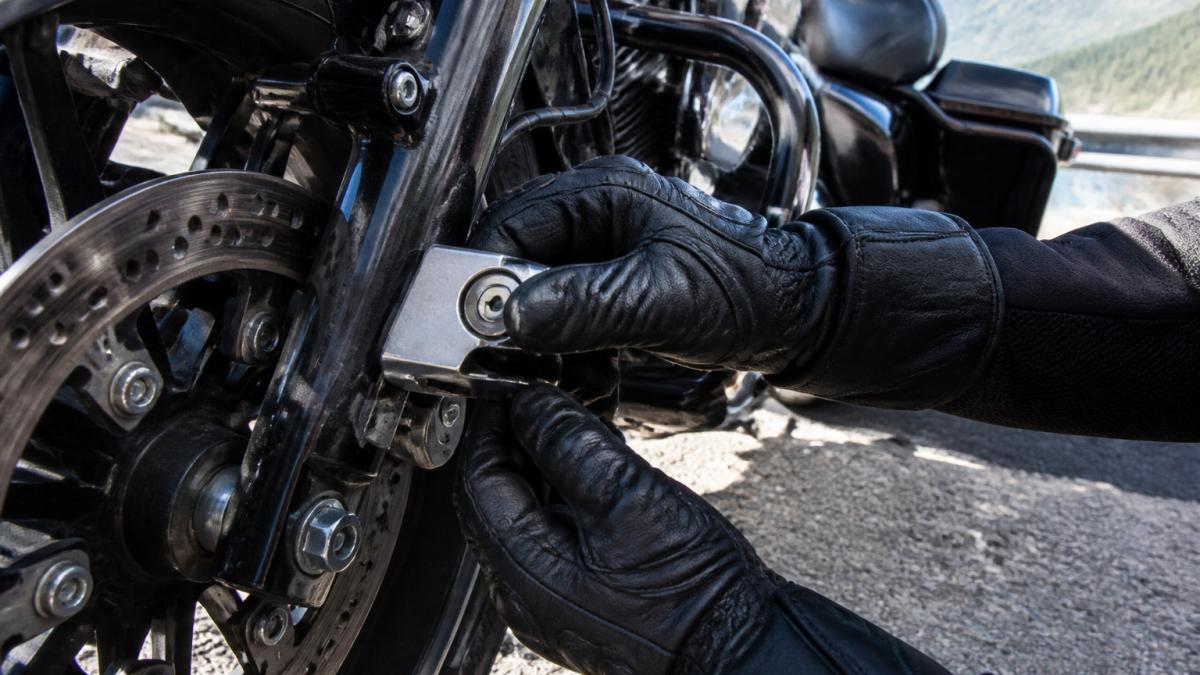
Here's what most buyers get wrong: they compare locks by looks instead of by attack method. A thief with hydraulic bolt cutters doesn't pick your lock.
So the practical test isn't "can it be cut?" It's "how long does it take, and how much noise does it make?" Thieves work on a clock.
A Transparent Test Methodology You Can Replicate
Most lock reviews skip the conditions behind the claim. Here is the methodology we recommend riders use to compare hardware, and the one we apply when evaluating security bolts for touring bikes.
- Tool type: Test with the tools a real thief carries, 24-inch and 36-inch bolt cutters, a cordless angle grinder with a cutoff wheel, and a pry bar. Note which tool defeats the product and which does not.
- Attack time: Time each attempt from first contact to failure, noting whether the tool slipped, bound, or needed repositioning. A lock that survives 90 seconds of grinding differs from one that opens in 15.
- Lock positioning: Test mounted on the bike, not in a bench vise. On a touring bike the disc lock sits low and close to the fork leg, limiting swing room for cutters and changing the attack entirely.
What the Attack Surface Tells You
For a disc lock, the exposed shackle is the weak point; diameter and hardness set the ceiling on cut resistance, and a recessed, shielded cylinder removes the picking and drilling shortcut. For a security bolt, there's no exposed shackle to cut. The cylinder is recessed and shielded, so bolt cutters have nothing to grab, and an angle grinder must work against a hardened, low-profile head often recessed into the component it secures.
Reading the Results Like a Rider
A disc lock that resists 60 seconds of bolt-cutter attack but opens to a grinder in 20 seconds is still useful, because most opportunistic thieves don't carry a grinder into a motel lot. The goal isn't an uncuttable lock, it's one that pushes the attack past the thief's patience and noise tolerance. Compare products on the full attack profile (cutter time, grinder time, picking resistance, mounting position), not a single headline number.
Weight, Storage and Carry Options for Long-Distance Riding
Every ounce counts on a week-long trip, but a security bolt adds almost nothing to your load because it replaces a bolt already on the bike.
Disc locks eat luggage space. A chunky alarm-equipped disc lock can weigh as much as a small water bottle and takes room in a saddlebag you'd rather use for rain gear.
A few carry habits that work on tour:
- Keep the disc lock in a dedicated pocket, not loose in a bag where it scratches paint
- Use a lock pouch on the frame or crash bar for quick access at fuel stops
- Store the key on a separate ring from the ignition key so a lost set doesn't strand you
Compact, lightweight hardware you actually carry beats heavy gear you leave in the hotel room, the difference between a secured bike and an unsecured one.
Fit and Compatibility on Touring Brake Discs and Custom Mounting Points
Fit is where most security purchases go wrong, so check before you buy. Disc lock shackle diameter must pass cleanly through your brake disc holes, and disc thickness varies across models. Measure the hole and the disc gap, then match the lock.
Security bolts are more forgiving because they replace an existing fastener, but thread pitch and length must still match.
A Fit Guide for Touring Bikes and Brake-Disc Designs
Competitors rarely publish a fit guide, so here is the checklist we use when matching hardware to a touring motorcycle. Measure in inches and millimeters, and write the numbers down before ordering.
- Bolt diameter and thread pitch: Match the thread diameter and pitch exactly. A bolt that threads a few turns then binds is the wrong pitch, and forcing it damages the component's threads.
- Bolt length and shoulder: Measure from under the head to the tip of the original bolt. Too long and the bolt bottoms out before it clamps; too short and it engages too few threads to hold safely.
- Disc openings: Disc lock shackle diameter must pass through the disc holes with clearance. Measure the smallest hole in the disc, not the largest, and leave a margin so the shackle does not bind when the wheel is turned.
Model-Specific Constraints on Touring Bikes
Touring motorcycles carry more bolted-on hardware than any other category, and each added component is a fit variable.
Our advice: confirm compatibility with your exact model year and aftermarket accessories before ordering. We build our hardware around Harley-Davidson and Indian touring models, including fitment for stock and aftermarket seats and saddlebags. If unsure, ask before you buy rather than drilling new holes.
A Five-Minute Pre-Purchase Check
Before you order, do this on your own bike:
- Photograph the fastener you intend to replace, with a ruler beside it for scale.
- Measure the thread diameter, pitch, and length, and note the shoulder type.
- Measure the smallest brake-disc hole and the disc thickness with calipers.
- Turn the bars to full lock and check clearance at the mounting point.
- List every aftermarket accessory near the mounting point and confirm clearance with each one installed.
That five-minute check prevents the most common touring-security mistake: buying hardware that fits the catalog photo but not the bike in your garage.
Harley-Davidson Saddlebag Locks and Layered Security for Overnight Stops
Overnight is when touring bikes get stripped. A motel lot at 2 a.m. is a thief's ideal window: dark, quiet, and full of bikes with quick-release luggage.
Layered security is the answer, and it means stacking cheap deterrents so no single failure loses the bike:
- A disc lock on the front wheel to stop it rolling
- A chain or U-lock through the frame and a fixed anchor where one exists
- Harley-Davidson saddlebag locks so luggage can't be lifted in seconds
The saddlebag locks are the piece most riders skip, and they're the piece thieves target first. Quick-release bags are convenient for you and equally convenient for someone else. Locking hardware turns a five-second grab into a fumbled, visible struggle.
Weather, Corrosion and Long-Term Durability on the Road
Rain, road salt, and temperature swings destroy cheap security hardware faster than any thief. A lock that seizes after one wet season is one you'll stop using.
Durability comes down to materials and seals. Hardened steel resists cutting but needs corrosion protection. A shielded cylinder keeps water and grit out of the keyway.
A common mistake is ignoring maintenance until the key won't turn.
Choosing Your Touring Security Setup from Robert Becker Design
The right setup depends on how you ride, not on buying the most expensive lock on the shelf. If you park in high-theft areas overnight, layer a disc lock, a chain, and locking saddlebag and seat hardware.
A simple decision framework:
- Overnight in a city: disc lock + chain + saddlebag locks + tracker
- Day rides with frequent stops: disc lock only, kept in a jacket pocket
- Long tour with removable luggage: add saddlebag and seat locks before you leave
At Robert Becker Design, we've built theft prevention hardware for the motorcycle industry since 2012, designed by riders for riders. Our lineup covers saddlebag locks, seat locks, and mounting-arm security for Harley-Davidson, Indian, and other touring models, plus fitment for Garmin GPS units.
Frequently Asked Questions
Are security bolts effective against motorcycle theft?
They work best as one layer, not the whole plan. A hardened security bolt on a brake disc forces a thief to deal with a small, hardened target that resists hand tools and slows down hydraulic bolt cutters, which is often enough to make an easier bike nearby more attractive. Pair it with a chain or U-lock, a cover, and a GPS tracker for overnight stops. No single lock stops a determined thief with unlimited time and power tools, so the goal is delay and noise.
How do motorcycle security bolts differ from disc locks?
A security bolt is a compact locking pin or bolt that threads or clamps through the brake disc and immobilizes the wheel, while a disc lock is a larger shackle-style lock that snaps over the disc rotor. Both prevent movement, but security bolts tend to be smaller and lighter for touring, and some accept a key-operated push-down cylinder. Disc locks are quicker to spot and often louder to defeat. Many riders carry one of each and use the bolt for short stops.
Can security bolts be used on Harley-Davidson and Indian touring bikes?
Yes, provided the bolt fits the brake disc thickness and hole pattern on your model. Touring bikes from both brands use thick rotors, and aftermarket wheels or upgraded brake discs can change clearance, so measure before you buy. Robert Becker Design builds locks around Harley-Davidson and Indian touring platforms, including Tri Glide and Road Glide 3 trikes, and its saddlebag and seat locks are made for stock and aftermarket components. Check the fitment list for your year and model.
What other locks should I use with a motorcycle security bolt?
Build a layered setup: a security bolt or disc lock on the front wheel, a chain or U-lock through the frame and a fixed object, Harley-Davidson saddlebag locks to protect luggage, and a cover to hide what is on the bike. For overnight touring stops, add a ground anchor where possible and a tracker as a backup. Robert Becker Design covers the component side with saddlebag, seat, and GPS mounting locks, so the bolt handles the wheel while those handle the parts thieves actually target.
Securing a touring bike isn't about one perfect lock. It's about making your bike harder to take than the one parked next to it. Robert Becker Design builds the specialized hardware that closes the gaps generic locks leave open, from saddlebag and seat locks to GPS mount security and mounting-arm protection, all engineered for touring models and backed by a team that's been at it since 2012. Get started with Robert Becker Design and ride knowing your gear is bolted down.
