
Table of Contents
- Why Motorcycle Theft Prevention Matters More When You Travel
- Best Motorcycle Security Locks for Travel
- How to Secure Motorcycle Luggage and Accessories
- GPS Trackers for Motorcycles: Recovery When Prevention Fails
- Smart Parking Strategy: Location, Lighting, and Deterrence
- Motorcycle Theft Prevention Tips for Overnight and Stealth Camping
- Layering Your Security: DIY vs. Professional Installation
- Frequently Asked Questions
Last Updated: August 30, 2026
Why Motorcycle Theft Prevention Matters More When You Travel
Motorcycle theft risk increases dramatically when you leave home. At Robert Becker Design, we've worked with touring riders since 2012, and the pattern is consistent: bikes get hit hardest when owners are far from familiar territory, sleeping in a tent, or parked overnight in unfamiliar cities.
Thieves target unattended vehicles they can study without interruption. A bike sitting in a hotel lot for eight hours, loaded with aftermarket accessories and GPS hardware, is an attractive target. When you travel, you lose home-field advantages: your garage, your neighbors, your familiar parking spots, your routine.
The good news is that motorcycle theft prevention on the road is solvable. It requires layering multiple deterrents, thinking ahead about where and how you park, and choosing hardware that travels well. According to the National Insurance Crime Bureau's vehicle theft data, motorcycles are among the most frequently stolen vehicle types, and recovery rates lag well behind those for cars. Prevention is the only reliable strategy.
Best Motorcycle Security Locks for Travel
The single most effective thing a touring rider can do is use more than one lock. A single lock, regardless of quality, can be defeated faster than two different lock types from different manufacturers. Thieves work on time pressure. Every additional barrier increases the chance they'll move on.
Heavy-Duty Chains and Ground Anchors
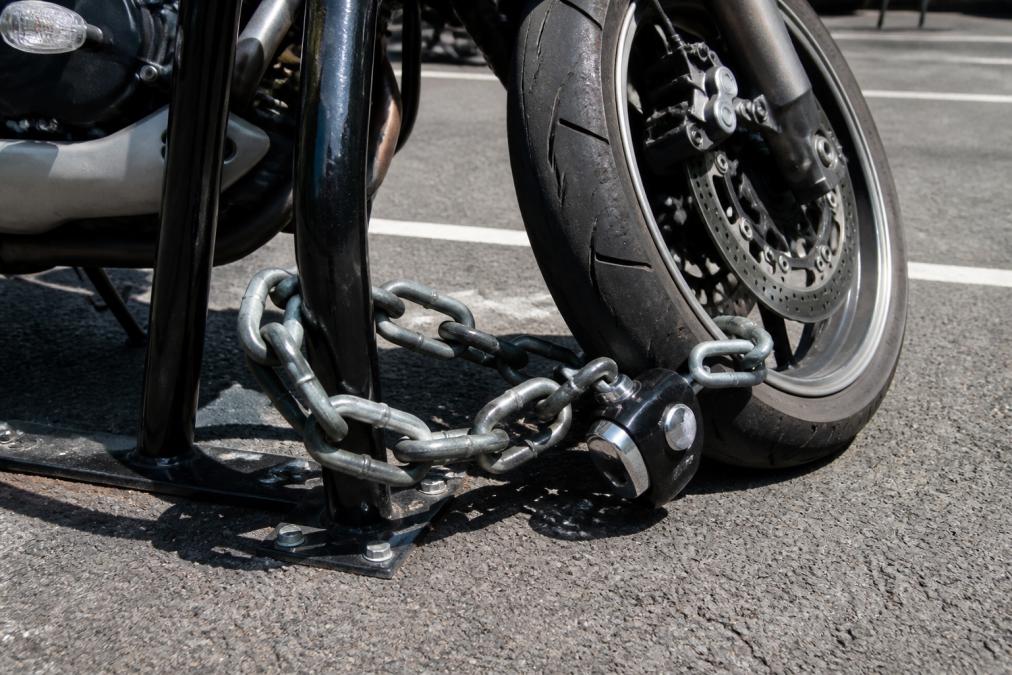
A heavy-duty chain is the foundation of any serious travel security setup. The chain should be hardened steel with a link diameter thick enough to resist bolt cutters, and the lock should be a closed-shackle design that minimizes exposed metal for attack.
For travel, many riders carry a mid-weight chain, roughly 1 to 1.5 meters long, that's heavy enough to deter casual theft without being impractical to pack. Loop it through the frame or swingarm and around a fixed object: a bike rack, signpost, or concrete pillar. If no fixed object is available, looping through both wheels and the frame at least prevents a quick roll-away.
Ground anchors are ideal for riders who return to the same location repeatedly. A portable anchor bolted to a floor or wall provides a tamper-resistant attachment point that a chain alone can't replicate.
Disc Brake Locks and Immobilizers
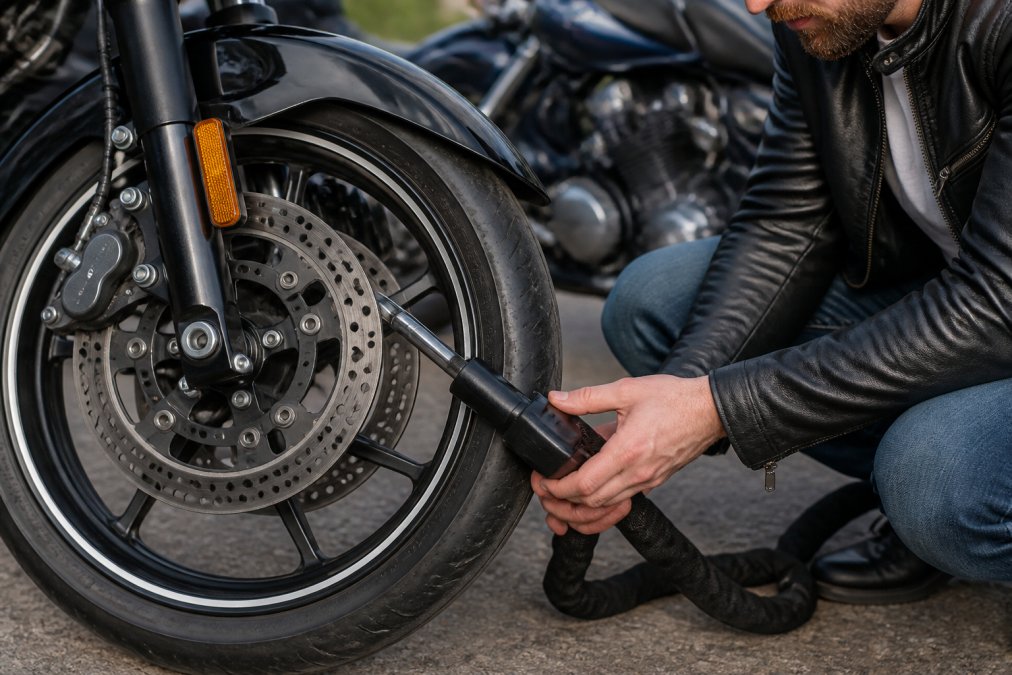
A disc brake lock is compact, travels easily in a tank bag or saddlebag, and provides a fast-deploy deterrent for short stops. The lock pins through the brake disc rotor, physically preventing wheel rotation. Many models include a vibration sensor that triggers an audible alarm when the bike is moved or struck.
A disc brake lock doesn't anchor the bike to anything, so a determined thief with a van and ramp can still load the motorcycle. Use it as a secondary layer, not a primary one.
An immobilizer cuts the ignition circuit, preventing the engine from starting without correct authentication. Some touring riders add aftermarket immobilizers as a backup to factory ignition locks, particularly on older models.
Steering Locks and Ignition Locks
The factory steering lock, standard on most modern motorcycles, locks the handlebars at full deflection. It's a basic deterrent, not a serious one. A determined thief can break it with a sharp kick. Use it, but don't rely on it alone.
Aftermarket steering locks and ignition locks add a secondary layer to the cockpit. They're particularly useful when combined with a chain.
How to Secure Motorcycle Luggage and Accessories
Securing the bike itself is only half the problem. High-value accessories, GPS units, and saddlebag contents represent a significant portion of what thieves target on touring motorcycles.
Saddlebag and Seat Lock Solutions
Factory saddlebag latches on most Harley-Davidson and Indian touring models aren't designed with theft prevention as the primary objective. Aftermarket saddlebag locks replace or supplement factory hardware with tamper-resistant mechanisms that require a key to open.
Robert Becker Design engineers saddlebag locks specifically for touring motorcycles, including Harley-Davidson and Indian models, with fitment that works with both stock and aftermarket bag configurations. The locks install without drilling.
Seat locks are equally important. A solo seat or custom seat can be removed in seconds if held by a single bolt with no secondary lock. A dedicated seat lock mechanism prevents removal without the correct key, protecting both the seat itself and any storage compartment beneath it.
Securing Aftermarket Accessories and Mounting Hardware
GPS units are a specific high-value target. A Garmin zumo or Montana mounted on a RAM arm is visible, recognizable, and easy to remove without tools if the mounting hardware isn't secured. A GPS lock that threads through the mounting arm and secures to the handlebar or fairing bracket prevents quick removal.
The same principle applies to any aftermarket accessory with visible mounting hardware: auxiliary lights, communication systems, camera mounts. Tamper-resistant fasteners, secondary locking pins, and security cables all add friction to the removal process.
GPS Trackers for Motorcycles: Recovery When Prevention Fails
GPS trackers serve a different function than locks. Locks prevent theft. A GPS tracker helps recover the bike after theft occurs. Both have a place in a complete security strategy.
A motorcycle GPS tracker is a hidden device that transmits the bike's location to a remote monitoring app on your phone. Modern units use cellular networks and update location in near-real time. Best placement is concealed inside the fairing, under the seat, or within the frame.
Recovery rates improve substantially when law enforcement has a precise, current location. Without a tracker, a stolen motorcycle is often stripped for parts before it's found. With one, recovery within hours is realistic.
Key features to look for in a travel GPS tracker:
- Cellular coverage in the regions you'll be riding through
- Tamper alerts that notify you when the device is moved or disconnected
- Long battery life or direct wiring to the motorcycle's electrical system
- A subscription plan with adequate coverage for your travel area
- A compact form factor that allows genuinely hidden installation
According to the Insurance Information Institute's motorcycle theft guidance, comprehensive insurance coverage for theft is a critical complement to physical security measures. A GPS tracker supports both recovery and insurance claims by providing documented location data.
Smart Parking Strategy: Location, Lighting, and Deterrence
The best lock in the world doesn't help if you park in a location that gives thieves unlimited time and zero visibility. Parking strategy is a security layer that costs nothing but requires deliberate habit formation.
Choosing Well-Lit, High-Traffic Areas
Park in well-lit areas whenever possible. Thieves work faster and more confidently in darkness. A motorcycle parked directly under a working streetlight, visible from a hotel lobby or busy restaurant, is a harder target than one tucked into a shadowed corner.
High foot traffic is a deterrent in its own right. Witnesses reduce dwell time. When evaluating a parking spot, look for direct line of sight from a staffed location, active security cameras with visible signage, other vehicles parked nearby, and a fixed object to lock to within reach of your chain.
Securing to Fixed Objects and Bike Racks
A fixed object is any anchor point that can't be moved without heavy equipment: bike racks, signposts set in concrete, parking meters, structural columns. A chain that connects your motorcycle to one of these forces a thief to either cut the chain or cut the object, both of which take time and generate noise.
When no suitable fixed object exists, looping the chain through both wheels and the frame creates a wheel-lock that prevents rolling. It's a meaningful reduction in theft risk, not a complete solution.
Motorcycle Theft Prevention Tips for Overnight and Stealth Camping
Overnight security is where most motorcycle theft prevention guides fall short. The advice for hotel parking doesn't translate directly to a campsite, and stealth camping introduces a completely different set of variables.
Psychological Deterrents and Motorcycle Covers
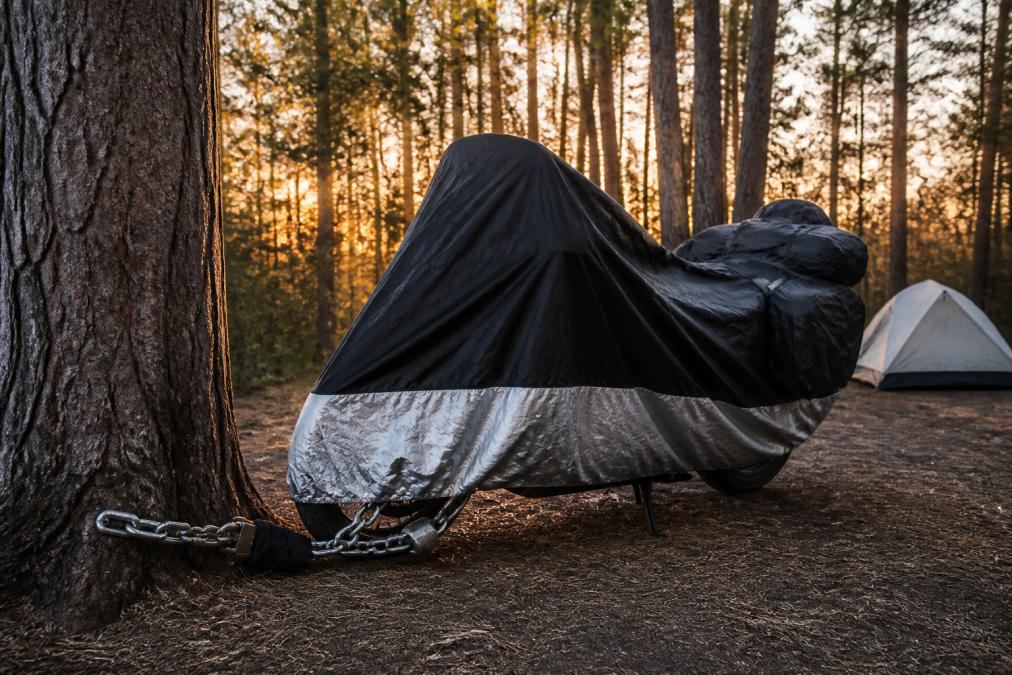
A motorcycle cover conceals the bike's make, model, and accessories from casual observation, and it signals that the owner has taken deliberate security steps. For stealth camping, a cover also helps the bike blend into the environment.
Psychological deterrents extend beyond covers. A visible alarm LED, a security cable looped conspicuously around a tree, a steering lock with a bright warning flag: all signal that this particular bike is harder to steal than the next one. Thieves make risk assessments quickly. Make yours look like the wrong choice.
Audible Alarms and Vibration Sensors
An audible alarm with a vibration sensor is one of the most cost-effective security layers available. When triggered, a quality alarm produces enough sound to wake a sleeping rider within a reasonable distance.
Modern motorcycle alarms use multi-axis vibration sensors that distinguish between a passing truck's vibration and a direct attempt to move or tilt the bike. False alarm rates on quality units are low enough to be manageable.
For overnight camping, the combination of a motorcycle cover, a chain secured to a tree or ground anchor, and an active audible alarm with vibration sensor covers the three primary theft scenarios: opportunistic visual targeting, quick roll-away, and attempted loading.
Layering Your Security: DIY vs. Professional Installation
The layered security approach is the organizing principle behind everything covered in this guide. No single device stops a determined thief. Multiple independent layers, each requiring different tools or skills to defeat, create a cumulative deterrent that most thieves won't invest time in.
Here's how the layers stack in practice:
Security Layer | Primary Function | Travel Practicality | DIY Install |
|---|---|---|---|
Heavy-duty chain | Anchors bike to fixed object | Medium (adds weight) | Yes |
Disc brake lock | Prevents wheel rotation | High (compact) | Yes |
Steering lock | Limits handlebar movement | High (factory standard) | Yes |
Audible alarm | Alerts rider to tampering | High (battery or wired) | Yes, with wiring skills |
GPS tracker | Enables post-theft recovery | High (hidden unit) | Yes, concealed install |
Saddlebag/seat locks | Secures accessories | High (purpose-built hardware) | Yes |
Motorcycle cover | Conceals and deters | High (packs flat) | N/A |
DIY installation is realistic for most of these layers. Chains, disc brake locks, covers, and most alarm systems require no technical knowledge. GPS trackers that wire directly to the electrical system require basic electrical skills, but most riders comfortable with minor maintenance can handle the job. Saddlebag and seat locks from Robert Becker Design are engineered for straightforward installation without drilling in most configurations.
Professional installation makes sense for hardwired alarm systems with complex integration, immobilizers that require ECU-level access, or GPS units where concealment is critical. A shop with experience in motorcycle security can also assess your specific bike's vulnerabilities and recommend placement that a generic guide can't.
Start with what you can install yourself and do it today. A chain and a disc brake lock installed this afternoon are worth more than a professionally installed system you're still researching next month. Add complexity as your travel frequency and security requirements grow.
As documented in the Motorcycle Safety Foundation's rider resources, security awareness and preparation are consistent factors in reducing motorcycle vulnerability. The riders who get hit are overwhelmingly those who relied on a single deterrent or none at all.
The most important insight from working with touring riders over the years: the gap isn't between cheap locks and expensive ones. It's between riders who use multiple layers consistently and those who don't.
Touring motorcycles loaded with aftermarket accessories, GPS hardware, and custom seats represent a significant investment. Protecting that investment on the road requires deliberate planning, not just good intentions. Robert Becker Design builds purpose-engineered locks for saddlebags, seats, and GPS mounting systems specifically because generic hardware doesn't address the real vulnerabilities on touring bikes. Shop our full lineup to find the security solutions built for the way you actually ride.
Frequently Asked Questions
What are the most effective motorcycle theft deterrents for travelers?
Layering multiple security methods works far better than relying on one. Combine a disc brake lock with an audible alarm, a heavy-duty chain secured to a fixed object, and a GPS tracker for remote monitoring. Visible deterrents like a motorcycle cover and steering lock also discourage opportunistic thieves before they even attempt the bike. Motorcycle theft prevention on the road requires planning each stop, not just overnight parking.
What stops a motorcycle from being stolen?
No single device guarantees absolute protection, but making the bike harder to steal than others nearby is the goal. Hardened steel chains, disc brake locks, immobilizers, and steering locks each add time and noise to any theft attempt. Parking in well-lit areas near security cameras, securing the bike to a fixed anchor point, and using a GPS tracker for vehicle recovery all compound the difficulty for a would-be thief.
How can I secure my motorcycle saddlebags and gear while parked?
Dedicated saddlebag locks and seat locks prevent thieves from walking off with expensive luggage and accessories without touching the ignition. For touring bikes like Harley-Davidson and Indian models, purpose-built locking hardware integrates directly with factory mounting points. Never leave valuables visible inside bags, and remove GPS units or use Kradellock when leaving the bike unattended.
Does insurance cover theft of motorcycle accessories and luggage?
Standard motorcycle insurance policies vary significantly. Comprehensive coverage typically covers the bike itself if stolen, but aftermarket accessories, GPS units, saddlebag contents, and custom parts often require a separate endorsement or rider. Review your policy's accessory coverage limit and document all aftermarket components with photos and receipts. Contact your insurer before a trip to confirm what theft insurance actually covers for travel gear and mounted accessories.
What is the best way to park a motorcycle in a public area?
Park in well-lit, high-traffic areas whenever possible, ideally near a security camera. Back the bike into a spot so the wheel is against a wall or curb, limiting rolling access. Secure the frame or wheel to a fixed object like a bike rack or solid post using a heavy-duty chain. A disc brake lock placed on the front rotor adds a visible theft deterrent that slows any attempt to push the bike away.
Are GPS trackers worth it for motorcycle travel?
GPS trackers for motorcycles are one of the highest-value security investments for travelers because they shift the goal from prevention to recovery. If a bike is stolen despite other security layers, a GPS tracker with remote monitoring gives law enforcement a precise location in real time. Many units are small enough to hide inside fairings or under seats, making them difficult to find and remove. For long-distance touring or overnight parking in unfamiliar areas, they provide significant peace of mind.