
Last Updated: November 11, 2026
Quick Summary
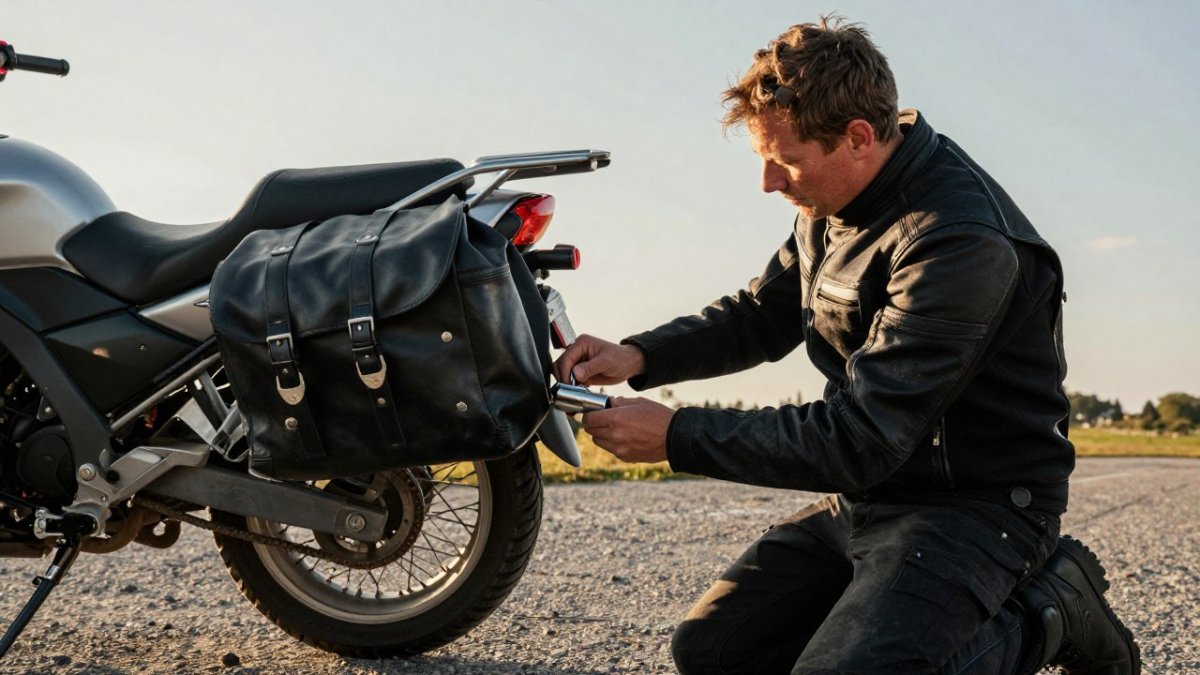
Protecting motorcycle luggage and seats means securing bags against theft and shielding seats from abrasion, weather, and wear. Match locks and habits to the situation: cable locks and locking mounts for bags, plus pads and covers to stop strap scratches, dye transfer, and moisture damage.
- For quick stops, use a cable lock through bag handles and a frame point, and park in visible spots.
- Drop-in latch locks secure hard bags but do not stop a thief from releasing the bag from its mount.
- Use a felt or closed-cell foam pad under straps that cross the seat to prevent scratches.
- Route every strap away from the exhaust, wheel, and moving suspension parts.
- Run a tug test before every ride, since straps loosen as loads settle.
Table of Contents
- Why Protecting Motorcycle Luggage and Seats Matters
- Motorcycle Luggage Theft Prevention by Situation and Duration
- Motorcycle Saddlebag Locks for Stock and Aftermarket Bags
- Harley-Davidson Seat Security: Protecting Solo and Two-Up Seats
- Motorcycle Tail Bag Security and Secure Attachment
- Weatherproofing Beyond a Rain Cover
- Load Limits, Balance, and Handling Effects
- Your Pre-Ride Attachment and Safety Check
- Frequently Asked Questions
Why Protecting Motorcycle Luggage and Seats Matters
Protecting motorcycle luggage and seats means securing bags against theft and shielding seats from abrasion, weather, and wear. Most riders ignore the parking lot, where gear disappears and seats get ruined.
Two problems hit touring riders most: theft, since saddlebags, tail bags, and GPS units are easy targets on an unattended bike, and damage, since a loaded bag rubbing a vinyl seat leaves scratches and worn patches.
The fix is a system of locks, straps, covers, and habits. Here is how to build that system for your own bike.
Motorcycle Luggage Theft Prevention by Situation and Duration
Motorcycle luggage theft prevention starts with one question: how long will the bike sit, and where? Match your security to the situation so you stop overspending on quick stops and underspending on risky ones.
Quick Stops vs. Overnight Parking
For a quick stop, the goal is delay and visibility. Use a cable lock through bag handles and a frame point, keep valuables in a jacket pocket, and park where people can see the bike.
Overnight, the thief has hours and privacy. Take hard bags and tail bags inside when you can. If not, use a lockable storage option plus a cable lock, and strip the bike of anything loose: helmet, gloves, GPS, and rain gear.
High-Theft Urban Parking
In dense city parking, assume someone is watching.
- Never leave a helmet on the mirror or seat; carry it or lock it in a hard case.
- Park near cameras, foot traffic, and lighting, not behind a building.
- Use a disc lock plus a cable through your bags for layered protection.
One habit separates prepared riders from victims: they never leave the same valuables in the same place twice.
Motorcycle Saddlebag Locks for Stock and Aftermarket Bags
Motorcycle saddlebag locks solve the weakest point on most touring bikes: the latch. The right lock depends on the bag, the mounting hardware, and how the bag opens.
How the Main Lock Types Work
- Drop-in latch locks replace the stock latch mechanism inside a hard bag. They add a keyed cylinder so the bag cannot be opened without the key, but they do not stop a thief from releasing the whole bag from its mount. Pair one with a locking mount or a cable.
- Locking bolt kits replace the quick-release pins that hold a hard bag to its bracket with keyed bolts. The bag stays on the bike unless the key is used. These work best on bags that already have a sturdy bracket and a clean mounting point.
- Locking mounts are aftermarket brackets with an integrated keyed release. They are the most secure option for hard bags because the bag cannot be lifted off even if the latch is defeated, but they add cost and require model-specific fitment.
Matching the Lock to the Bag
| Bag Type | Weak Point | Lock Approach | What It Does Not Stop |
|---|---|---|---|
| Stock hard saddlebags | Simple latch, quick release | Drop-in latch lock plus locking bolt kit | A thief who cuts the bracket |
| Aftermarket hard bags | Mounting hardware | Locking mount plus cable | Forced prying of the bag shell |
| Soft bags | Zippers, straps | Cable lock through handles and frame | Cutting the bag fabric |
| Tail bags | Buckles, quick release | Cable lock plus locked zipper pulls | Lifting the whole bag if the cable is loose |
Fit matters more than brand. Custom mounting points, crash bars, and aftermarket racks can block a lock from seating correctly.
Confirm the bag is fixed at a point that needs a key or a tool to release.
Before you ride, test the lock with the bag loaded. A bag that flexes under load can bind a latch lock or pull a cable loose.
Harley-Davidson Seat Security: Protecting Solo and Two-Up Seats
Seat security protects one of the most expensive parts on a touring bike. A leather or vinyl seat held by a single fastener is easy to lift off. Solo seats on bobbers and two-up seats on Road Glides and Street Glides are both targets, and aftermarket seats cost real money to replace.
On trikes like the Tri Glide and Freewheeler, the seat locking setup differs from two-wheel models, so confirm fitment for your specific bike.
Seat Protection by Material: Vinyl, Leather, and Aftermarket Covers
Security is half the job. The other half is stopping wear, and the right method depends on the seat material. Most touring seats are vinyl, some are leather, and many riders add a gel or memory-foam aftermarket cover. Each fails differently.
- Vinyl is the most common seat material. It resists water but scratches and scuffs easily, and a loaded bag rubbing on it for a long trip will leave permanent marks. Vinyl also transfers dye: a dark bag strap or new riding pants can leave a stain soap will not remove. Use a vinyl-safe protectant, not a leather conditioner, and keep straps off the surface with a soft pad.
- Leather is more durable but absorbs moisture and oil. A wet leather seat that stays covered can grow mildew, and road salt pulled in by a wet strap will dry into a stiff, cracked patch. Clean with a pH-balanced cleaner, condition after every wet ride, and let it dry fully before covering.
- Aftermarket gel and foam covers are the most vulnerable to pressure marks. The foam compresses under a loaded bag and takes a set that does not fully recover. Rotate the bag position slightly on long trips and use a wide, flat pad to spread the load.
Preventing Scratches, Dye Transfer, and Pressure Marks
- Use a seat cover or a soft pad under bag straps that cross the seat. A pad made of felt or closed-cell foam works better than a towel, which bunches and traps grit.
- Route straps so buckles and metal never touch the vinyl directly. A buckle that rests on the seat will leave a mark on the first bump.
- Check strap tension at every fuel stop; loose straps flap and chafe, and over-tight straps press hard edges into the foam.
- Clean and condition the seat after each trip to remove road spray and grit. Grit under a strap acts like sandpaper on every mile.
A common mistake is tightening straps until the bag cannot move at all. That presses hard edges into the seat and does more damage than a slightly loose strap with a pad underneath.
Moisture and Condensation Under Covers
A seat cover that keeps rain off can also trap moisture underneath. Cover a damp seat and park in the sun, and condensation forms while the foam stays wet for days, which is how mildew starts and vinyl separates from its backing.
Watch out: a cover left on a wet seat for a week can do more damage than no cover at all. If you must cover a damp seat, use a vented cover and check underneath after the first dry day.
Motorcycle Tail Bag Security and Secure Attachment
Motorcycle tail bag security comes down to two things: how the bag attaches, and whether a stranger can undo that attachment in seconds. A tail bag strapped with quick-release buckles is convenient for you and equally convenient for a thief.
Secure attachment means the bag is fixed at a point that requires tools or a key to release.
Straps, bungee cords, and cargo nets each have a place:
- Straps with cam buckles hold the most weight and stay tight on long rides.
- Bungee cords work for light items but stretch and lose tension.
- Cargo nets keep loose gear contained but do not secure a bag to the bike.
Route every strap away from the exhaust, the wheel, and moving suspension parts. A strap that touches a hot exhaust pipe will fail, and one that reaches the rear wheel will end your trip.
Weatherproofing Beyond a Rain Cover
A rain cover handles rain falling from above. It does nothing for road spray thrown up from the rear tire, which hits your bags from below and behind at speed.
Start with the bag itself. A waterproof bag with welded seams and a roll-top closure keeps water out without any cover at all.
Then deal with the outside:
- Use a rain cover sized to the bag, not a loose one that flaps.
- Secure the cover with a strap so wind cannot peel it off at highway speed.
- Treat leather bags with a conditioner made for motorcycle leather, and reapply it before each season.
- Check zippers; a zipper without a storm flap is a leak waiting to happen.
Road spray also carries grit and salt. Rinse bags and seats after a wet ride, and dry leather fully before storing it.
Load Limits, Balance, and Handling Effects
Overloading luggage changes how the bike steers, brakes, and holds a line. Every manufacturer publishes a maximum load for the bike and for each bag, and those numbers exist for a reason.
Keep these rules in mind when you pack:
- Put heavy items low and as close to the center of the bike as possible.
- Keep the load balanced left to right, especially in saddlebags.
- Never exceed the bag's rated capacity, even if the bag still closes.
- Recheck strap tension after the first few miles; loads settle.
Handling effects show up first in corners and crosswinds. If the bike feels light in the front or wanders in a gust, you have too much weight too far back.
Your Pre-Ride Attachment and Safety Check
Run this check before every ride with luggage, not just the first one. It takes a few minutes and catches the failures that cause real problems on the road.
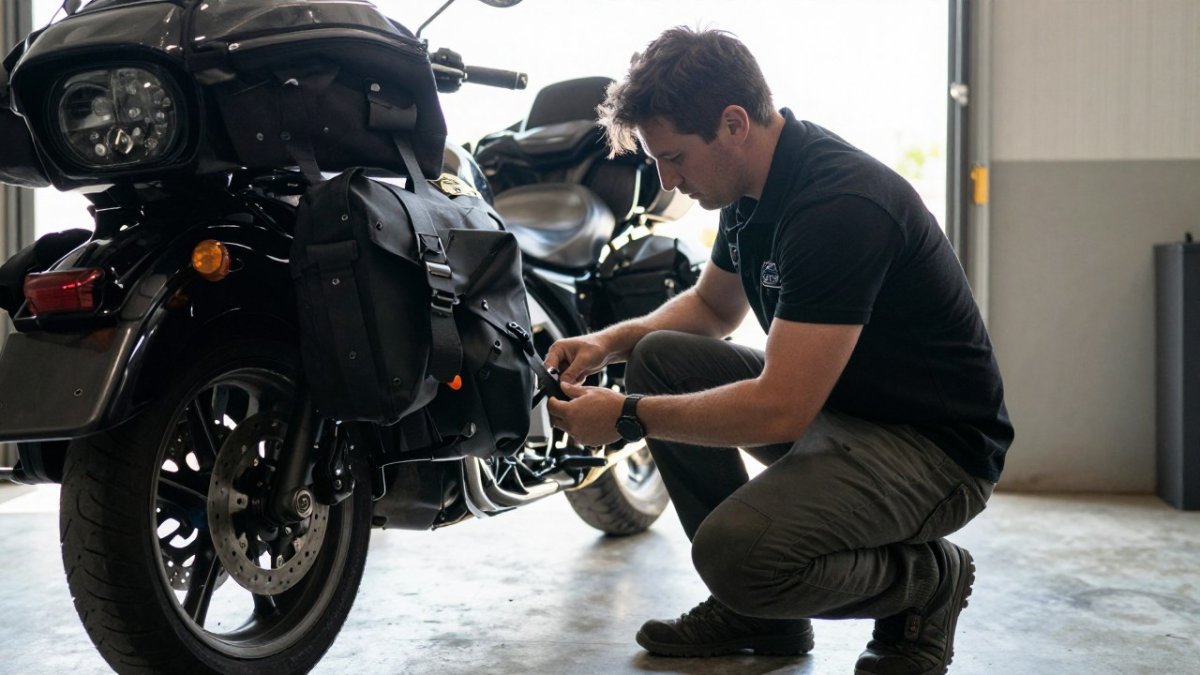
- Tug test: Grab each bag and pull firmly in every direction. Nothing should shift or lift.
- Strap check: Confirm every buckle is locked and every strap end is secured so it cannot flap.
- Clearance check: Verify no strap or cover can reach the exhaust, wheel, or suspension.
- Lock check: Confirm every lock is engaged and the key is on your person, not in the bag.
- Seat check: Look for new scuffs or wear points where straps contact the seat, and add padding if you find any.
- Load check: Confirm the load is balanced and within limits.
Watch out: skipping the tug test after a fuel stop is the most common way riders lose a bag on the highway.
This is where Robert Becker Design comes in.
Your gear is only as safe as the weakest lock on the bike.
Frequently Asked Questions
How do you secure luggage on a motorcycle?
Route straps through frame-mounted tie-down points, not through the seat or plastic trim. Use two straps per bag so the load cannot shift, and check buckles after the first 10 minutes of riding. For saddlebags, use dedicated motorcycle saddlebag locks that secure the bag to its mounting hardware. A cargo net works for light items but is not a substitute for straps on a loaded tail bag.
How can I keep motorcycle luggage from being stolen?
Motorcycle luggage theft prevention starts with layers: lock the bag to the bike, lock the bag closed, and take valuables with you. Cable locks and zip ties slow a casual thief; dedicated locks for saddlebags and seats stop a determined one. Park where the bike is visible, and never leave a helmet or GPS in an unlocked bag. For overnight parking, strip the bike down and carry gear inside.
Can you lock motorcycle saddlebags?
Yes. Check that the lock fits your specific mounting hardware before buying.
How do you protect a motorcycle seat from theft and wear?
For wear, keep the vinyl clean and conditioned, avoid dragging abrasive gear across it, and use a seat cover when strapping a tail bag down. That protects against scratches and abrasion on long-distance trips.
