

Table of Contents
- Why Your Garmin Zumo Is a Theft Target
- Step 1: Choose a Garmin Zumo XT Locking Mount
- Step 2: Secure the Mounting Hardware and Bracket
- Step 3: Build a Daily Removal and Storage Routine
- Software Security: GPS Theft Prevention Features in the Zumo
- Best Motorcycle GPS Theft Prevention: A Layered Strategy
- Final Word: Secure Your Zumo Before Your Next Ride
- Frequently Asked Questions
Last Updated: September 8, 2026
Why Your Garmin Zumo Is a Theft Target
A Garmin Zumo is one of the most expensive single accessories on a touring motorcycle, and thieves know it. A GPS unit left on a powered cradle is a quick, high-value grab that takes seconds to remove (nicb.org).
Protecting Garmin Zumo from theft requires more than remembering to take it off the bike. The device's mounting system, which is designed for easy removal, also makes it vulnerable when you park in crowded lots or leave the bike overnight. Most riders focus on locks for the bike itself and overlook the electronics sitting right on the handlebar.
The good news is that a layered approach works. By combining a physical locking mount, secure mounting hardware, and a daily removal habit, you can make your Zumo far more trouble to steal than the bike next to it. This guide walks through each layer in order of importance, starting with the component that does the heaviest lifting.
National Insurance Crime Bureau motorcycle theft data consistently shows that portable electronics are among the first items stripped from parked motorcycles, which is why the mounting system matters as much as the unit itself.
Step 1: Choose a Garmin Zumo XT Locking Mount
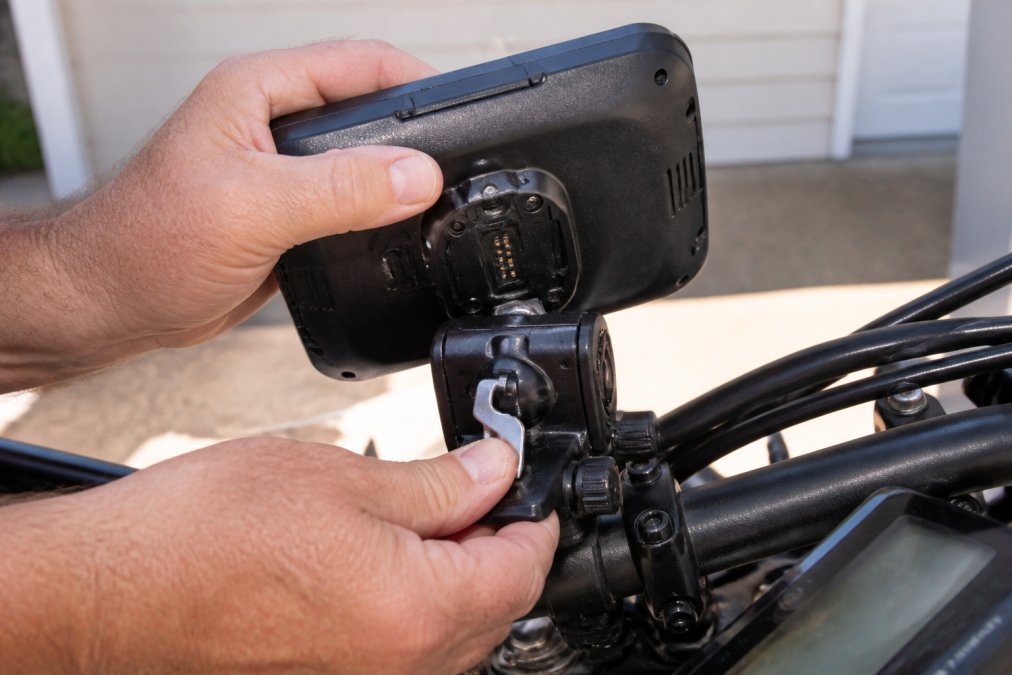
The foundation of any anti-theft setup is a Garmin Zumo XT locking mount that physically prevents the device from being lifted off the cradle. A standard powered cradle uses a release plunger that any passerby can press, allowing the Zumo to slide free in under five seconds.
A locking mount replaces that vulnerable release mechanism with a security pin or lockable button that requires a key or tool to disengage. This single change converts your GPS from a grab-and-go target into a device that is physically attached to the motorcycle.
When selecting a locking mount, verify compatibility with your specific Zumo model and existing mounting hardware. Many locking solutions are designed as direct replacements for the factory powered cradle, meaning you keep your wiring harness and ball mount while upgrading only the part that holds the GPS.
Step 2: Secure the Mounting Hardware and Bracket
A locking cradle is only as strong as the bracket holding it. Many riders install a high-quality locking mount but leave the mounting arm attached with standard hardware, allowing a thief to unbolt the entire assembly and remove the GPS later at their leisure.
Securing the mounting hardware means replacing exposed fasteners with tamper-resistant versions. The clutch base and ball mount that connect your cradle to the handlebar should use security bolts or locking plates that cannot be turned with common tools.
For riders using RAM-style mounting systems, a security bracket that covers the bolt heads is an effective deterrent. These brackets create a smooth surface with no purchase point for pliers or wrenches, forcing a thief to abandon the attempt or damage the bike significantly to proceed.
The mounting kit you choose should be rated for vibration resistance as well as security. A locking plate that rattles loose over miles of highway is a safety hazard, so confirm that whatever security hardware you add maintains the rigid connection your Zumo needs for accurate navigation.
Step 3: Build a Daily Removal and Storage Routine
Hardware alone cannot protect your Zumo when you are away from the bike. Device removal remains the single most reliable theft prevention method, and it costs nothing beyond thirty seconds of habit.
Build a routine that treats the Zumo like a wallet or phone. When you dismount for fuel, food, or lodging, the GPS comes off the cradle and goes with you. This practice protects against both opportunistic theft and smash-and-grab scenarios where a thief targets multiple bikes in a parking lot.
For overnight parking, never leave the empty cradle exposed either. A visible powered cradle signals to thieves that a GPS is stored nearby, possibly in a saddlebag. If your saddlebags lack dedicated security, a thief may break into them looking for the unit you just removed.
Software Security: GPS Theft Prevention Features in the Zumo
Physical locks are essential, but protecting Garmin Zumo from theft also involves the software built into the device and your Garmin account. Most riders never enable these features, leaving a stolen unit fully functional and easy to resell. This is the layer that can actually get your device back or render it worthless to a thief.
Enable the Device Lock PIN
The Garmin Zumo (including the XT, XT2, and 396/595 series) includes a device lock PIN that requires entry at startup. To set it, go to Settings > Security > Device Lock and enter a 4-digit PIN. This prevents a thief from powering on the unit and using it for navigation. While a determined thief could attempt a factory reset, Garmin's newer firmware ties the device lock to the unit's serial number, making a full reset more difficult without the original owner's credentials.
A PIN alone won't stop a determined thief, but it serves two purposes: it renders the unit useless to casual buyers, and it forces a thief to invest time in bypassing it, time they'd rather spend on an unlocked unit. For maximum effect, pair the PIN with a custom startup message that displays your name and phone number. This simple step increases the chance a honest finder returns the unit if it's dropped or left behind.
Register the Device and Use Garmin's Theft Recovery Tools
Garmin offers a free product registration portal that links your Zumo's serial number to your account. This is not just for warranty purposes, it's the first step in a recovery workflow. If your Zumo is stolen, log in to your Garmin account and report the device as stolen. Garmin can flag the serial number in their system, which helps if the thief later connects the unit to a computer running Garmin Express or attempts a software update.
Additionally, Garmin's "Find My Device" features (available on newer Zumo models via the Garmin Drive app) can log the last known GPS coordinates when the unit loses connection to your phone. This is not real-time tracking, the Zumo lacks cellular or satellite tracking hardware, but it can give law enforcement a starting point if the unit is turned on and connected to a Wi-Fi network.
Document Everything Before You Ride
Before you install your Zumo, write down the serial number (found in Settings > About or on the device label) and photograph the unit installed on your bike. Store this information in a cloud drive or with your insurance documents. If your Zumo is stolen, you'll need this for a police report and an insurance claim.
The Post-Theft Recovery Checklist
If your Zumo is stolen, follow this sequence within 24 hours:
- File a police report with the serial number and any tracking data from the Garmin Drive app.
- Report the theft to Garmin through your account portal and request a serial number flag.
- Contact your insurance agent to file a claim under your motorcycle policy's accessory coverage.
- Monitor online marketplaces (eBay, Craigslist, Facebook Marketplace) for your unit's serial number or distinctive markings you may have added.
A common pattern among recovered units is that a thief sells the Zumo to a pawn shop or online buyer who later tries to register it or update it, triggering the stolen flag. This is why registration is not optional, it's your only digital leash on the device.
Best Motorcycle GPS Theft Prevention: A Layered Strategy
The best motorcycle GPS theft prevention combines physical security, software protection, and behavioral habits into a single system. Relying on any one layer leaves gaps that a motivated thief can exploit. But a layered strategy is not just about stacking defenses, it's about understanding how each layer interacts and where the weak points are in your specific setup.
How the Layers Work Together
- Locking mount prevents quick removal while the bike is parked, this stops the 5-second grab. Robert Becker Design has locks for the Garmin 300 series, 500 series, 6oo series and the XT series. They also have locks for the Ram mount. 50 deferent key codes are available. the GPS and RAM mounts can be keyed to match all other locks from Robert Becker Design.
- Security bolts stop thieves from unbolting the entire mount assembly, this stops the 2-minute job.
- Daily removal eliminates the target when you are away from the bike, this stops the planned theft.
- PIN lock makes a stolen unit difficult to resell, this reduces the financial incentive.
- Serial documentation supports recovery and insurance claims, this is your safety net.
Each layer addresses a different thief profile. The opportunistic thief is stopped by the locking mount. The prepared thief with a socket set is stopped by security bolts. The thief who watches your parking habits is stopped by removal. No single layer stops all three, but together they create a compounding deterrent.
Visual Deterrents: The Psychological Layer
Visual deterrents matter more than most riders realize, and they cost almost nothing. A visible locking mechanism signals that you have invested in security, and thieves generally move to easier targets. Visible security devices are one of the most effective deterrents against opportunistic theft.
Consider these low-cost additions that require no hardware modification:
- A Garmin-branded or generic GPS warning sticker on your windscreen or fairing. This signals that you are aware of theft risk and likely have countermeasures in place.
- A dummy cable lock draped across the handlebar near the mount. Even if it's not attached to anything, it suggests the rider secures their gear.
- A motion-activated LED light aimed at the handlebar area. Thieves avoid well-lit targets, and a sudden light draws attention.
These deterrents work because they target the thief's decision-making process before they ever touch your bike. A thief casing a parking lot makes a split-second assessment of which bike is the easiest target. Visible security hardware and stickers shift that assessment away from your Zumo.
Comparative Durability: Metal vs. 3D-Printed Mounts
A flimsy cable lock or plastic bracket can be cut in seconds, giving a false sense of security. The security mount market has expanded to include 3D-printed plastic options that are cheaper than machined metal, but they are not equivalent in theft resistance.
3D-printed PLA or PETG mounts can fail under two conditions: impact (a thief striking the mount with a hammer) and heat (a parked bike in direct sunlight can reach 140°F, which softens many thermoplastics) (nist.gov). Metal mounts, whether aluminum or stainless steel, do not have this vulnerability.
However, metal is not always better. A metal mount that uses a simple hex bolt is less secure than a 3D-printed mount that uses a proprietary security key, because the metal mount can be removed with a common tool. The material matters less than the fastener design. Look for:
- Hardened steel or titanium security bolts that resist cutting and drilling.
- Proprietary key patterns that require a specialized tool not available at hardware stores.
- Recessed bolt heads that prevent grip with pliers or vice grips.
The layered strategy is not about buying the most expensive hardware, it's about making your Zumo the least attractive target in the parking lot. A $40 locking mount plus a $10 security bolt kit plus a $5 sticker is often more effective than a $200 mount alone, because it addresses multiple theft vectors simultaneously.
Final Word: Secure Your Zumo Before Your Next Ride
Protecting Garmin Zumo from theft is not a single purchase but a security mindset. The riders who never lose a GPS are the ones who treat the device as removable cargo, secure the mounting system properly, and use every software tool available.
Start with a locking mount that physically secures the unit, then reinforce the bracket with security hardware. Build the removal habit until it is automatic, and enable the PIN and registration features on the Zumo itself. These steps take minutes to implement and eliminate the most common ways GPS units are stolen.
Robert Becker Design has specialized in motorcycle theft prevention since 2012, engineering security locks for GPS mounts, saddlebags, and seats on Harley-Davidson and Indian touring models. Our mounting security solutions are designed by riders.
Frequently Asked Questions
Can I leave my Garmin Zumo mounted on my motorcycle when parked?
Leaving your Zumo mounted invites theft, even with a locking mount. A determined thief can damage your bike trying to remove it. The safest routine is to detach the GPS unit and store it in your saddlebag, jacket, or hotel room. A locking mount and security bracket deter casual theft, but removal is the only way to guarantee your device's safety.
What is the best Garmin Zumo XT locking mount?
The best Garmin Zumo XT locking mount uses a metal security bracket and a lockable button mechanism to hold the device firmly. Look for a mount that replaces the standard plastic cradle and uses security pins or bolts that require a special tool to remove. This prevents a thief from quickly twisting the unit off the handlebar.
Does the Garmin Zumo have a built-in anti-theft feature?
The Garmin Zumo includes a theft detection feature that sounds an alarm if the device is removed from its powered cradle while the ignition is off. While helpful, this alarm is easily ignored in a parking lot. Treat it as a secondary layer, not your primary defense. A physical locking mount is your main deterrent.
How do I secure the mounting bracket to prevent GPS theft?
Securing the bracket is as important as locking the GPS. Standard hex bolts are easily removed. Replace them with tamper-resistant security bolts or pins that require a unique key. This prevents thieves from simply unbolting the entire mount and taking the GPS and bracket together. It also protects your handlebar setup from damage.
The reality is that most motorcycle GPS theft happens because riders leave an easy opportunity. A secure mounting system from Robert Becker Design, combined with the daily habits outlined here, closes that window. Check our motorcycle security product lineup to find the right locking mount and security bolts for your Garmin Zumo, then ride with the confidence that your navigation system stays where you put it.