
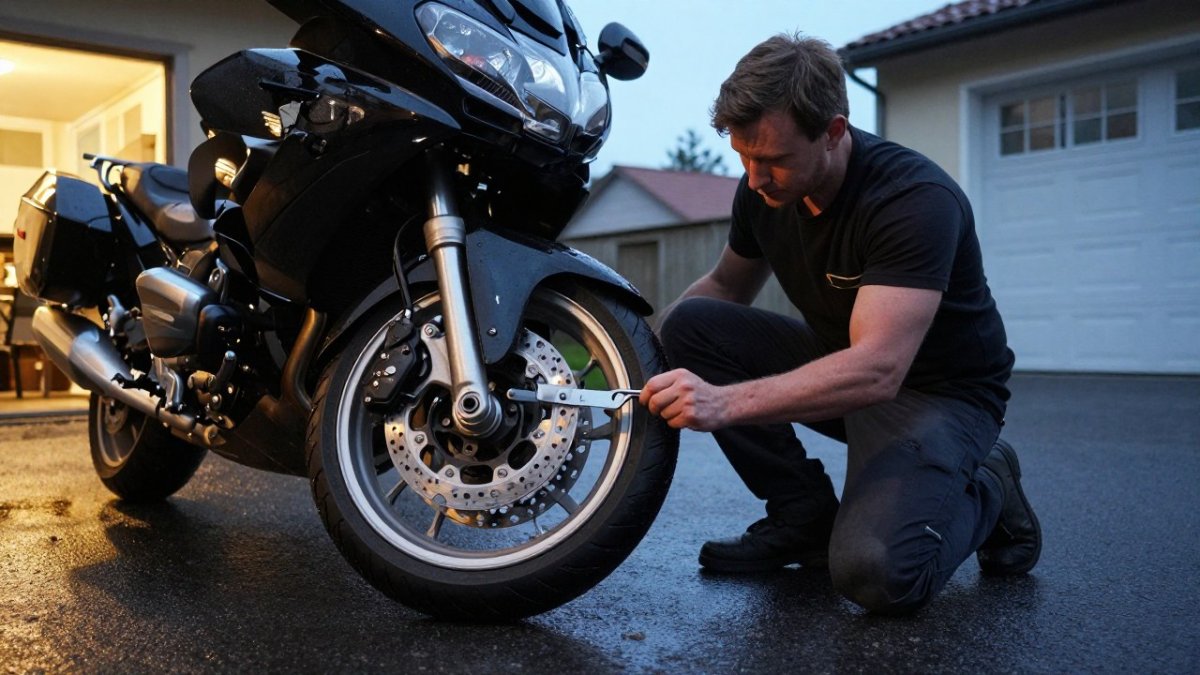
Quick Summary
The right motorcycle disc lock depends on your bike and where you park. Choose a lock that fits your brake rotor thickness and openings, resists the tools thieves use, and suits your parking situation. Add an alarm or reminder cable for busy areas, and secure saddlebags and seats with separate locks.
- Measure rotor thickness and check that the lock pin passes through a rotor opening.
- Confirm the lock body clears the caliper, fork, and spokes before buying.
- A disc lock protects the wheel only, so bags and seats need separate locks.
- Clip a reminder cable to your handlebars to avoid riding off with the lock attached.
- Alarm sensitivity affects false triggers, so test the lock where you usually park.
Table of Contents
- Top Motorcycle Disc Locks at a Glance
- How We Evaluated These Disc Locks
- Motorcycle Disc Lock with Alarm: Audible Deterrence and False Triggers
- Motorcycle Disc Lock Reminder Cable: Preventing a Ride-Away
- Matching Locks to Your Brake Discs, Mounts and Accessories
- Securing Saddlebags and Seats Alongside Your Disc Lock
- Choosing the Right Disc Lock for Your Parking Situation
- Getting Your Disc Lock Setup in Place
- Frequently Asked Questions
Last Updated: November 18, 2026
Motorcycle disc locks are one of the simplest ways to keep a parked bike from rolling away, and the best ones also make it harder for thieves to walk off with your saddlebags, seat, or GPS mounting hardware. Matching the right lock to the right bike and parking spot matters, and the choice depends on your bike and how you park.
A disc lock that works on a bare cruiser may not suit a loaded touring rig parked on a city street. The real question is whether the lock resists the tools thieves actually carry, fits your brake disc, and leaves you with a setup you will use every day.
Top Motorcycle Disc Locks at a Glance
The table below summarizes the disc locks covered in this guide, based on what the supplied research reports for each one. Where a price or specification is not confirmed, we say so rather than guess.
| Lock | Key Feature | Best For | Price |
|---|---|---|---|
| Robert Becker Design | Theft prevention for saddlebags, seats, and GPS mounts | Touring owners protecting factory and aftermarket accessories | Contact for current pricing |
| Xena XX 6 | Rugged steel body, piercing alarm, motion sensors | Riders wanting an alarmed disc lock | Not confirmed in our research |
| Oxford Alpha XA14 | Alarmed disc lock | Riders wanting an audible deterrent | Not confirmed in our research |
| LiteLok X1 | Angle-grinder resistance | Riders prioritizing attack resistance | Not confirmed in our research |
| Squire Defiant Security | Compact design | Riders who carry their lock with gear | Not confirmed in our research |
| Hiplok MD1000 | Recommended disc lock from a security-focused brand | Riders comparing specialist brands | Not confirmed in our research |
Robert Becker Design: Our line is built for the accessories touring riders care about most: saddlebags, seats, and mounting arms, including hardware for GPS units such as Garmin zumo, Montana, and Monterra models. For current pricing, contact us through our website.
How We Evaluated These Disc Locks
We compared each lock against the criteria riders and reviewers use most often: physical attack resistance, alarm behavior, fit with common brake discs, portability, and value. Where our sources did not confirm a detail, we left it out instead of estimating it.
Motorcycle Disc Lock with Alarm: Audible Deterrence and False Triggers
An alarm turns a silent physical lock into something a thief has to explain to everyone within earshot. The lock resists the tool, and the alarm removes the thief's most important asset, time without attention. But an alarm is only useful if it goes off when someone is actually tampering with the bike and stays quiet when the wind picks up or a truck rolls past.
Alarmed disc locks generally use a shock or motion sensor inside the lock body, which can trigger a siren after movement. Specifications such as arming delay, decibel level and tilt sensing vary by model, so check each product's own documentation.
Advertised decibel ratings are measured at the siren, not at the rider's ear, so treat them as a rough comparison rather than a guarantee. Testing a lock in the spots you actually park in can show how it reacts to everyday vibration.
Some alarmed locks offer adjustable sensitivity. Higher sensitivity can catch gentle tampering but may also respond to wind or passing traffic, while lower sensitivity is quieter but may miss slow attempts.
Alarmed locks run on batteries that need replacing over time, and cold weather and moisture can affect performance. Check the battery and seals periodically, and dry the lock before storing it if it has been rained on.
An alarm is a deterrent layer, not a substitute for a physical lock. Pair it with a lock that resists cutting and drilling.
Motorcycle Disc Lock Reminder Cable: Preventing a Ride-Away
A disc lock stops the wheel from turning, but it does not stop someone from picking up the bike and loading it onto a truck. A reminder cable is a simple accessory that prevents you from riding off with the lock still attached. Many riders have pulled away from a curb with the lock still clamped to the rotor, which can damage the brake disc, the lock, or both.
Clip the cable to your handlebars or tank bag so you see it before you start riding.
Matching Locks to Your Brake Discs, Mounts and Accessories
Most disc-lock returns and bad recommendations come down to fit, not security. A lock that clamps perfectly on one bike can be impossible to seat on another because the rotor is thicker, the caliper sits in the way, or the wheel design leaves no room for the lock body. Before you compare alarms or prices, confirm the lock will actually go on your bike.
Disc locks clamp through the openings in the brake rotor, so the two numbers that matter are rotor thickness and the size and spacing of the openings. Rotor thickness on most street and touring bikes falls in a narrow band, but it is worth checking your owner's manual or measuring with calipers at the edge of the rotor, away from the wear surface. The lock's pin or shackle has to pass through a rotor opening and still leave the body clear of the rotor face. If the openings are small or narrow, a lock with a thick pin will not fit no matter how the body is shaped.
The lock body sits on one side of the rotor, and the caliper, fork leg, or swingarm can block that space. With the bike on level ground, look at the rotor from both sides and find a spot where the lock body can sit flat without touching the caliper, the ABS sensor ring, or the wheel spokes. On some bikes the only clear spot is near the bottom of the rotor, which changes how the lock hangs and how easy it is to reach. A lock that fits but leaves the keyhole facing the wheel or the ground is a lock you will stop using.
Floating rotors, wave or petal rotors, and rotors with a carrier in the center all change where a lock can clamp. A wave rotor may have openings that are too irregular for a wide pin, and a floating rotor's carrier can leave less room for the lock body. If your bike has an unusual rotor, check the lock's published fit notes or ask the seller to confirm before buying.
A disc lock protects the wheel and stops the bike from rolling, but it does nothing for saddlebags, seats, or GPS mounts. Those are separate fit problems: bag locks have to match the bag's mounting hardware, seat locks have to match the seat pan, and GPS mounts have to match the cradle and arm. Robert Becker Design builds locks for these touring components, including hardware for Harley-Davidson, Indian, and trike models such as the Tri Glide, Freewheeler, and Road Glide 3. Fit depends on the specific mount, so confirm compatibility for your model before ordering. If your bike is heavily customized, confirm the mount pattern and whether any drilling or modification is required before you order.
A quick fit checklist before you buy:
- Measure rotor thickness at the edge and compare it to the lock's stated range.
- Confirm the pin or shackle diameter fits through at least one rotor opening.
- Find a clear spot for the lock body away from the caliper, fork, and spokes.
- Check that the keyhole is reachable with the lock seated.
- Confirm the lock ships with a reminder cable or that you have one.
- For accessory locks, match the lock to the specific bag, seat, or mount hardware.
Watch out: A lock that fits the rotor but leaves the body resting against the caliper can damage the caliper finish or prevent the lock from seating fully, test the fit with the bike stationary before you trust it on the road.
Securing Saddlebags and Seats Alongside Your Disc Lock
Saddlebags and seats are common theft targets because they are valuable and easy to remove. A disc lock protects the wheel, but it does nothing for the bags or seat.
Many riders use a layered approach: a disc lock for the wheel, a dedicated lock for each saddlebag, and a seat lock for solo or factory seats. Each lock stops a different type of theft, so the combination covers more of the bike.
Choosing the Right Disc Lock for Your Parking Situation
Where you park should shape your choice. A rider leaving a bike in a secure garage needs far less than someone parking on a busy urban street overnight.
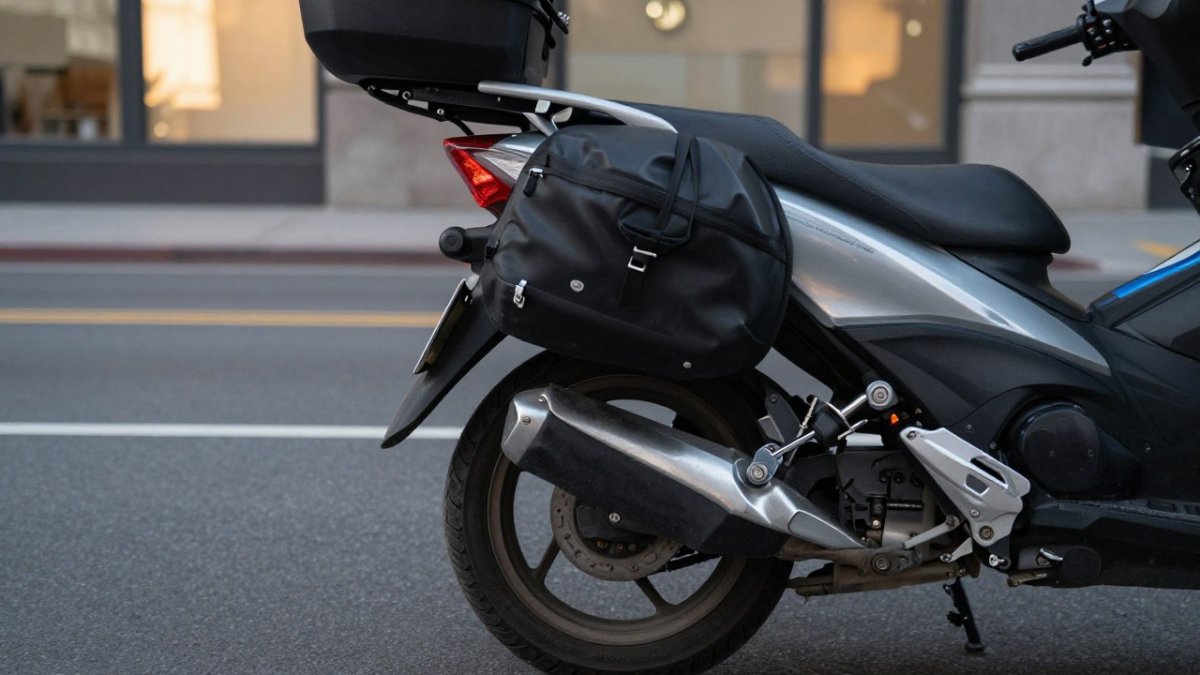
For high-risk areas, choose a lock with strong attack resistance and an alarm, and add an anchor point or chain. For occasional stops, a compact lock you can carry may be enough. Think about how often you will use the lock, how long you will leave the bike unattended, and whether you have a secure place to store the key.
Best for city parking: A disc lock with a reminder cable and a secondary lock for accessories.
Best for short stops: A compact lock you can slip into a bag.
Getting Your Disc Lock Setup in Place
Install your lock with the bike on a stand or on level ground. Position the lock over the rotor so the body sits clear of the caliper, then tighten it firmly. Test the lock by trying to turn the wheel. If it moves, the lock is not seated correctly.
Attach the reminder cable, test the alarm, and confirm the key works smoothly. Store a spare key somewhere secure. Recheck the lock periodically for wear, corrosion, or loose hardware, especially if you ride in wet or salty conditions.
For current pricing on Robert Becker Design saddlebag, seat, and mounting-arm locks, or to confirm fit for your model, visit our website and request a quote.
Frequently Asked Questions
What is the best disc lock for a motorcycle?
No single disc lock suits every rider. The best choice depends on your brake disc design, how often you park in high-theft areas, and whether you want an audible alarm. Compare the models in this guide against your bike's rotor and your parking habits, and check current pricing directly with the manufacturer or retailer, since prices vary by model, bundle and seller.
Are motorcycle disc locks effective against theft?
A disc lock stops a thief from rolling the bike away quickly, which is its main job, but it is not a complete solution on its own. Thieves with angle grinders or bolt cutters can defeat weaker locks in minutes. Choose a lock with hardened steel and good cut resistance, and combine it with a secure anchor point or a second lock when you park in busy areas.
Should I choose an alarmed or non-alarmed motorcycle disc lock?
An alarmed disc lock draws attention when someone tampers with it, which can scare off opportunistic thieves. The tradeoff is that sensitive alarms can false-trigger from bumps or wind, so test the sensitivity setting before you rely on it. A non-alarmed lock is simpler and has no battery to replace, which may suit riders who park in quiet, low-traffic locations.
How do I know if a disc lock will fit my motorcycle?
Check the brake disc thickness and diameter, the caliper position and the clearance around the rotor before buying. Many locks list a maximum disc thickness and a pin or shackle diameter in millimeters. If you ride a bike with aftermarket brake components or a non-standard rotor, measure first and confirm fit with the manufacturer.
